
 By Owen Palmer
Updated November 2026
A clean tile to laminate flooring transition keeps two different floor heights and materials from fighting each other at a doorway or room edge. The right strip covers the gap, handles the height difference and gives you a finished line. This list compares six widely sold options by intended use, profile type, finish and how they install, so you can match a strip to your gap width and floor thickness. You may also like 6 Best Transition Pieces for Laminate Flooring for Doorways and Gaps (2026).
Our top picks at a glance
- 1
 TOP CHOICEBest overallFloor Transition Strip Vinyl Door Threshold Ramp Self Adhesive Carpet Edging StripView on Amazon
- 2
 TOP CHOICEBest for wide gapsVinyl Transition Strip Trim Self Adhesive 10Ft x 2" Flooring Transition LaminateView on Amazon
- 3TOP CHOICEBest for a flush look2'' x 10Ft Self Adhesive Floor Transition Strip Laminate Vinyl Flooring Transition StripView on Amazon
- 4
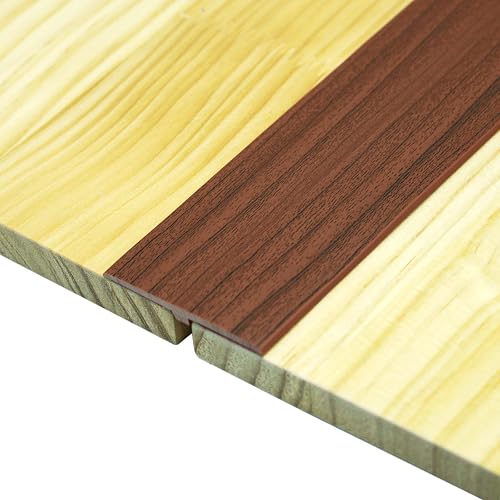 Best for wood-look floorsSelf Adhesive Floor Transition Strip T Molding 5 ft x 1.97"View on Amazon
- 5
 Best for metal durabilityuxcell 3 Pcs Aluminum T Molding Floor Transition StripView on Amazon
- 6
 Best for paintable trimFlexible T-Molding Transition Strips for Hardwood Floor,Laminate FloorView on Amazon
Our Top Picks
Quick Comparison
| Product | Best for | Key feature |
|---|---|---|
| Floor Transition Strip Vinyl Door Threshold Ramp | Small height differences | Ramp profile, adjustable width |
| Vinyl Transition Strip Trim Self Adhesive 10Ft | Wide gaps | Flat divider, strong backing |
| 2” x 10Ft Self Adhesive Floor Transition Strip | Flush look | Low-profile, long roll |
| Self Adhesive Floor Transition Strip T Molding | Wood-look floors | Walnut tone, PVC body |
| uxcell Aluminum T Molding Floor Transition Strip | Heavy traffic | Metal construction |
| Flexible T-Molding Transition Strips | Paint-to-match trim | Flexible, paintable |
Floor Transition Strip Vinyl Door Threshold Ramp Self Adhesive Carpet Edging Strip
Floor Transition Strip Vinyl Door Threshold Ramp Self Adhesive Carpet Edging Strip Doorway Edge Trim, Overlap Edge Reducer for Laminate Carpet, Floor, Tile (Brown Wood Grain, 1/5" to 2/5", 3.3Ft)
Best for: Small height differences at doorways
This strip suits homeowners who need a gentle slope where tile sits a little higher than laminate. Its ramp profile helps people and vacuums roll over the edge.
Pros
- Ramp profile smooths small height steps
- Wood-grain finish blends with laminate
Cons
- Less suited to large height differences
Vinyl Transition Strip Trim Self Adhesive 10Ft x 2″ Flooring Transition Laminate
Vinyl Transition Strip Trim Self Adhesive 10Ft x 2" Flooring Transition Laminate with Strong Backing Flat Divider Strip for Joining Floor Tile Gap, Carpet, Threshold (Brown)
Best for: Wide gaps between tile and laminate
Best suited to rooms where the joint is wider than an inch and the surfaces sit close in height. The flat divider keeps the joint visible but tidy.
Pros
- Two-inch width covers wider gaps
- Strong adhesive backing for a firm hold
Cons
- Visible divider may not suit a seamless look
2” x 10Ft Self Adhesive Floor Transition Strip Laminate Vinyl Flooring Transition Strip
2'' x 10Ft Self Adhesive Floor Transition Strip, Laminate Vinyl Flooring Transition Strip for Joining Floor Gaps, Carpet Threshold, Doorway Transitions, Threshold Cover, Floor Tiles- Brown Wood Grain
Best for: A flush, low-profile look
A good fit for open-plan spaces where you want the transition to read as a line rather than a raised edge. The long roll covers multiple doorways.
Pros
- Long 10-foot roll covers several openings
- Brown wood grain suits common laminate tones
Cons
- Adhesive may need extra cleaning on dusty subfloors
Self Adhesive Floor Transition Strip T Molding 5 ft x 1.97″
Self Adhesive Floor Transition Strip T Molding 5 ft x 1.97" (L x W) for Wood Tile Doorways Easy Install Gap Cover PVC Threshold Strip, Walnut
Best for: Wood-look floors with a warm tone
Homeowners pairing walnut-tone laminate with tile in kitchens or hallways often choose this profile. The T shape spans a joint without a sharp edge.
Pros
- Walnut tone matches many wood-look laminates
- PVC body is easy to cut with a utility knife
Cons
- Shorter 5-foot length means more pieces on long runs
uxcell 3 Pcs Aluminum T Molding Floor Transition Strip
uxcell 3 Pcs Aluminum T Molding Floor Transition Strip, 1.6"x3 Ft Moulding Transition Strip for Doorway, Laminate Flooring, Joining Flooring Gaps of Laminate Planks Tile, Grey
Best for: High-traffic doorways
Aluminum profiles are common in commercial and busy household settings where edges take regular impact. Three pieces cover several openings.
Pros
- Metal body resists dents from foot and cart traffic
- Three pieces cover multiple doorways
Cons
- Metal can look industrial in a residential space
Flexible T-Molding Transition Strips for Hardwood Floor, Laminate Floor, Tile, Vinyl Flooring
Flexible T-Molding Transition Strips for Hardwood Floor,Laminate Floor,Tile,Vinyl Flooring .118" Long×1.97" Width,Black,Paintable
Best for: A paintable finish that matches trim
Useful when you want the strip to disappear into surrounding trim or wall color. Flexibility helps it follow slightly uneven subfloors.
Pros
- Paintable surface matches room color
- Flexible body follows minor floor irregularities
Cons
- Thin profile offers less height-difference coverage
Buying Guide
Height difference between the two floors
Tile is usually thicker than laminate, so the first thing to measure is the step between the two surfaces. A low-profile strip works well when the difference is small, while a ramp-style or T-molding profile is better when the step is larger or when one side sits noticeably higher.
Check the height at the transition before you buy anything. A strip that is too tall can catch foot traffic, and one that is too short may leave an edge that wears or chips over time.
Gap width and coverage
Measure the gap between the tile and the laminate, then choose a strip whose base or cover is wide enough to span it with some overlap on both sides. Narrow strips suit tight seams, while wider trims cover larger expansion gaps or uneven cuts.
Leave room for the floor to expand and contract. Most manufacturers recommend a small expansion gap, and a strip that fully covers it without blocking movement will help prevent buckling.
Material and durability
Aluminum profiles are sturdy and suit high-traffic doorways, while vinyl and PVC options are lighter, quieter underfoot and easier to cut. Consider how much foot traffic and rolling weight the transition will face each day.
Flexible strips can follow slightly curved or uneven edges, but they may not hold up as well under heavy load. Rigid metal or thick vinyl is usually the better choice for busy entryways.
Installation method
Self-adhesive strips are the quickest to install and need only a clean, dry surface, though the adhesive may need extra support on textured tile. Screw-down or clip-in profiles offer a more secure hold and suit anyone willing to drill a few holes.
Think about the subfloor and how often you plan to change flooring later. Screw-in profiles are easier to remove and reuse, while adhesive strips are more permanent.
Finish and color match
Choose a finish that blends with your laminate and tile, such as a wood-grain tone, a neutral grey, or a paintable surface you can match to your walls or trim. A close color match makes the transition look like part of the floor rather than a separate piece.
FAQ
Can I install a transition strip over existing tile grout?
Self-adhesive strips generally need a smooth, clean, dry surface to bond well, so grout ridges can prevent full contact. Clean the area thoroughly and consider a screw-down profile if the surface is uneven or textured.
Do transition strips need to allow for expansion?
Yes, laminate floors expand and contract with humidity and temperature changes. Leave a small gap at the edge of the laminate and choose a strip that covers it without pressing tightly against the flooring.
Which strip is best for a doorway with heavy foot traffic?
A sturdy aluminum or thick PVC profile with screw or clip mounting usually holds up best in busy doorways. These options resist wear and stay in place better than lightweight adhesive strips.
Can transition strips be painted?
Some strips are designed to be paintable, which lets you match them to nearby walls or trim. Check the product details first, since many vinyl and wood-grain strips are not intended for painting.
How do I cut a transition strip to length?
Measure the doorway carefully and mark the strip before cutting. A fine-tooth saw or a hacksaw works well for metal, while a utility knife or hand saw is usually enough for vinyl and PVC.
Will a transition strip damage my flooring if I remove it later?
Adhesive strips can leave residue or pull up finish when removed, so test a small area first. Screw-down or clip-in profiles are generally easier to remove without harming the surrounding floor.
Conclusion
For a standard doorway with a small height difference and moderate traffic, a low-profile self-adhesive vinyl or wood-grain strip is a simple, tidy choice. For wider gaps or busier entrances, a sturdier T-molding or aluminum profile will give you a more durable finish.
If you plan to paint the strip or want a metal look, a paintable or aluminum option suits you best. Match the strip to your gap width, height difference and how often the doorway sees traffic, and you will have a clean, lasting transition.
Related reading
- Vinyl Tile vs Laminate Flooring (2026): Which Is Better for Your Home?
- Top 3 Transition Strip Laminate Flooring Picks for Doorways and Gaps
- Top 3 Tile Looking Laminate Flooring Picks for Bathrooms and Kitchens
- Top 3 Stone Tile Laminate Flooring Picks for Every Room
About Owen Palmer
Owen Palmer is part of our editorial team and reviews and edits our DIY home renovation guides, checking product details against manufacturer specifications and owner feedback.
