Quick answer
Our overall pick is the Bostitch BTFP12569 for its 2-in-1 versatility and ergonomic design. Other models suit different needs, including lightweight options for DIYers and professional-grade nailers with adjustable bases for precise installations.
Choosing the right flooring nailer is crucial for a successful hardwood or engineered floor installation. The best flooring nailers drive fasteners securely into the tongue of the plank without damaging the surface. This roundup is based on comparing manufacturer specifications and features listed on Amazon.
We’ve identified 12 models, including 2-in-1 nailer/staplers, mallet-actuated tools, and trigger-pull designs, to help you find the best flooring nailer for your project.
Quick picks
- Overall Versatile Pick: Bostitch BTFP12569 (see on Amazon)
- Best Tool-Less Adjustment: Metabo HPT N5010AC (see on Amazon)
- Best Trigger-Pull Operation: Powernail 50F (see on Amazon)
- Lightest Weight Option: Freeman P50LSLW (see on Amazon)
12 Best Flooring Nailers compared
| # | Product | Best for | Actuation Method | Compatible Floor Thickness | Weight |
|---|---|---|---|---|---|
| 1 | Bostitch BTFP12569 | Overall versatile 2-in-1 pick | Mallet-actuated pneumatic | 1/2″ to 3/4″ | 14.72 lbs |
| 2 | Metabo HPT N5010AC | Best with tool-less depth adjustment | Mallet-actuated pneumatic | 1/2″ to 3/4″ (adjustable) | 11.2 lbs |
| 3 | NuMax SFL618 | 3-in-1 option | Mallet-actuated pneumatic | Not listed | 8.8 lbs |
| 4 | Freeman P50LSLW | Lightest weight 2-in-1 | Mallet-actuated pneumatic | 5/8″ to 3/4″ | 8.4 lbs |
| 5 | Freeman PFL618BR | 3-in-1 with semi-quick jam release | Mallet-actuated pneumatic | 1/2″ to 3/4″ | 11.46 lbs |
| 6 | Carpenter Air Tools CFL5016 | Best with a 7-year warranty | Mallet-actuated pneumatic | 1/2″ to 3/4″ | 12.8 lbs |
| 7 | Powernail 50P2FLEXPRXLW | Professional 18-gauge with Flex Power Roller | Mallet-actuated pneumatic | 3/8″ to 3/4″ | Not listed |
| 8 | Powernail 50F | Best trigger-pull operation | Trigger-pull pneumatic | 3/8″ to 3/4″ | 14.0 lbs |
| 9 | Powernail 445PRXLSW | Professional 16-gauge for thick hardwood | Mallet-actuated pneumatic | 5/8″, 3/4″, 33/32″ | Not listed |
| 10 | Freeman PF18GLCN | For dense and exotic hardwoods | Mallet-actuated pneumatic | 3/8″ to 3/4″ | 9.68 lbs |
| 11 | NuMax S18GLCNDH | Best dual-handle ergonomic design | Mallet-actuated pneumatic | Not listed | 7.8 lbs |
| 12 | Bostitch MIIIFN | Classic mallet-actuated model | Mallet-actuated pneumatic | 1/2″ and 3/4″ (plates included) | 13.98 lbs |
How we chose
Our editors compared manufacturer listings and specifications on Amazon as of October 2026. We did not test or use any product hands-on. Our selections are based on comparing listed features, compatible fasteners, actuation methods, and included accessories.
Best 2-in-1 Flooring Nailer/Staplers
These versatile tools can drive both cleat nails and staples, offering flexibility for different flooring types.
1. Overall versatile 2-in-1 pick: Bostitch BTFP12569

Pros
- 2-in-1 design drives staples and L-cleats
- Includes interchangeable base plates for different floor thicknesses
- Ergonomic long handle with rubber grip
Cons
- The listing does not mention if a mallet is included
This Bostitch pneumatic nailer is a 2-in-1 tool that can drive 15.5-gauge flooring staples or 16-gauge L-cleats from 1-1/2-inch to 2-inch lengths. It features mallet-actuated operation and comes with non-marring, interchangeable base plates for flooring from 1/2-inch through 3/4-inch thick. The ergonomic long handle is designed with a comfortable rubber grip.
Best for: Homeowners and contractors looking for a single, versatile tool for both stapling and nailing flooring.
2. Best with tool-less depth adjustment: Metabo HPT N5010AC

Pros
- 2-in-1 design for cleats and staples
- Tool-less depth adjustment
- Top-loading aluminum magazine
Cons
- The listing does not mention if a mallet is included
The Metabo HPT N5010AC is a 2-in-1 flooring nailer and stapler that accepts 16-gauge L-shaped cleat nails and 15.5-gauge 1/2-inch crown flooring staples up to 2 inches long. It features a tool-less depth adjustment for the base between 1/2-inch and 3/4-inch. It has a top-loading aluminum magazine and uses mallet-actuated pneumatic operation.
Best for: Installers who want the convenience of adjusting the base plate without tools.
3. 3-in-1 option: NuMax SFL618

Pros
- 3-in-1 design for T-cleats, L-cleats, and staples
- Lightweight aluminum body
- Ergonomic handle
Cons
- The listing does not specify included base plates or compatible floor thickness
The NuMax SFL618 is a pneumatic 3-in-1 tool that can use 16-gauge T-cleats, 16-gauge L-cleats, and 15.5-gauge 1/2-inch crown staples from 1-1/2 to 2 inches. It’s built with a high-strength aluminum body and heat-treated steel parts. It includes an ergonomic handle to reduce fatigue and is for tongue and groove hardwood flooring.
Best for: A cost-effective, multi-fastener tool for general hardwood flooring projects.
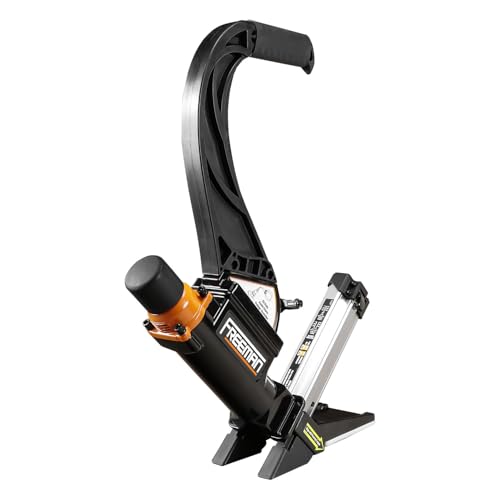
4. Lightest weight 2-in-1: Freeman P50LSLW
Pros
- Lightweight design
- 2-in-1 nailer/stapler
- Includes a flooring mallet
Cons
- Compatible with a narrower range of floor thicknesses (5/8" to 3/4")
The Freeman P50LSLW is a lightweight pneumatic 2-in-1 flooring nailer/stapler. It drives 16-gauge L-cleats and 15.5-gauge 1/2-inch crown staples from 1-1/2 to 2 inches for installing 5/8-inch to 3/4-inch tongue and groove hardwood. The listing states it is 2 pounds lighter than comparable nailers, with a high-density plastic handle and light strike bumper.
Best for: DIYers and installers who want to minimize arm fatigue during long projects.
5. 3-in-1 with semi-quick jam release: Freeman PFL618BR

Pros
- 3-in-1 design
- Semi-quick jam release feature
- For 1/2" to 3/4" flooring
Cons
- The listing does not mention if base plates are included or interchangeable
This Freeman tool is a pneumatic 3-in-1 flooring nailer/stapler for 16-gauge T-cleats, L-cleats, and 15.5-gauge staples from 1-1/2 to 2 inches. It is for installing 1/2-inch to 3/4-inch tongue and groove hardwood flooring. It features a semi-quick jam release mechanism for faster clearing of jammed fasteners and a durable aluminum body.
Best for: Installers who appreciate easy jam clearing in a multi-fastener tool.
6. Best with a 7-year warranty: Carpenter Air Tools CFL5016

Pros
- 7-year warranty
- 3-in-1 nailer and stapler
- Includes two non-marring base plates
Cons
- The listing does not specify the fastener gauges it accepts
The Carpenter Air Tools CFL5016 is a pneumatic 3-in-1 flooring nailer and stapler compatible with 1/2-inch to 3/4-inch solid tongue and groove wood flooring. It includes two non-marring base plates for different floor thicknesses. It has a durable, heavy-duty heat-treated aluminum housing and a lightweight design to reduce installer fatigue.
Best for: Buyers who prioritize a long manufacturer warranty for their tools.
Best Professional-Grade L-Cleat Nailers
Models designed for professional installation, often featuring advanced adjustable bases for precise fit.
7. Professional 18-gauge with Flex Power Roller: Powernail 50P2FLEXPRXLW

Pros
- Adjustable Flex Power Roller base eliminates need for shims
- For 18-gauge L-cleats
- Installs a wide range of floor thicknesses
Cons
- The listing does not mention if a mallet is included
- For L-cleats only, not a 2-in-1 tool
This Powernail pneumatic nailer is a professional-grade, mallet-actuated tool for 18-gauge L-cleats. It is compatible with L-cleat nails from 1-inch to 1-3/4 inches long and is for installing tongue and groove flooring from 3/8-inch to 3/4-inch thick. Its key feature is an adjustable Flex Power Roller base designed to fine-tune to various wood profiles without shims.
Best for: Professional installers working with a range of hardwood and engineered flooring thicknesses.
8. Best trigger-pull operation: Powernail 50F

Pros
- Trigger-pull actuation (no mallet needed)
- Patented Flex adjustable foot
- For 18-gauge L-cleats
Cons
- For L-cleats only, not a 2-in-1 tool
The Powernail 50F is a pneumatic, trigger-pull actuated 18-gauge L-cleat flooring nailer. It is for installing tongue and groove solid hardwood, bamboo, and engineered flooring from 3/8-inch to 3/4-inch thick, using collated L-cleats from 1-inch to 1-3/4 inches. It features a patented lever-actuated Flex adjustable foot made from no-mar material.
Best for: Installers who prefer trigger-pull actuation over using a mallet.
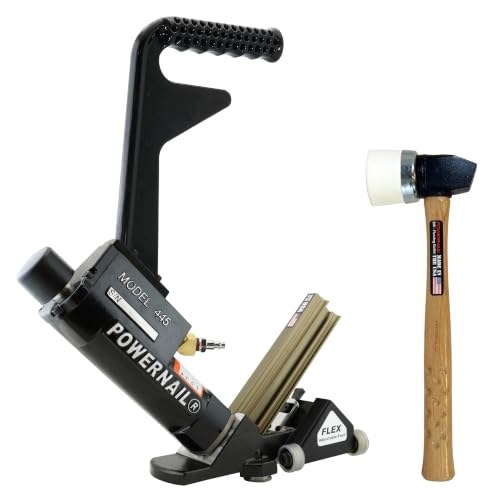
9. Professional 16-gauge for thick hardwood: Powernail 445PRXLSW
Pros
- 16-gauge L-cleats for thicker hardwood
- Adjustable Flex Power Roller base
- Professional-grade construction
Cons
- The listing does not mention if a mallet is included
- For specific thicker flooring sizes only
This Powernail tool is a professional-grade, mallet-actuated 16-gauge L-cleat flooring nailer designed for solid hardwood flooring. It uses 16-gauge nails from 1-1/2 inches to 2 inches long and is for installing 5/8-inch, 3/4-inch, and 33/32-inch tongue and groove hardwood. It includes an adjustable Flex Power Roller base.
Best for: Installing thicker, solid hardwood flooring species like oak, cherry, and walnut.
10. For dense and exotic hardwoods: Freeman PF18GLCN

Pros
- Designed for dense/exotic hardwoods
- Ergonomic extended reach handle
- Includes a flooring mallet
Cons
- For 18-gauge L-cleats only
The Freeman PF18GLCN is a pneumatic 18-gauge L-cleat flooring nailer designed for dense and exotic hardwoods like strand woven bamboo and teak, as well as engineered flooring. It uses 18-gauge glue collated L-cleats from 1-1/4 to 1-3/4 inches for flooring from 3/8-inch to 3/4-inch thick. It has an ergonomic extended reach handle and light strike bumper.
Best for: Installing dense, exotic hardwoods or engineered flooring.
Best Ergonomic & Lightweight Designs
Nailers focused on reducing user fatigue with lighter construction or specialized handle designs.
11. Best dual-handle ergonomic design: NuMax S18GLCNDH

Pros
- Ergonomic dual handle design
- Lightweight aluminum body
- Includes flooring mallet and base plates
Cons
- For 18-gauge L-cleats only
The NuMax S18GLCNDH is a pneumatic 18-gauge L-cleat flooring nailer with a dual handle design. It uses 18-gauge glue collated L-cleats from 1-1/4 to 1-3/4 inches for most tongue and groove hardwood flooring. The dual handles are designed to reduce fatigue by allowing installation from a kneeling or standing position.
Best for: Installers seeking maximum comfort and flexibility with a dual-handle grip.
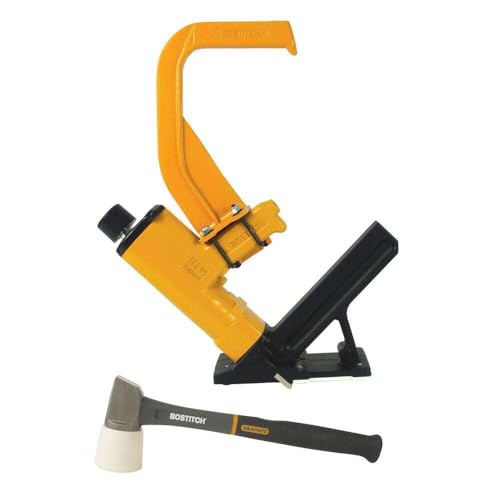
12. Classic mallet-actuated model: Bostitch MIIIFN
Pros
- Kit includes nailer and graphite mallet
- Extra-wide composite base plate included
- Long reach handle for comfort
Cons
- The listing does not specify the gauge or type of fastener it uses
This classic Bostitch pneumatic flooring nailer uses a high-speed, mallet-actuated operation. It includes an extra-wide composite base plate for stability, plus separate 1/2-inch and 3/4-inch base plates. It has a long reach handle for improved comfort and control, with a short handle noted as optional. The kit includes a graphite mallet.
Best for: Traditional mallet-actuated installation with the stability of a wide base plate.
How to choose a flooring nailer
Selecting the best flooring nailer depends on your project’s specific requirements. The primary decision is between a nailer that only drives L-cleat nails and a 2-in-1 or 3-in-1 model that can also drive staples. Cleats offer strong holding power for solid hardwood, while staples can be suitable for engineered floors. Check the tool’s listed compatible flooring thickness—typically ranging from 3/8-inch to 3/4-inch—to ensure it matches your material.
Consider the actuation method: mallet-actuated tools require striking with a mallet to drive each fastener, while trigger-pull models use a button or lever. Mallet-actuated is traditional and common, but trigger-pull can be faster and less physically demanding. Also, look for features like adjustable bases (like Powernail’s Flex system) that fine-tune to floor thickness without shims, and ergonomic handles to reduce fatigue.
Always follow the manufacturer’s manual for safe operation, including proper air pressure settings and wearing eye protection. You’ll also need an air compressor, hose, and the correct collated fasteners. For more on the full suite of tools needed, see our guide to Flooring Installation Tools.
What to look for
- Fastener Compatibility: Choose between L-cleat only, or a 2-in-1 model for cleats and staples.
- Floor Thickness Range: Ensure the tool’s listed compatible thickness matches your flooring material.
- Actuation Method: Decide between traditional mallet-actuated or convenient trigger-pull operation.
- Weight & Ergonomics: Lighter tools and comfortable grips reduce fatigue on large projects.
FAQ
What’s the difference between a flooring nailer and a stapler?
Flooring nailers drive L-shaped cleat nails, which provide strong holding power ideal for solid hardwood. Flooring staplers drive wide-crown staples. Some tools are 2-in-1 or 3-in-1 combos that can do both. The best choice depends on your flooring type and manufacturer recommendations.
What does “mallet-actuated” mean?
A mallet-actuated flooring nailer requires you to strike a bumper on the tool with a rubber mallet to drive each fastener. This traditional method provides good control and ensures the fastener is fully seated. The alternative is a trigger-pull or push-button actuation, which is powered by the tool’s pneumatic system alone.
Can I use a flooring nailer on engineered hardwood?
Many flooring nailers listed are compatible with engineered hardwood, but you must check the manufacturer’s specifications. Tools listed for “tongue and groove hardwood and engineered flooring” are typically suitable. Always consult your flooring manufacturer’s installation guidelines first.
What else do I need to use a pneumatic flooring nailer?
You will need an air compressor capable of delivering the required pressure (check the tool’s manual), a compatible air hose, a rubber mallet (for mallet-actuated models), safety glasses, and the correct collated fasteners (nails or staples) in the gauge and length specified by the tool.
References
- Amazon product listings and manufacturer specifications (accessed October 2026)
- Occupational Safety and Health Administration (OSHA). Eye and Face Protection. https://www.osha.gov/eye-face-protection