
 By Emily Parker
Updated November 2026
Choosing a membrane for tile installation is one of the decisions that quietly determines whether a tile floor or shower lasts ten years or ten months. A membrane sits between the substrate and the tile, and depending on the product it can isolate cracks, block moisture, or both. This guide compares seven membrane products on the criteria that matter most to DIY renovators: how the membrane bonds to the substrate, whether it handles moisture or only crack isolation, how easy the roll is to cut and lay, how well it works with thin-set mortar, and how much owners report it simplifies the job. The list is based on published specifications, brand reputation and common owner feedback patterns. None of these products were tested in our own shop.
Our top picks at a glance
- 1
 TOP CHOICEBest overallSchluter DITRA-PS Roll Peel & Stick Uncoupling MembraneView on Amazon
- 2
 TOP CHOICEBest for shower floorsWaterproof Decoupling Membrane Roll, HDPE Vapor BarrierView on Amazon
- 3
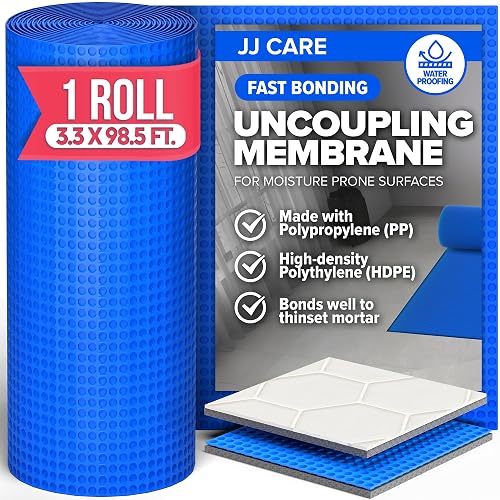 TOP CHOICEBest for large open floorsUncoupling Membrane for Tile Floor, 3.3 ft x 98.5 ft RollView on Amazon
- 4
 Best for wet areas and saunasProfessional Thick Uncoupling Polyethylene Tile Underlayment MembraneView on Amazon
- 5
 Best for crack preventionUncoupling Membrane for Crack Prevention Anti Fracture Flooring UnderlaymentView on Amazon
- 6
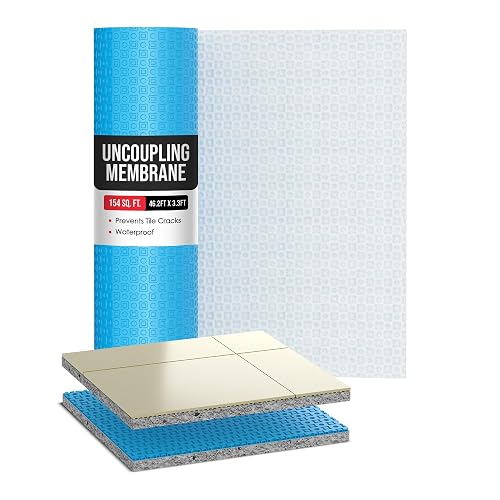 Best budget pickHouseables Tile Membrane, Flooring UnderlaymentView on Amazon
- 7
 Best for small wall and niche workHDPE membrane for tile shower walls, floors, bathrooms and saunasView on Amazon
Our Top Picks
Quick Comparison
| Product | Best for | Key feature |
|---|---|---|
| Schluter DITRA-PS Roll Peel & Stick Uncoupling Membrane | Best overall | Pressure-sensitive backing for concrete, OSB and plywood |
| Waterproof Decoupling Membrane Roll, HDPE Vapor Barrier | Best for shower floors | HDPE vapor barrier with anti-fracture function |
| Uncoupling Membrane for Tile Floor, 98.5 ft roll | Best for large open floors | Long continuous roll for fewer seams |
| Professional Thick Uncoupling Polyethylene Tile Underlayment | Best for wet areas and saunas | 23.6 mil thickness |
| Uncoupling Membrane for Crack Prevention | Best for crack prevention | Anti-fracture flooring underlayment, 4.34 mm |
| Houseables Tile Membrane | Best budget pick | 1/8″ thick roll covering 150 sq ft |
| HDPE membrane for tile shower walls | Best for small wall and niche work | 5 in x 50 ft strip, bonds with thin-set |
Schluter DITRA-PS Roll Peel & Stick Uncoupling Membrane
Schluter DITRA-PS Roll Peel & Stick Uncoupling Membrane – for Concrete, OSB, and Plywood – Pressure-Sensitive Adhesive, 110 Square Feet – DITRAPS110
Best for: Best overall
This is the right pick for renovators who want the membrane bonded in place before any thin-set goes down, especially over concrete, OSB or plywood where slipping and wrinkling during mortar work are common frustrations. The peel-and-stick backing holds the sheet to the substrate, which many DIYers find makes a difference on sloped or awkward surfaces.
Key specs
- Roll coverage: 110 square feet
- Pressure-sensitive adhesive backing
- Designed for concrete, OSB and plywood substrates
Pros
- Adhesive backing keeps the membrane from shifting during setting
- Well-known brand with extensive installation documentation
- Works on several common subfloor types
Cons
- Higher-end option relative to the rest of this list
- Peel-and-stick seams require careful alignment on first contact
Bottom line: Pick this if the subfloor is concrete, OSB or plywood and you want a membrane that stays put without extra fasteners.
Waterproof Decoupling Membrane Roll, HDPE Vapor Barrier
Waterproof Decoupling Membrane Roll, HDPE Vapor Barrier, Anti-Fracture Flooring Underlayment for Shower Bathroom 153 Sqft Uncoupling Membrane, 1/8'' Tile Underlayment, 3.3 × 46 FT
Best for: Best for shower floors
Designed around bathroom and shower use, this roll pairs an HDPE vapor barrier with anti-fracture decoupling. It suits renovators tiling a shower pan or bathroom floor who want moisture protection and crack isolation in one sheet.
Key specs
- Roll size listed at 3.3 x 46 ft, about 153 sq ft
- HDPE vapor barrier construction
- Stated thickness of 1/8 inch
Pros
- Combines waterproofing and decoupling in one layer
- Roll length reduces seams on medium bathroom floors
- Marketed specifically for shower and bath applications
Cons
- Seam tape and corner treatments are still needed for a complete waterproof system
- Stiffness can make tight corners harder to fit
Bottom line: A strong choice for a bathroom floor or shower pan where moisture is the primary concern.
Uncoupling Membrane for Tile Floor, 3.3 ft x 98.5 ft Roll
Uncoupling Membrane for Tile Floor, 3.3 ft x 98.5 ft Roll (323 Sq Ft), Blue Waterproof Tile Underlayment Membrane for Crack Isolation, Tile Underlayment and Tile Membrane
Best for: Best for large open floors
Owners tiling kitchens, entryways or open-plan living areas often find the main cost of time is seaming. This very long roll reduces the number of joints across a big floor, which is the practical advantage of this product.
Key specs
- Roll size: 3.3 ft x 98.5 ft (about 323 sq ft)
- Blue colored polyethylene-style sheet
- Marketed for crack isolation and waterproofing
Pros
- Very large coverage per roll
- Fewer seams across big open floors
- Blue color makes it easier to see where the membrane has been laid
Cons
- A 98-foot roll is heavy and awkward to handle in small rooms
- Seams still need proper overlap and sealing
Bottom line: Best for large floors where a long, continuous sheet will save time and reduce joints.
Professional Thick Uncoupling Polyethylene Tile Underlayment Membrane
Professional Thick Uncoupling Polyethylene Tile Underlayment Membrane for Bathroom, Kitchen, Saunas and Wet Areas Waterproofing Membrane for Shower, 3.3Ft x 33Ft (108 Sq Ft), 23.6 Mils
Best for: Best for wet areas and saunas
The heavier gauge of this polyethylene membrane suits rooms that see standing water or steam, such as saunas, showers and wet bathroom floors. Renovators who expect long-term moisture exposure often prefer a thicker sheet.
Key specs
- Thickness: 23.6 mils
- Roll size: 3.3 ft x 33 ft (about 108 sq ft)
- Polyethylene construction
Pros
- Thick gauge adds puncture resistance during installation
- Listed for bathroom, kitchen, sauna and wet area use
- Manageable roll size for mid-sized rooms
Cons
- Thicker sheets add height to the finished floor, which can affect door clearance
- Requires careful edge detailing at walls and drains
Bottom line: Choose this for steam-prone or heavily wet rooms where a thicker membrane is worth the added build-up.
Uncoupling Membrane for Crack Prevention Anti Fracture Flooring Underlayment
Uncoupling Membrane for Crack Prevention Anti Fracture Flooring Underlayment 54 Sqft Uncoupling Membrane for Tile, 4.34mm Thick Waterproofing Membrane
Best for: Best for crack prevention
This product is aimed at floors where movement or cracking in the substrate is the main concern, such as older houses or floors over wood framing. Its stated purpose is to decouple the tile from the substrate so surface cracks do not telegraph through the tile.
Key specs
- Coverage: 54 sq ft
- Stated thickness: 4.34 mm
- Marketed as both uncoupling and waterproofing
Pros
- Clear focus on anti-fracture performance
- Thicker profile for added isolation
- Small roll size suits a single bathroom or hallway
Cons
- Coverage is limited, so larger rooms need multiple rolls
- Thicker profile raises the finished floor height
Bottom line: A focused option for crack-prone floors and smaller areas where coverage needs are modest.
Houseables Tile Membrane, Flooring Underlayment
Houseables Tile Membrane, Flooring Underlayment, For Decoupling, Anti Fracture, Waterproof, Anti Crack, Vapor, 1/8" Thick Uncoupling Membrane, Tile Underlayment, Floor, 3.3' x 46.2' / 150 Sq Ft
Best for: Best budget pick
For renovators covering a moderate floor area who want a simple uncoupling and waterproof sheet without a premium brand, this roll offers a practical starting point. Budget choices like this suit first-time tilers, though the membrane still needs proper seaming.
Key specs
- Roll size: 3.3 ft x 46.2 ft (about 150 sq ft)
- Thickness: 1/8 inch
- Marketed for decoupling, anti-fracture and vapor protection
Pros
- Generous coverage for the price tier
- Covers several functions in one sheet
- Easy to find in typical flooring sections
Cons
- Brand-specific installation guidance is less extensive than premium lines
- Owners often recommend a compatible seam tape for best results
Bottom line: A sensible choice for DIY renovators working on a standard floor who want solid coverage without paying for premium features.
HDPE membrane for tile shower walls, floors, bathrooms and saunas
HDPE membrane for tile shower walls, floors, bathrooms and saunas; bonds with thin-set mortar for reliable installation Professional Waterproof Membrane for Shower,5In x 50Ft(21 Sq Ft)
Best for: Best for small wall and niche work
The narrow 5-inch width makes this membrane better suited to seam strips, niches, curbs and corners than to full floors. It is a good companion product for renovators who need targeted waterproofing around a shower.
Key specs
- Strip size: 5 in x 50 ft (about 21 sq ft)
- HDPE construction
- Designed to bond with thin-set mortar
Pros
- Useful for detailing corners, niches and seams
- Bonds with thin-set for a mechanical grip
- Long strip length for continuous detailing
Cons
- Too narrow to serve as a full floor membrane
- Coverage is limited, so it is a supplement rather than a main sheet
Bottom line: Pick this for targeted waterproofing around shower corners, niches and curbs rather than as a primary floor membrane.
Buying Guide
Decoupling versus waterproofing
Some membranes are mainly decoupling layers that let the substrate move without cracking the tile. Others focus on waterproofing or vapor control. Many products do both, but check the manufacturer’s stated purpose before you buy. A floor over a cracking slab needs decoupling most; a shower pan needs waterproofing most.
Good picks for this: Schluter DITRA-PS Roll Peel & Stick Uncoupling Membrane, Uncoupling Membrane for Crack Prevention Anti Fracture Flooring Underlayment
Roll size and coverage
Measure the room in square feet and add about 10 percent for cutting waste and overlaps. Long rolls reduce seams on large floors, while small strips work for niches and curbs. Wide rolls mean fewer seams but can be harder to maneuver in a small bathroom.
Good picks for this: Uncoupling Membrane for Tile Floor, 3.3 ft x 98.5 ft Roll, Houseables Tile Membrane
Thickness and floor height
Membrane thickness adds to your finished floor height. Check the stated thickness against door clearances, transitions to adjacent flooring and the height of toilet flanges or drain assemblies. Thicker sheets offer more isolation but can make transitions harder to fit.
Good picks for this: Professional Thick Uncoupling Polyethylene Tile Underlayment Membrane, Uncoupling Membrane for Crack Prevention
Substrate compatibility
Confirm what the membrane is designed to bond to. Peel-and-stick products are made for specific substrates like concrete, OSB and plywood. Loose-laid sheets rely on thin-set mortar to hold them in place. Check the substrate before purchase so the adhesive or mortar will bond correctly.
Good picks for this: Schluter DITRA-PS Roll Peel & Stick Uncoupling Membrane, HDPE membrane for tile shower walls
Wet area use
Showers, saunas and steam rooms expose membranes to continuous moisture. Look for products that list wet area or bathroom use and that are constructed from polyethylene or HDPE, which resist water absorption. Remember that the membrane is only part of the system; seams, corners and drains need proper detailing.
Good picks for this: Waterproof Decoupling Membrane Roll, HDPE Vapor Barrier, Professional Thick Uncoupling Polyethylene Tile Underlayment Membrane
Seam and corner treatment
Most membranes need seam tape or a compatible sealant at overlaps, and corners usually need pre-formed or cut pieces. Plan for these accessories before you start. Owners frequently report that poorly sealed seams cause more trouble than the membrane itself, so budget extra time for detailing.
Good picks for this: HDPE membrane for tile shower walls, Waterproof Decoupling Membrane Roll, HDPE Vapor Barrier
Ease of handling
Long rolls are heavy and can be difficult to unroll in tight rooms. Consider whether you can comfortably carry and position the roll alone, and whether you have a helper for the larger sizes. Lighter-weight rolls are easier for single-person jobs.
Good picks for this: Houseables Tile Membrane, Uncoupling Membrane for Crack Prevention Anti Fracture Flooring Underlayment
FAQ
What is a membrane for tile installation?
A membrane for tile installation is a sheet layer placed between the subfloor or substrate and the tile. Depending on the product, it isolates cracks, blocks moisture, or manages vapor. It is bonded with thin-set mortar or a pressure-sensitive adhesive.
Do I need a membrane under every tile floor?
Not always. Membranes are most useful over cracking concrete, wood subfloors that flex, and wet areas like showers. For stable, well-bonded substrates on the ground floor, a membrane may not be required, though many renovators use one for added protection.
Can I install a membrane myself?
Yes, many DIY renovators install membranes successfully. The key steps are a clean, dry substrate, correct thin-set coverage, careful seam overlaps and proper corner detailing. For complex wet areas or structural concerns, consult a professional tile installer or a licensed contractor.
Which membrane type is best for a shower floor?
Shower floors benefit from a membrane with waterproofing and decoupling properties, such as an HDPE vapor barrier sheet paired with proper seam and corner sealing. Confirm the product is designed for wet areas before you buy.
How do I know how much membrane to buy?
Measure the floor or wall area in square feet, add about 10 percent for waste and overlaps, and choose the roll or strip size that covers the total with the fewest seams.
Can a membrane be used over an existing tile floor?
This depends on the condition of the existing tile, its bond to the substrate and the floor height that results. Manufacturers generally advise removing loose or damaged tile first. Consult a professional before layering over existing finishes.
Conclusion
For most DIY renovators, the Schluter DITRA-PS peel-and-stick membrane is the safest all-around choice, especially over concrete, OSB or plywood. Shower and bathroom floors call for a membrane with an HDPE vapor barrier, so the waterproof decoupling roll is a good fit there. Large open rooms benefit from the long roll that reduces seams, while the thick polyethylene sheet suits steam-prone or heavily wet areas. Crack-prone floors point toward the anti-fracture underlayment, and the Houseables roll is a practical budget option. Use the narrow HDPE strip for corners, niches and curbs rather than as a main floor sheet. Always check the substrate, the stated purpose, the floor height and the seam requirements before you buy, and consult a professional tile installer for complex or structural situations.
Sources
- Building science and moisture research relevant to waterproofing and vapor control in wall and floor assemblies (nist.gov)
- Tile Council of North America installation standards and guidance on membranes and substrate preparation
- Consumer safety guidance on home renovation and working safely with tools and materials (cpsc.gov)
Related reading
- 7 Best Waterproof Membranes for Tile Installation Options (2026)
- 5 Best Waterproofing Membranes for Tile Installation (2026)
- Yard Drain Tile Installation: A Step-by-Step Guide for Wet Lawns
About Emily Parker
Emily Parker is part of our editorial team and reviews and edits our DIY home renovation guides, checking product details against manufacturer specifications and owner feedback.


