By Claire Russell
As an Amazon Associate I earn from qualifying purchases. This page may contain affiliate links.
Updated November 2026
Patching a drywall hole is the easy part. Getting the repair to disappear under paint is where most DIY jobs go wrong, and the right primer for drywall repair is what decides whether your patch blends in or shows up as a flat, flashing rectangle on the wall. This list compares seven primers across the needs that actually matter: how well they seal joint compound, how much they hide stains, how they handle bare and previously painted surfaces, and how forgiving they are in a small room with limited ventilation. We picked these based on manufacturer specifications, brand reputation for drywall and patch work, and the patterns owners tend to report, not on any hands-on testing of our own.
Our top picks at a glance
- 1
 TOP CHOICEBest overallZinsser Bulls Eye 1-2-3 Plus Spray Primer, White, 13ozView on Amazon
- 2
 TOP CHOICEBest for small patches and spackle hybridsGORILLA High Performance Wall Repair, 16 oz TubView on Amazon
- 3
 TOP CHOICEBest budget pickDRAWTITE Drywall Primer and Sealer, White, 1 GallonView on Amazon
- 4
 Best for stain blocking on problem spotsZinsser B-I-N Shellac Primer-Sealer, 26ozView on Amazon
- 5
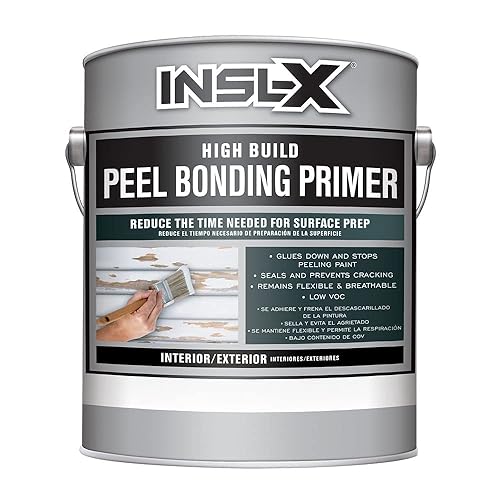 Best for glossy or previously painted wallsINSL-X High Build Peel Bonding Primer, White, 1 GallonView on Amazon
- 6
 Best for nail holes and nicks3M High Strength Small Hole Repair, 32 ozView on Amazon
- 7
 Best all-surface primerINSL-X Prime All Multi-Surface Primer, WhiteView on Amazon
Our Top Picks
Quick Comparison
| Product | Best for | Key feature |
|---|---|---|
| Zinsser Bulls Eye 1-2-3 Plus Spray Primer, White, 13oz | Overall drywall patch priming | Spray application with high hide |
| GORILLA High Performance Wall Repair, 16 oz Tub | Small patches and spackle hybrid work | Primer and spackle in one, color-change formula |
| DRAWTITE Drywall Primer and Sealer, White, 1 Gallon | Budget-conscious full-wall priming | Sealer for new drywall and wallpaper repair |
| Zinsser B-I-N Shellac Primer-Sealer, 26oz | Stain blocking on problem areas | Shellac-based stain and odor blocking |
| INSL-X High Build Peel Bonding Primer, White, 1 Gallon | Glossy or previously painted surfaces | High-build peel-bonding adhesion |
| 3M High Strength Small Hole Repair, 32 oz | Nail holes, nicks, and small voids | Low-shrink formula for small repairs |
| INSL-X Prime All Multi-Surface Primer, White | Mixed surfaces in one room | Multi-surface bonding |
Zinsser Bulls Eye 1-2-3 Plus Spray Primer, White, 13oz
Bulls Eye 1-2-3 Plus spray primer, 13oz, White. High-hide stain-blocking spray primer for all surfaces; bonds without. Zinsser Bulls Eye 1-2-3 Plus Spray Primer, White, 13oz
Best for: Overall drywall patch priming and fast, even coverage on small to medium repairs.
This is a good fit for homeowners who want one reliable primer to cover joint compound, feathered patches, and bare drywall across a room without rolling and cutting in. The aerosol format suits textured patches and tight corners where a roller leaves lap marks.
Key specs
- Size: 13 oz aerosol can
- Color: White
- Designed as a high-hide, stain-blocking spray primer for interior and exterior surfaces
- Manufacturer states it bonds to a wide range of surfaces without extensive surface prep
Pros
- Even coverage on textured and feathered patches
- Good hide for quick touch-ups before finish paint
- No roller or tray cleanup for small jobs
Cons
- Cost per square foot is higher than rolled primer for large areas
- Requires masking and good ventilation to avoid overspray
Bottom line: Pick this if you want a dependable spray primer for patches and small repairs and you do not mind masking off the room.
GORILLA High Performance Wall Repair, 16 oz Tub
Applies Purple, Dries White, Shrink & Crack Resistant, Spackling and Primer in One, Heavy-Duty Indoor and Outdoor Use GORILLA High Performance Wall Repair, 16 oz Tub, Color Change Formula
Best for: Small patches and spackle hybrid work where you want filler and primer in one step.
Homeowners who fill nail holes, dings, and shallow gouges will appreciate a product that doubles as spackle and primer. The color-change formula makes it easier to see where you have coated, which helps when working on small, scattered repairs.
Key specs
- Size: 16 oz tub
- Formula marketed as applying purple and drying white
- Manufacturer describes it as shrink and crack resistant
- Labeled for heavy-duty indoor and outdoor use
Pros
- Fills and primes in a single pass, reducing steps on small repairs
- Color change shows coverage clearly
- Labeled shrink and crack resistant
Cons
- Not economical for covering large wall areas
- Deeper holes may still need a second application to build up level
Bottom line: Best for homeowners doing lots of small spot repairs who want to save a step rather than prime full walls.
DRAWTITE Drywall Primer and Sealer, White, 1 Gallon
DRAWTITE Drywall Primer & Sealer, Wallpaper Repair (White) 1 Gallon
Best for: Budget-conscious full-wall priming and sealing new or patched drywall before paint.
If you are priming several patched walls or a new ceiling, a gallon-size primer-sealer keeps material costs in check. It is a sensible pick for a basement or rental-type project where the finish paint matters less than uniform sealing.
Key specs
- Size: 1 gallon
- Color: White
- Designed as a drywall primer and sealer, also marketed for wallpaper repair
Pros
- Good value for larger areas
- Seals porous new drywall and joint compound evenly
- Works in a roller-and-brush workflow
Cons
- Owners often report it needs careful coat thickness to avoid visible sheen differences
- Less specialized for heavy stain blocking than shellac-based options
Bottom line: A practical choice for sealing large patched areas on a budget, especially before a standard latex topcoat.
Zinsser B-I-N Shellac Primer-Sealer, 26oz
26oz primer-sealer. Blocks stains & seals surfaces with superior adhesion for interior/exterior wood, drywall & metal. Zinsser B-I-N Shellac Primer-Sealer
Best for: Stain blocking on problem spots such as water marks, smoke, and tannin bleed through a patch.
Shellac primers are a long-standing choice when stains threaten to bleed through fresh paint. This one suits repairs near old water damage, ceiling patches with brown tinting, or any area where you need a stain barrier rather than just a bonding coat.
Key specs
- Size: 26 oz can
- Shellac-based primer-sealer
- Manufacturer states it blocks stains and seals surfaces with strong adhesion on wood, drywall, and metal
Pros
- Strong stain and odor blocking
- Dries quickly for recoat scheduling
- Bonds well to difficult surfaces
Cons
- Requires mineral spirits or alcohol cleanup depending on the formula, so check the can
- Stronger odor during application, so ventilation is important
Bottom line: The right pick when a stain is the real problem, not just a bare patch.
INSL-X High Build Peel Bonding Primer, White, 1 Gallon
INSL-X High Build Peel Bonding Primer BP110009A-01, White, 1 Gallon (Pack of 1)
Best for: Glossy or previously painted walls where the patch needs to grip without peeling.
When you are repairing drywall on a glossy enamel wall or a surface that has seen several paint layers, adhesion is the main risk. A peel-bonding primer is designed to hold onto slick surfaces and build a thicker film to help the patch stay put.
Key specs
- Size: 1 gallon
- Color: White
- Marketed as a high-build peel-bonding primer
Pros
- Strong adhesion to glossy and previously painted surfaces
- High-build film helps level minor texture differences
- Useful for reducing peel risk on repair areas
Cons
- Thick application can take longer to dry between coats
- Can be more than needed for bare, new drywall
Bottom line: Choose this for repairs on slick or repainted walls where adhesion is the top concern.
3M High Strength Small Hole Repair, 32 oz
Small Hole Repair Primer Enhanced Spackling Compound, Easy Repair For Nicks & Nail Holes, No Shrinking, Cracking or Sagging 3M High Strength Small Hole Repair, 32 oz
Best for: Nail holes, nicks, and small voids where you need a filler that will not crack or sag.
This is a filler-first product rather than a primer, but it earns a place here because many small repairs end with a primer coat over the filled spot. It suits anyone whose repairs are mostly small holes rather than large patches.
Key specs
- Size: 32 oz tub
- Enhanced spackling compound for small hole repair
- Manufacturer states it is low-shrink and resists cracking and sagging
Pros
- Fills nail holes and nicks cleanly
- Low-shrink formula reduces second coats
- Sands smooth for priming
Cons
- Not a primer, so a separate primer coat is still required
- Less suited to wide cracks or large holes
Bottom line: Pick this for the filling step on small holes, then prime over it with any of the primers above.
INSL-X Prime All Multi-Surface Primer, White
INSL-X AP100009A-04 Prime All Multi-Surface Primer, White
Best for: Mixed surfaces in one room, such as drywall, trim, and wood, where you want one primer.
Homeowners repairing drywall next to wood trim or metal fixtures often want to avoid buying several primers. A multi-surface product simplifies the shopping list and works across the room.
Key specs
- Color: White
- Marketed as a multi-surface primer for interior use
Pros
- One primer across drywall and trim
- Simplifies purchasing for mixed-surface rooms
- Good bonding on a range of substrates
Cons
- May not match specialized shellac or peel-bonding primers for severe stains or glossy paint
- Owners sometimes report needing two coats over heavy patches
Bottom line: A convenient all-around choice when one primer needs to cover drywall and other surfaces in the same space.
Buying Guide
Primer type: oil-based, water-based, shellac, or spray
Water-based latex primers suit most interior drywall repairs because they dry fast, clean up with water, and work well under latex paint. Oil-based and shellac primers are stronger stain blockers and bond to difficult surfaces, but they need solvent cleanup and more ventilation. Spray primers are fast on textured patches. For a deeper look at oil-based options, see 7 Best Oil Based Primers for Drywall Repair Options Compared (2026).
Good picks for this: Zinsser B-I-N Shellac Primer-Sealer, DRAWTITE Drywall Primer and Sealer
Stain blocking and hide
If the patch sits near water damage, smoke, or old tannin stains, look for a primer marketed as stain blocking. A standard drywall primer may not stop brown or yellow tones from showing through a light finish coat. Spray and shellac formats usually offer the strongest hide on problem spots.
Good picks for this: Zinsser Bulls Eye 1-2-3 Plus Spray Primer, Zinsser B-I-N Shellac Primer-Sealer
Surface type: bare drywall, joint compound, or painted walls
Bare joint compound is porous and needs a sealer to avoid flashing, where the patch looks dull next to the surrounding wall. Glossy or previously painted surfaces need adhesion, not just sealing. Match the primer to the surface rather than buying one product for everything. Our guide to Sheetrock and Drywall Repair: A Step-by-Step Guide for Beginners covers how surface prep affects primer choice.
Good picks for this: INSL-X High Build Peel Bonding Primer, DRAWTITE Drywall Primer and Sealer
Size and coverage
Estimate primer by area, not by number of patches. Manufacturers typically publish coverage per gallon, and porous joint compound can absorb more than painted drywall. For a few small patches, a 13 oz aerosol or a 16 oz tub is plenty. For a whole room or ceiling, a gallon is the practical size. Measure the wall, subtract windows and doors, and plan for two coats over heavy patch work.
Good picks for this: DRAWTITE Drywall Primer and Sealer, Zinsser Bulls Eye 1-2-3 Plus Spray Primer
Application method: roller, brush, or spray
Rollers handle large flat areas and keep coats even. Brushes are better for corners and edges. Aerosol sprays are fast for textured patches, but they need masking and ventilation. Choose the method that matches the size of the repair and the surrounding area you want to protect.
Good picks for this: Zinsser Bulls Eye 1-2-3 Plus Spray Primer, INSL-X Prime All Multi-Surface Primer
Compatibility with the finish paint
Check that your primer is compatible with latex or oil-based topcoats. A water-based primer under an oil-based paint may need extra adhesion steps, and some shellac primers do not play well with certain topcoats without a barrier coat. Read the label, and when in doubt, follow the topcoat manufacturer’s recommended primer.
Good picks for this: INSL-X Prime All Multi-Surface Primer, INSL-X High Build Peel Bonding Primer
Combined filler and primer products
Products that fill and prime in one step save time on small repairs, but they are not a full replacement for a dedicated primer on large patches. Use a filler-primer for nail holes and small dings, then prime the whole repair area with a standard product before painting.
Good picks for this: GORILLA High Performance Wall Repair, 3M High Strength Small Hole Repair
FAQ
Do I need primer over joint compound?
Yes. Joint compound is porous and absorbs paint unevenly, which causes flashing where the patch looks dull or different in sheen. A primer or sealer evens out the absorption so the finish coat looks uniform.
Can I use spray primer on drywall patches?
Yes, spray primers are a practical choice for textured patches and small repairs. Mask the surrounding area, work in a ventilated room, and apply thin coats to avoid drips.
What is the difference between primer and sealer?
Primer is designed to bond to the surface and improve paint adhesion. Sealer is designed to block porosity and absorption. Many drywall products combine both functions, which is why the terms often appear together on labels.
How many coats of primer does a drywall repair need?
Most patch repairs take one coat of primer, sometimes two over heavy or deep patches. Check the manufacturer’s guidance and sand lightly between coats if the surface feels rough.
Can I prime drywall without sanding first?
You should sand joint compound smooth and remove dust before priming. Priming over rough or dusty patches can trap debris and create a bumpy finish. A damp cloth or a vacuum with a brush attachment helps.
Do I need primer if I am using paint with primer built in?
Paint-and-primer combinations can work well on lightly patched walls, but they are less effective on large repairs, stains, or bare joint compound. For best results on patches, use a dedicated primer first, then paint.
Is primer safe to use in a bedroom or closed room?
Many primers, especially oil-based and shellac types, release odors and solvent vapors. Ventilate the room, use a fan, and follow the label’s safety instructions. If you have respiratory concerns or a sensitive household member, consult a professional before working in an enclosed space.
Conclusion
For most DIY drywall repairs, the choice comes down to the problem you are solving. Zinsser Bulls Eye 1-2-3 Plus Spray Primer is a strong all-round pick for small and medium patches. GORILLA High Performance Wall Repair suits homeowners who want to fill and prime small spots in one step. DRAWTITE Drywall Primer and Sealer makes sense for larger areas on a budget. Zinsser B-I-N Shellac Primer-Sealer is the right tool when stains threaten to bleed through. INSL-X High Build Peel Bonding Primer fits glossy or repainted walls, 3M High Strength Small Hole Repair handles the filling step on nail holes, and INSL-X Prime All Multi-Surface Primer is a convenient choice for rooms with mixed surfaces. Match the primer to the surface, the stain risk, and the finish paint, and the patch will disappear as it should.
Sources
- Workplace safety guidance on solvent vapors, ventilation, and protective equipment when using paints and primers (osha.gov)
- Indoor air quality and volatile organic compound information relevant to primers and paints (epa.gov)
- Consumer safety information on household chemicals, storage, and ventilation during home projects (cpsc.gov)
Related reading
- Top 7 Drywall Repair and Install Tools and Kits Compareds
- Repair Water Damaged Drywall: A Step-by-Step Guide for Beginners
- Repair Anchor Holes in Drywall for Reuse: A Step-by-Step Guide
- How to Repair Water Damaged Drywall Ceiling: A Step-by-Step Guide

About Claire Russell
Claire writes about diy home renovation. Each guide starts with research into how products are built and what owners report after months of use, and is revised when better options appear.