 By Emily Parker
Updated November 2026
If you are painting cheap interior doors, the materials you pick matter more than the brush technique. Hollow core slabs, budget doors with thin veneers and the MDF-style panels sold at big-box stores all respond differently to primer, paint and tools. This guide compares six products that fit a typical budget door project. We selected them on research: manufacturer specifications, brand reputation for coverage and durability, and patterns that show up in owner feedback. We did not test these products ourselves, so treat the specs below as what the manufacturers and listings state.
Our top picks at a glance
- 1
 TOP CHOICEBest overallRust-Oleum 369384 Advanced Dry Door & Trim Paint, Quart, Satin WhiteView on Amazon
- 2
 TOP CHOICEBest for hollow core slabsJUBEST 24"x80" 2-Panel White Primed Hollow Core Interior Molded Door SlabView on Amazon
- 3
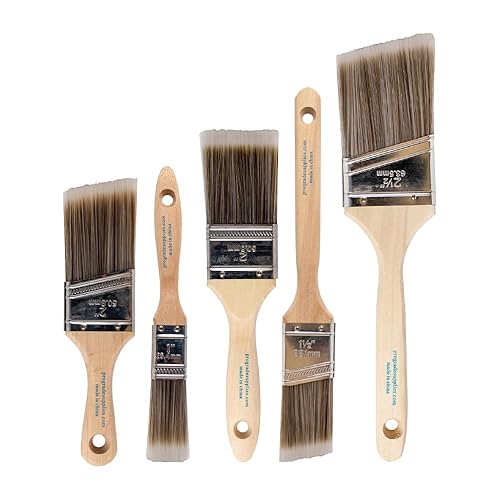 TOP CHOICEBest budget pickPro Grade Paint Brush Set, 5-PieceView on Amazon
- 4
 Best for edge and panel detailStak Rack 6 in 1 Painter's Accessory ToolView on Amazon
- 5
 Best for replacing a worn slabSmooth White Paintable Hollow Core Interior Door Slab, 24×80 inView on Amazon
- 6
 Best primer-and-paint bundleRust-Oleum Satin White Door & Trim Paint and Zinsser Bulls Eye 1-2-3 Primer, Quart BundleView on Amazon
Our Top Picks
| Product | Best for | Key feature |
|---|---|---|
| Rust-Oleum 369384 Advanced Dry Door & Trim Paint, Quart, Satin White | Most painted door surfaces | Satin finish sold for doors and trim |
| JUBEST 24″x80″ 2-Panel White Primed Hollow Core Interior Molded Door Slab | Hollow core replacement doors | Primed and ready to paint |
| Pro Grade Paint Brush Set, 5-Piece | Budget projects with mixed paint types | Synthetic bristles for latex and oil-based paint |
| Stak Rack 6 in 1 Painter’s Accessory Tool | Panels, trim and cabinet doors | Stacking design for holding parts while drying |
| Smooth White Paintable Hollow Core Interior Door Slab, 24×80 in | Swap-out doors on a tight budget | Lightweight raised 2-panel slab, primed |
| Rust-Oleum Satin White Door & Trim Paint and Zinsser Bulls Eye 1-2-3 Primer, Quart Bundle | Doors with stains, glossy paint or bare wood | Paint and primer sold together |
Rust-Oleum 369384 Advanced Dry Door & Trim Paint, Quart, Satin White
Rust-Oleum 369384 Advanced Dry Door & Trim Paint, Quart, Satin White
Best for: Most painted door surfaces, including trim sets that need to match
This is a good fit for homeowners who want one paint that works on the door face, the frame and the trim. The satin sheen is common on interior doors because it cleans up better than flat paint and hides small dents better than gloss.
Key specs
- Quart container
- Satin white finish
- Sold for door and trim applications
Pros
- Designed specifically for doors and trim, so the sheen is consistent across surfaces
- Satin finish resists scuffs better than flat paint
- Widely available, which makes touch-ups easier later
Cons
- One quart covers only a few doors, so you may need more for both faces of several slabs
- Satin shows brush marks on rough surfaces unless you sand and prime first
Bottom line: A solid default choice for homeowners painting several doors who want a durable, washable finish.
JUBEST 24″x80″ 2-Panel White Primed Hollow Core Interior Molded Door Slab
Smooth Surface, Ready-to-Paint, NOT Pre-drilled, Boring Required, NO Hardware and Hinges, Interior Door for Pantry, Laundry JUBEST 24"x80" 2-Panel White Primed Hollow Core Interior Molded Door Slab
Best for: Hollow core replacement doors that need to be painted after install
This slab suits people replacing a damaged or dated door rather than repainting an existing one. The listing describes it as ready to paint, with no pre-drilled holes, so you will need to bore for hardware and hinges yourself.
Key specs
- 24 inches wide by 80 inches tall
- 2-panel molded design
- Primed white, ready for paint
- Hollow core construction
Pros
- Primed surface reduces the prep work before your first coat
- Standard 24-inch width fits many common openings
- Lightweight, which makes it easier to hang by one person
Cons
- Not pre-drilled, so hinge and lock alignment takes care and measuring
- Hollow core doors feel lighter and can sound hollow compared with solid wood
Bottom line: Best for people who need a new door and plan to paint it in place, especially for closets, pantries and laundry rooms.
Pro Grade Paint Brush Set, 5-Piece
Interior & exterior | Cabinets, doors, furniture, decks | For latex & oil-based | Synthetic bristles, Softwood handles Pro Grade Paint Brushes, Paint Brush Set for Walls, Trim & Stain, 5-Piece
Best for: Budget projects where you need brushes for both latex and oil-based paint
Door painting uses a lot of edge work, and a set with different sizes lets you cut clean lines around panels without buying separate tools. The listing names synthetic bristles and softwood handles, which suits water-based paint.
Key specs
- Five-piece set
- Synthetic bristles
- Softwood handles
- Labeled for latex and oil-based paint
Pros
- Multiple sizes cover panels, edges and trim
- Synthetic bristles are the usual choice for latex paint
- Useful for other projects, such as cabinets and decks
Cons
- Bristle quality varies between sets, and budget brushes can shed on a smooth finish
- Brushes alone do not make a door look smooth; you still need a good roller or sprayer for flat faces
Bottom line: A practical buy for a first door project when you want one set that handles several jobs.
Stak Rack 6 in 1 Painter’s Accessory Tool
Stak Rack | 6 in 1 Painter's Accessory Tool | Stacking Design | Paint Interior or Exterior Doors, Trim & Kitchen Cabinet Doors| for Contractors & Homeowners (12)
Best for: Painting panel doors, trim and cabinet doors where you need to stack and dry parts
Painting a door means working on flat faces, edges and recessed panels, and a stacking tool helps you dry pieces without them sticking together. The listing is aimed at contractors and homeowners working on doors and cabinets.
Key specs
- Six-in-one design
- Stacking design
- Intended for interior and exterior doors, trim and cabinet doors
Pros
- Lets you dry several parts at once without touching wet paint
- Works across doors, trim and cabinets
- Keeps the work area tidier during a multi-door project
Cons
- Only useful if you are painting several parts; a single door may not need it
- Owners often mention it takes some practice to set up the stacking correctly
Bottom line: Worth considering if you are doing a full set of doors or trim at once and need a place to dry them.
Smooth White Paintable Hollow Core Interior Door Slab, 24×80 in
Smooth White Paintable Hollow Core Interior Door Slab, for Swing, Pocket, Sliding Door, Durable and Lightweight 24×80 in Raised 2-Panel Square Top Primed Interior Door Panel
Best for: Swap-out doors on a tight budget where you want a paintable slab in standard size
This slab is aimed at replacing an existing door, including swing, pocket and sliding applications according to the listing. It is lightweight and primed, so you can paint it to match your trim.
Key specs
- 24 inches wide by 80 inches tall
- Raised 2-panel square top design
- Primed and paintable
- Hollow core
Pros
- Primed surface cuts down on prep before the first coat
- Standard size fits many existing openings
- Light enough for one person to handle during install
Cons
- Hollow core construction feels lighter than solid wood
- You will need to drill and fit hardware yourself
Bottom line: A reasonable pick for a replacement door in a bedroom or closet where weight and cost matter more than solid construction.
Rust-Oleum Satin White Door & Trim Paint and Zinsser Bulls Eye 1-2-3 Primer, Quart Bundle
Rust-Oleum Satin White Door & Trim Paint and Zinsser Bulls Eye 1-2-3 Primer, Quart Bundle
Best for: Doors with stains, glossy old paint or bare wood that need a primer before topcoat
A bundle of primer and paint helps when the existing door finish is unknown. Primer bonds the topcoat and reduces the chance of peeling or blotching, especially on wood with knots or stain.
Key specs
- Quart of satin white door and trim paint
- Quart of Zinsser Bulls Eye 1-2-3 primer
- Bundled as a set
Pros
- Primer and topcoat are matched in one purchase
- Helpful on glossy or stained surfaces where paint adhesion is uncertain
- Satin topcoat suits doors and trim
Cons
- Two quarts may be more than a single door needs
- Primer adds a coat, so drying time stretches the project
Bottom line: Pick this bundle if your door has an unknown or glossy finish and you want the primer and paint to work together.
Buying Guide
Door material: hollow core, solid wood or MDF
Most cheap interior doors are hollow core, with a thin skin over a cardboard or wood lattice interior. These take paint well but dent easily and can sound hollow. Solid wood and MDF panels hold paint better at edges and joints. Check the door material before you buy primer, because the wrong primer can raise grain on wood or fail to bond on smooth MDF.
Good picks for this: JUBEST 24″x80″ 2-Panel White Primed Hollow Core Interior Molded Door Slab, Smooth White Paintable Hollow Core Interior Door Slab
Primer and paint compatibility
Manufacturers usually specify whether a paint is designed for doors and trim or for walls. Door paints are formulated to resist scuffs and hold up to frequent use. If the door has glossy paint, stain or bare wood, a bonding primer improves adhesion. Always read the can for recoat times.
Good picks for this: Rust-Oleum 369384 Advanced Dry Door & Trim Paint, Rust-Oleum Satin White Door & Trim Paint and Zinsser Bulls Eye 1-2-3 Primer
Sheen level
Satin is the most common choice for interior doors. It cleans easily and hides minor surface flaws better than flat paint. Semi-gloss shows more brush marks and imperfections, though some owners prefer it for a tougher finish. Flat paint is harder to clean and scuffs more readily on high-touch doors.
Good picks for this: Rust-Oleum 369384 Advanced Dry Door & Trim Paint
Size and fit
Standard interior doors in the US are often 24, 28, 30 or 32 inches wide and 80 inches tall. Measure the rough opening, not the old door, and confirm the thickness (commonly 1-3/8 inches for interior doors). Replacement slabs need the correct width and height to avoid gaps at the top or bottom.
Good picks for this: Smooth White Paintable Hollow Core Interior Door Slab, 24×80 in, JUBEST 24″x80″ 2-Panel White Primed Hollow Core Interior Molded Door Slab
Tools for edges and panels
Doors have recessed panels and narrow edges where a roller leaves ridges. A set of angled brushes handles cut lines well, while a stacking rack keeps parts from sticking while they dry. Choose brush bristles that match your paint type, synthetic for latex and natural for oil-based.
Good picks for this: Pro Grade Paint Brush Set, 5-Piece, Stak Rack 6 in 1 Painter’s Accessory Tool
Drying time and project pace
Plan for each coat to dry according to the can. Many water-based door paints recommend waiting several hours between coats and a longer period before heavy use. Stacking or propping doors during drying prevents sticking and fingerprints.
Good picks for this: Stak Rack 6 in 1 Painter’s Accessory Tool, Rust-Oleum Satin White Door & Trim Paint and Zinsser Bulls Eye 1-2-3 Primer
Durability and care
Doors take constant contact from hands and shoulders, so a washable finish matters. Satin paints and primed surfaces tend to hold up better. Clean with a damp cloth and mild soap, and avoid abrasive pads. Touch up scuffs before they spread.
Good picks for this: Rust-Oleum 369384 Advanced Dry Door & Trim Paint, Rust-Oleum Satin White Door & Trim Paint and Zinsser Bulls Eye 1-2-3 Primer
FAQ
Can I paint a cheap hollow core door without sanding it?
You can, but light sanding helps the primer and paint bond. Scuff the surface with fine-grit sandpaper, wipe away dust and then prime. Glossy surfaces benefit most from this step.
Do I need primer for painting cheap interior doors?
Many door paints are sold as self-priming, but a bonding primer is recommended over stain, glossy finishes or bare wood. Follow the manufacturer’s directions for your specific surface.
What finish is best for interior doors?
Satin is the most common choice because it balances washability with a soft look. Semi-gloss is tougher but shows brush marks more. Flat paint is harder to clean.
How many coats of paint does a door need?
Most projects use one coat of primer and two coats of topcoat, though the paint label will state the coverage for your product. Allow full drying time between coats.
Should I remove the door to paint it?
Removing the door and laying it flat is easier and reduces drips. It also lets you paint all edges. If you cannot remove it, mask the hinges and hardware and work carefully.
Can I replace a cheap door instead of painting it?
Replacing can make sense if the door is badly damaged, warped or the wrong size. Measure the opening carefully and confirm the door thickness before buying a slab. For a broader view of costs and time, see Interior Door Painting Cost: A Step-by-Step Guide to Budget and Time (2026).
Conclusion
For painting cheap interior doors, start with the door material and the surface condition, then match the primer and paint to that surface. Rust-Oleum 369384 Advanced Dry Door & Trim Paint suits most painted doors that need a washable satin finish. If you are replacing a door rather than repainting it, the JUBEST and Smooth White primed hollow core slabs give you a paintable starting point. The brush set and Stak Rack help with edges and drying, and the Rust-Oleum and Zinsser bundle is the practical pick for glossy or stained doors. For a step-by-step process, read Painting an Interior Door: A Step-by-Step Guide for a Smooth Finish and Spray Painting Interior Doors: A Step-by-Step Guide for Beginners before you start.
Sources
- Consumer product safety information on paint use, ventilation and handling household chemicals (cpsc.gov)
- Guidance on lead-safe practices when painting older homes built before 1978 (epa.gov)
- Home improvement and building envelope basics for interior doors and insulation (energy.gov)
Before you buy: helpful guides
Related reading
About Emily Parker
Emily Parker is part of our editorial team and reviews and edits our DIY home renovation guides, checking product details against manufacturer specifications and owner feedback.