
 By Owen Palmer
Updated November 2026
Patching a dent, a nail pop, or a seam crack usually comes down to one material: the all purpose joint compound for drywall repair you choose. Some compounds sand easily, some dry fast, and some are made for a single step like taping or skim coating. This list compares six options from the Amazon listings we reviewed, focusing on what each one is built for, how owners tend to describe it, and which kind of repair it suits best. The criteria were product type, manufacturer specifications, brand reputation, and patterns in owner feedback. We did not run any physical tests on these products.
Our top picks at a glance
- 1
 TOP CHOICEBest overallDAP DryDex Lightweight Low Dust Joint Compound, Pink/White, 32 OzView on Amazon
- 2
 TOP CHOICEBest budget pickJoint Compounds, Drywall Repair, Wall Repair Materials, Ready To Use CView on Amazon
- 3
 TOP CHOICEBest for small patch jobsU S Gypsum 380270 Quart Ready-To-Use Joint Compound, Off-White, 1.75 pt (Original)View on Amazon
- 4
 Best for larger wall repairsDAP Wallboard Joint Compound, White, 12 LbsView on Amazon
- 5
 Best for flexible patchesDAP ElastoPatch Smooth Flexible Patching Compound, White, 32 OzView on Amazon
- 6
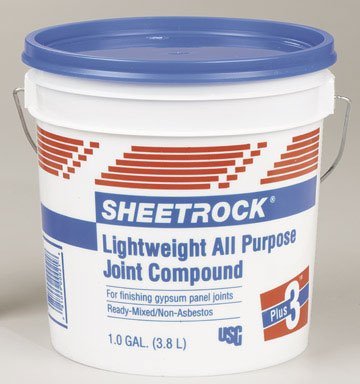 Best for lightweight finishingUSG Plus-3 Lightweight Joint Compound, 3.5 Qt, Blue LidView on Amazon
Our Top Picks
Quick Comparison
| Product | Best for | Key feature |
|---|---|---|
| DAP DryDex Lightweight Low Dust Joint Compound | General patching and finishing | Low dust, lightweight формула |
| Sheetrock All Purpose Joint Compound Ready-Mixed 1 Qt | Small budget-conscious repairs | Ready-mixed, ready to use from the container |
| U S Gypsum Ready-To-Use Joint Compound Quart | Small patch jobs | Quart size for limited use |
| DAP Wallboard Joint Compound, White, 12 Lbs | Larger wall repairs | Bulk 12 lb container |
| DAP ElastoPatch Smooth Flexible Patching Compound | Flexible patches and cracks | Flexible formula that resists cracking |
| USG Plus-3 Lightweight Joint Compound | Lightweight finishing coats | Lightweight, easy-sanding texture |
DAP DryDex Lightweight Low Dust Joint Compound, Pink/White, 32 Oz
DAP DryDex Lightweight Low Dust Joint Compound, Pink/White, 32 Oz (7079812385)
Best for: General patching and finishing
This is a good fit for homeowners who want one compound for most small-to-medium repairs and care about dust during sanding. Its pink-and-white color makes it easy to see where you have applied it. For another angle, check out 6 Best Sanders for Drywall Repair: Top Picks Compared (2026).
Key specs
- 32 oz container
- Pre-mixed, ready-to-use compound
- Marketed as low dust and lightweight
Pros
- Lower dust than many standard compounds, according to manufacturer claims
- Pre-mixed, so there is no mixing step
- Color contrast helps you spot missed areas
Cons
- A 32 oz container covers only small jobs
- Owners sometimes mention it can be thinner than heavier compounds for deep fills
Bottom line: A strong first pick for DIYers who want a clean, low-dust compound for everyday patch work.
Joint Compounds, Drywall Repair, Wall Repair Materials, Ready To Use Compounds, USG 380270072 Joint Compound, Paste, 1.75 pt Sheetrock All Purpose Joint Compound Ready-Mixed 1 Qt
Joint Compounds, Drywall Repair, Wall Repair Materials, Ready To Use Compounds, USG 380270072 Joint Compound, Paste, 1.75 pt Sheetrock All Purpose Joint Compound Ready-Mixed 1 Qt
Best for: Best budget pick for small repairs
This is a practical choice for a single nail pop or a small hole when you don’t want to buy a large container. It is a Sheetrock-branded, ready-mixed all purpose compound.
Key specs
- 1 quart (1.75 pt) ready-mixed container
- All purpose formula for taping and finishing
Pros
- Ready-mixed, so it can be used straight from the container
- Small size limits waste on minor jobs
- Recognizable brand name in drywall supplies
Cons
- The quart size runs out fast on anything larger than a few patches
- Owners often note it dries slower than setting-type compounds
Bottom line: Best for homeowners who need one small container for occasional touch-ups.
U S Gypsum 380270 Quart Ready-To-Use Joint Compound, Off-White, 1.75 pt (Original)
U S GYPSUM 380270072 U S Gypsum 380270 Quart Ready-To-Use Joint Compound, Off-White, 1.75 pt(Original)
Best for: Small patch jobs
This is the same family of ready-to-use compound as the Sheetrock quart, sold under the U S Gypsum name. It suits quick fixes in bathrooms, closets, and hallways.
Key specs
- 1 quart (1.75 pt) ready-to-use container
- Off-white color
Pros
- Ready to use with no mixing
- Off-white color blends well with painted walls
- Good for a first project with limited material needs
Cons
- Small size is not suited to large repairs
- Drying time is longer than with quick-set products
Bottom line: A reasonable pick for a single small hole or seam when you want to keep the purchase minimal.
DAP Wallboard Joint Compound, White, 12 Lbs
Drywall Supplies, Joint Compounds, Wallboard Compounds, Interior Wall Repair, DAP 10104 Wallboard Joint Compound, Paste DAP Wallboard Joint Compound, White, 12 Lbs (7079810102)
Best for: Larger wall repairs
A 12 lb container is better suited to a room’s worth of patches, taping seams on new drywall, or a series of repairs after a remodel.
Key specs
- 12 lb container
- White wallboard joint compound
Pros
- Larger quantity covers multi-patch jobs
- Widely available from a long-established drywall brand
- Good value per pound for bulk work, as owners often describe it
Cons
- Because it is a powder-style bulk product, mixing is required, so it takes more prep
- Heavy container is awkward to store long-term once opened
Bottom line: Best for DIYers tackling a larger drywall project who are comfortable mixing.
DAP ElastoPatch Smooth Flexible Patching Compound, White, 32 Oz
DAP ElastoPatch Smooth Flexible Patching Compound, White, 32 Oz (7079812278)
Best for: Flexible patches and cracks
ElastoPatch is a flexible patching compound often chosen for areas that move, such as corners and seams that crack over time. It is less of a standard all purpose mud and more of a specialty patch.
Key specs
- 32 oz container
- Flexible, smooth-finish formula
Pros
- Flexibility helps reduce re-cracking in movement-prone areas
- Smooth finish reduces sanding time
- Pre-mixed for easy application
Cons
- Costs more per pound than standard joint compound
- Not intended for thick fills or full-room finishing
Bottom line: A good match for crack repair and small patches where movement is a concern.
USG Plus-3 Lightweight Joint Compound, 3.5 Qt, Blue Lid
USG 380340004 384013004 3.5Qt Plus-3 Lightweight Joint Compound Blue Lid
Best for: Lightweight finishing
Plus-3 is a lightweight, all purpose compound that many finishers use for topping coats. Its lighter weight makes it easier to carry and apply overhead.
Key specs
- 3.5 quart container
- Lightweight formulation
- Blue lid for identification
Pros
- Lightweight, so less fatigue on ceilings and tall walls
- Sands relatively easily, according to owner feedback
- Mid-size container suits medium jobs
Cons
- Lightweight formulas can shrink more on deep fills
- Needs thin coats to avoid cracking
Bottom line: Best for finishing coats and overhead work when weight matters.
Buying Guide
Ready-mixed vs. powder (setting-type) compound
Ready-mixed compounds come pre-blended in a bucket and are the simplest option for small repairs. Powder compounds require mixing with water and set through a chemical reaction, which makes them faster to dry and stronger for deep fills. If you are patching one hole, ready-mixed saves time. If you are filling wide gaps, the powder option is worth the extra prep.
Good picks for this: Sheetrock All Purpose Joint Compound Ready-Mixed 1 Qt, DAP Wallboard Joint Compound 12 Lbs
Lightweight vs. standard formulas
Lightweight compounds contain expanded fillers that make them easier to sand and carry. The tradeoff is that they can shrink more and need thinner layers. Standard formulas are heavier and stronger for deep fills. Choose lightweight for finishing coats and ceilings; choose standard for structural patches.
Good picks for this: USG Plus-3 Lightweight Joint Compound, DAP DryDex Lightweight Low Dust Joint Compound
Flexibility for cracks and movement
Walls that move with temperature or settling tend to crack at seams and corners. Flexible patching compounds are designed to bend slightly without cracking again. If your problem is a recurring crack, a flexible product often outperforms standard mud, according to general owner feedback.
Good picks for this: DAP ElastoPatch Smooth Flexible Patching Compound
Size and quantity
Match the container to the job. A quart is enough for one or two small holes. A 3.5 quart container handles a room’s worth of patches. Twelve-pound boxes make sense for a full remodel. Remember that joint compound can dry out in a partly used container, so buying bulk for a tiny repair often leads to waste.
Good picks for this: U S Gypsum 380270 Quart Ready-To-Use Joint Compound, USG Plus-3 Lightweight Joint Compound
Dust level and sanding
Sanding is the messiest part of drywall repair. Low-dust formulas are marketed to reduce airborne particles, and lightweight compounds generally sand more easily. Wear an N95 respirator and eye protection during sanding regardless of product choice, and keep the room ventilated.
Good picks for this: DAP DryDex Lightweight Low Dust Joint Compound, USG Plus-3 Lightweight Joint Compound
Color and visibility
Color affects how easily you spot missed spots and uneven areas. Pink-and-white and off-white compounds help you see where you have applied material and where it needs sanding. Choose a color that contrasts with your wall for easier inspection.
Good picks for this: DAP DryDex Lightweight Low Dust Joint Compound, U S Gypsum 380270 Quart Ready-To-Use Joint Compound
Drying time and working time
Ready-mixed compounds usually dry slowly, sometimes over a day for thick coats, while setting compounds harden in minutes to hours. Plan your schedule accordingly, and apply thin coats to shorten drying time. Humidity and room temperature also change drying time, so allow extra time in damp or cold conditions.
Good picks for this: Sheetrock All Purpose Joint Compound Ready-Mixed 1 Qt, DAP Wallboard Joint Compound 12 Lbs
FAQ
Can I use all purpose joint compound for drywall repair on any wall?
Yes, for most interior drywall patches, seams, and small holes. For wet areas, use a compound labeled for moisture resistance, and check that the wall is dry and sound before patching.
Is lightweight joint compound better than regular?
Lightweight compound is easier to sand and carry, which makes it a good finishing choice. Regular or setting-type compound is stronger for deep fills. Neither is universally better; the right choice depends on the job.
How many coats of joint compound do I need?
Most repairs need two to three thin coats, with light sanding between each. Thick single coats tend to crack and shrink, so build the patch up gradually.
How long does joint compound take to dry?
Thin coats of ready-mixed compound typically dry within a day in normal conditions, though thicker patches take longer. Setting compounds harden much faster. Humidity and temperature affect drying time significantly.
Do I need primer after joint compound?
Yes. Joint compound is porous and absorbs paint unevenly, so a drywall primer helps the topcoat look uniform. Skipping primer often leaves visible patches, especially with flat or matte paint.
Can joint compound be stored after opening?
Ready-mixed compound can dry out or spoil once opened if the lid is not sealed well. Keep the lid tight, store it in a cool place, and check for mold or a sour smell before reusing. Setting-type powder stores longer when kept dry.
Should I consult a professional for large drywall repairs?
For structural damage, water-damaged walls, or repairs involving electrical or plumbing, consult a licensed contractor. Small DIY patches are usually manageable with basic tools and careful preparation.
Conclusion
For most homeowners, the DAP DryDex Lightweight Low Dust Joint Compound is a sensible starting point for everyday patching and finishing. If you only need a single small container, the Sheetrock or U S Gypsum quart options keep the purchase minimal. For larger jobs, the 12 lb DAP Wallboard Joint Compound makes more sense, and for cracks that keep returning, the DAP ElastoPatch flexible compound is the better match. The USG Plus-3 suits finishing coats and overhead work. Match the product to the job, and your repair will look far cleaner for it.
Sources
- Workplace guidance on respiratory protection and airborne dust exposure during sanding and construction work (osha.gov)
- Indoor air quality basics, including ventilation and dust control during home renovation projects (epa.gov)
- Consumer safety information on home repair hazards and safe DIY practices (cpsc.gov)
Related reading
- 7 Best All Four Walls Drywall Repair Kits Compared for Homeowners
- How to Sand Drywall Joint Compound Smoothly
- Wallboard Drywall Repair Clips: How to Fix Holes That Won't Hold a Patch
About Owen Palmer
Owen Palmer is part of our editorial team and reviews and edits our DIY home renovation guides, checking product details against manufacturer specifications and owner feedback.




