By Audrey Quinn
Quick answer
Our overall pick is the Shineboc 21-sheet wet and dry assortment, which lists seven grits from 120 to 2000 and is named for palm sanders and sanding blocks. The Pihemum 45-sheet set suits readers who want the widest grit range, while the two sponge block sets suit hand sanding of small areas.
Choosing sandpaper for drywall repair comes down to grit range, format and the surfaces each listing actually names. We compared five sandpaper sets and sanding sponges sold on Amazon, with our overall pick first. Each pick is described only by what its listing says, so you can match it to your tools and project. For the wider process, see our Repair Basics section.
Our picks at a glance

Pros
- Seven grits from 120 to 2000 listed
- Wet and dry use both stated
- Anti-clogging and tear-resistant backing listed
- Sheets can be cut to custom sizes
Cons
- Drywall is not named among compatible materials
- Wood is the only compatible material listed
- Spec grit number conflicts with the assortment

Pros
- 15 grits from 80 to 5000 listed
- Grit numbers printed on the back
- Waterproof and tear-resistant listed
- Wet and dry use both stated
Cons
- Drywall is not named in the listing
- No block or sander is listed with the sheets
- Spec grit number does not match the range

Pros
- 165 discs in one set
- Eight-hole design listed for dust removal
- Several compatible sander brands named
- Aluminum oxide listed in the features
Cons
- Requires a random orbital or similar sander
- Drywall is not named among compatible materials
- Grit information conflicts across listing fields

Pros
- Four grits with two blocks each
- Reusable and washable listed
- Grit numbers printed on the pads
- Block size listed for hand use
Cons
- Eight blocks is a smaller count than sheet sets
- Spec fields conflict on material and surface
- Power sander use is not mentioned
Pros
- Drywall named in surface recommendation
- Soft buffering layer listed for hand comfort
- Wet and dry use both stated
- Reusable and tear-resistant listed
Cons
- Hand-use blocks; power sander use is not mentioned
- Clear block dimensions are not listed
How we chose
We compared manufacturer listings and specifications on Amazon as of November 2026. We did not test any of these products hands-on, so every point below comes from the listing text and spec fields.
Our criteria were the grit range listed, the piece count and format, the compatible materials and surfaces named, whether wet or dry use is stated, and how consistent the listing data is. Where a spec field conflicted with the title or features, we left that detail out rather than repeat it.
Best Sandpaper for Drywall Repair: our picks in detail
1. Best overall: Shineboc Sandpaper Assortment 21-Sheet
The Shineboc pack contains 21 sheets in a 9 x 3.6 inch size, with three sheets in each of seven grits from 120 to 2000. The listing describes silicon carbide with an electrostatically coated grit layer, and it says the sheets can be used wet or dry. It also lists anti-clogging properties, a reinforced backing meant to resist tearing, and sheets that can be cut to other sizes.
The listing names palm sanders and sanding blocks as compatible devices, and wood as the compatible material. Drywall is not named, so check the manufacturer’s guidance before using it on wall patches. The spec sheet lists a single grit number of 220, which does not match the assortment described elsewhere, so we have left that field out.
Best for: Readers who want a full run of fine grits in one wet or dry pack and plan to use a palm sander or sanding block.
Pros
- Seven grits from 120 to 2000 listed
- Wet and dry use both stated
- Anti-clogging and tear-resistant backing listed
- Sheets can be cut to custom sizes
Cons
- Drywall is not named among compatible materials
- Wood is the only compatible material listed
- Spec grit number conflicts with the assortment
2. Best for widest grit range: Pihemum 45-Sheet Wet Dry Sandpaper
The Pihemum set includes 45 sheets in a 9 x 3.6 inch size, spread across 15 grits from 80 to 5000. The listing describes electro-coated silicon carbide that is waterproof and tear-resistant, and it says the sheets work wet or dry. Grit numbers are printed on the back of each sheet, which makes it easier to find the grit you need.
The listed compatible materials are wood, metal, plastic and resin, and the listing does not mention drywall. It suggests uses such as wood refinishing, automotive paint prep and metal polishing. The grit number field lists 60, which does not fit a set spanning 80 to 5000, so we have omitted that entry. The listing does not mention a sanding block or sander, so plan to pair the sheets with your own tool.
Best for: Readers who want the widest grit range, from coarse shaping to very fine polishing, and who already have a block or sander.
Pros
- 15 grits from 80 to 5000 listed
- Grit numbers printed on the back
- Waterproof and tear-resistant listed
- Wet and dry use both stated
Cons
- Drywall is not named in the listing
- No block or sander is listed with the sheets
- Spec grit number does not match the range
3. Best for random orbital sanders: POTUINOM 165-Piece 5-Inch Sanding Discs
The POTUINOM set contains 165 five-inch sanding discs, which the features describe as aluminum oxide. The listing says the discs have eight dust holes intended to remove dust during sanding and a special coating meant to reduce temperature. It names Bosch, DEWALT, Makita and Ryobi random orbit sanders as compatible, along with other 5-inch orbital sanders.
Because these are discs, the set only makes sense if you own a random orbital sander or a similar tool. Drywall is not named in the compatible materials list. The grit details differ between the features text, the included components field and the grit type field, so check the grit printed on each disc before you use it.
Best for: Readers who already own a random orbital sander and want a large set of 5-inch discs in one package.
Pros
- 165 discs in one set
- Eight-hole design listed for dust removal
- Several compatible sander brands named
- Aluminum oxide listed in the features
Cons
- Requires a random orbital or similar sander
- Drywall is not named among compatible materials
- Grit information conflicts across listing fields
4. Best for hand sanding putty and primer: MOWPOG 8-Pack Sanding Sponge Blocks
The MOWPOG pack contains eight sanding sponge blocks in four grits, 60, 80, 120 and 220, with two blocks per grit. The listing gives each block a size of 4 x 2.75 x 0.65 inches and says the grit numbers are printed on the pads. The blocks are described as reusable and washable, with a brown corundum abrasive on a sponge base.
The features name putty, primers, woodworking, furniture finishing and metal polishing as suitable uses, and the title mentions drywall. Some spec fields conflict with the features, such as listing the material as metal and the surface recommendation as stone, so we rely on the features text for uses. The listing describes the blocks for hand sanding in areas a power sander may miss, and it does not mention power sander use.
Best for: Readers who hand-sand small putty or primer touch-ups and want grit numbers printed on each block.
Pros
- Four grits with two blocks each
- Reusable and washable listed
- Grit numbers printed on the pads
- Block size listed for hand use
Cons
- Eight blocks is a smaller count than sheet sets
- Spec fields conflict on material and surface
- Power sander use is not mentioned
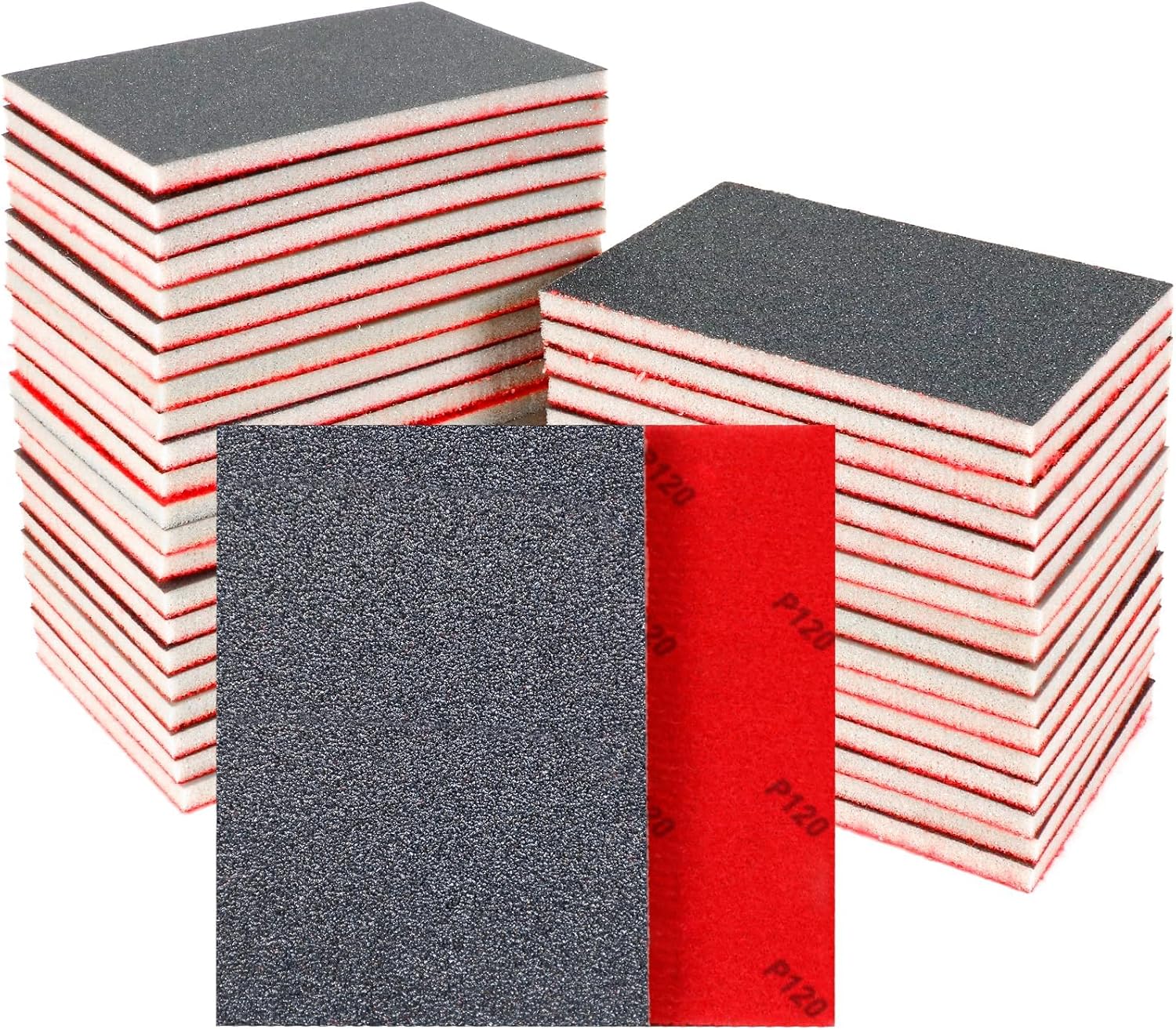
5. Best for hand-sanding drywall surfaces: Pukamam 24-Piece Sanding Sponge Block Set
The Pukamam set includes 24 sanding sponge blocks, with two of each grit across 12 grit entries from 80 to 3000. The listing names aluminum oxide as the material and describes a soft sponge buffering layer, a flexible foam that adapts to curves and corners, and an abrasive that resists tearing. It says the blocks can be used wet or dry and are reusable.
The surface recommendation names furniture, wood, paint, metal, plastic and drywall, and the features mention polishing drywall. The listing does not give clear block dimensions in its spec fields, so check the package before use. The listing describes the blocks as reducing hand fatigue for hand sanding, and it does not mention power sander compatibility.
Best for: Readers who want to hand-sand drywall and other listed surfaces and want a larger set of fine grits.
Pros
- Drywall named in surface recommendation
- Soft buffering layer listed for hand comfort
- Wet and dry use both stated
- Reusable and tear-resistant listed
Cons
- Hand-use blocks; power sander use is not mentioned
- Clear block dimensions are not listed
Our picks at a glance
| Product | Format | Pieces | Grit range (as listed) | Drywall named in listing |
|---|---|---|---|---|
| Shineboc 21-Sheet | 9 x 3.6 inch sheets | 21 sheets | 120 to 2000 | Not listed |
| Pihemum 45-Sheet | 9 x 3.6 inch sheets | 45 sheets | 80 to 5000 | Not listed |
| POTUINOM 165-Piece | 5-inch discs | 165 discs | 40 to 600 in component list; features text varies | Not listed |
| MOWPOG 8-Pack | Hand sanding sponge blocks | 8 blocks | 60 to 220 | Yes (title and features) |
| Pukamam 24-Piece | Hand sanding sponge blocks | 24 blocks | 80 to 3000 | Yes (surface recommendation) |
How to choose sandpaper for drywall repair
Choosing sandpaper for drywall repair usually means matching the grit to each stage of the job. Lower grit numbers are coarser and remove material faster, while higher numbers are finer and leave a smoother finish. A pack that covers both ends of that range saves you from buying several separate products, but it is still worth matching the grit to the stage you are on. If your patch sits over a loose fastener, our guide to drywall nail pop repair covers that step.
Format matters as much as grit. Sheets work well with a sanding block or a palm sander, while sponge blocks suit hand sanding in corners and small patches. If you plan to use a random orbital sander, look for discs that the listing names as compatible with your tool, and follow the tool’s manual for setup and speed.
Read the compatible materials and surface recommendation fields carefully. Several listings here name wood or metal and do not mention drywall, so for wall work you may need to rely on the features text or the brand’s own guidance. Where a listing is inconsistent, as several are here, check the printed grit on the packaging or product rather than trusting a single spec field.
Dust is the main health concern during sanding. Wear a properly fitted respirator or dust mask and eye protection, and review OSHA’s guidance on respiratory protection before you start. Keep the work area ventilated and follow the manufacturer’s manual for any power tool you use.
Once the patch is smooth, the next step is usually sealing it. Our guide to primer for drywall repair explains what comes after sanding, and our Repair Basics section covers other beginner fixes.
What to look for
- A grit range that covers coarse shaping through fine finishing
- A format (sheets, discs or sponge blocks) that matches your tool or hand sanding
- Listed compatibility with wood, metal, plastic or drywall surfaces
- Wet or dry use stated, if you want both options
- Printed grit numbers for quick identification
- Consistent specs across the title, features and spec fields
FAQ
Which sandpaper for drywall repair suits hand sanding?
The two sponge block sets, from MOWPOG and Pukamam, are described for hand sanding. MOWPOG lists four grits in eight blocks, while Pukamam lists a wider range in 24 blocks. Choose based on how many grits you want on hand and whether the listing names drywall for your work.
Can I use these on a power sander?
The POTUINOM discs are listed for random orbital sanders, and the Shineboc listing names palm sanders as compatible devices. Check your tool’s manual before use, and confirm the disc or sheet fits your sander.
Do I need a dust mask when sanding drywall?
Dust is a real concern. Start with OSHA’s respiratory protection guidance, and wear eye protection as well. Several listings say wet use reduces dust, but that does not replace a properly fitted mask.
References
- Amazon product listings and manufacturer specifications (accessed November 2026)
- OSHA, Respiratory Protection

About Audrey Quinn
Audrey writes about diy home renovation. Each guide starts with research into how products are built and what owners report after months of use, and is revised when better options appear.