 By Emily Parker
Updated November 2026
Planning a repaint means answering one question before anything else: what will this actually cost? An interior house painting cost estimator, whether a printed manual or a reference book of current labor and material data, helps you build a realistic number instead of guessing. The five books below were selected by checking publication dates, the scope of the cost data each one covers, how clearly the labor and material assumptions are laid out, and how consistently owners describe them as useful for planning. Since regional labor rates change quickly, we weighted newer editions and books that explain their method.
Our top picks at a glance
- 1
 TOP CHOICEBest overallNational Painting Cost Estimator 2020View on Amazon
- 2
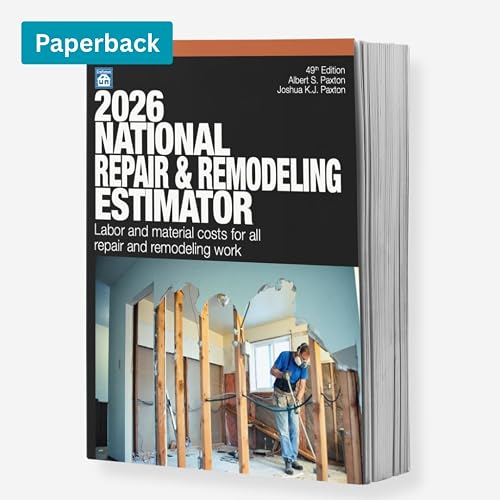 TOP CHOICEBest for whole-house remodel planning2026 National Repair & Remodeling EstimatorView on Amazon
- 3
 TOP CHOICEBest for contractors and managersHome Tech Remodeling and Renovation Cost Estimator, Field Manual/Manager's ManualView on Amazon
- 4
 Best budget pickNational Home Improvement Estimator 2016View on Amazon
- 5
 Best for historical cost comparison1995 Hometech Remodeling & Renovation Cost Estimator, Managers ManualView on Amazon
Our Top Picks
Quick Comparison
| Product | Best for | Key feature |
|---|---|---|
| National Painting Cost Estimator 2020 | Painting-specific budgeting | Dedicated painting cost data |
| 2026 National Repair & Remodeling Estimator | Whole-house remodel planning | Current-year general cost data |
| Home Tech Remodeling and Renovation Cost Estimator, Field Manual/Manager’s Manual | Contractors and project managers | Detailed field-oriented cost tables |
| National Home Improvement Estimator 2016 | Budget-minded homeowners | Broad improvement cost coverage |
| 1995 Hometech Remodeling & Renovation Cost Estimator, Managers Manual | Historical cost comparison | Older baseline pricing structure |
National Painting Cost Estimator 2020
National Painting Cost Estimator 2020
Best for: Painting-specific budgeting for interior projects
This is the most focused option on the list, built around painting work rather than remodeling as a whole. It suits homeowners who want to price a repaint by room, wall area and surface type, and who want the labor and material breakdown laid out separately so they can adjust for their own situation.
Key specs
- Dedicated painting cost tables
- Published for the 2020 cost year
- Print format for quick reference during planning
Pros
- Painting data is organized in a way that is easy to map onto a room-by-room plan.
- Labor and material are separated, which makes it easier to swap in local rates.
- Focused scope keeps the reference short and practical.
Cons
- The 2020 publication year means regional figures will need updating for current labor markets.
- Limited value for projects that go beyond painting.
Bottom line: A strong first choice for a homeowner whose project is primarily interior painting and who is comfortable adjusting baseline numbers to local rates.
2026 National Repair & Remodeling Estimator
2026 National Repair & Remodeling Estimator
Best for: Whole-house remodel planning where painting is one line item among many
This estimator covers repair and remodeling work broadly. It fits homeowners who are painting alongside flooring, drywall or trim work and want all the costs in one reference so the total budget is consistent.
Key specs
- Current-year publication (2026 edition)
- Covers repair and remodeling categories beyond painting
Pros
- The most recent edition on this list, which helps with current cost assumptions.
- Useful for seeing how painting fits into the overall project budget.
- One reference covers several trades, reducing the number of books to juggle.
Cons
- Painting detail is less granular than a dedicated painting estimator.
- Broad scope means some categories will not match your exact work.
Bottom line: Best for homeowners planning a multi-trade renovation who want the painting line item to sit inside a current, whole-project budget.
Home Tech Remodeling and Renovation Cost Estimator, Field Manual/Manager’s Manual
Home Tech Remodeling and Renovation Cost Estimator, Field Manual/Manager's Manual
Best for: Contractors and project managers who need detailed field-oriented cost tables
This title is written with the job site in mind. Homeowners who want to understand how a professional builds a bid will find the manager-style layout useful, though it takes more effort to read than a consumer-oriented guide.
Key specs
- Field manual and manager’s manual format
- Remodeling and renovation cost structure
Pros
- Detailed structure that mirrors how contractors price work.
- Helpful for checking whether a contractor’s bid includes all the expected line items.
- Strong for homeowners who want to learn the method, not just the totals.
Cons
- Density can be overwhelming for a first-time homeowner.
- Requires adjusting figures to current local conditions.
Bottom line: A good choice for a detail-minded homeowner or a small contractor who wants to check bids against a professional-style reference.
National Home Improvement Estimator 2016
National Home Improvement Estimator 2016
Best for: Budget-minded homeowners comparing several improvement types
This estimator offers a wide view of home improvement costs at a lower entry point than newer editions. It works well for early planning, when you are still deciding whether a painting project fits alongside other improvements.
Key specs
- 2016 publication year
- Covers a broad set of home improvement categories
Pros
- Broad coverage helps compare painting against other projects.
- Budget-friendly reference for early-stage planning.
- Easy to scan for rough order-of-magnitude figures.
Cons
- The 2016 data is noticeably dated for current labor and material markets.
- Painting-specific detail is shallower than dedicated painting estimators.
Bottom line: Suited to homeowners who want a low-cost overview for comparing projects, provided they verify numbers against current quotes before committing.
1995 Hometech Remodeling & Renovation Cost Estimator, Managers Manual
1995 Hometech Remodeling & Renovation Cost Estimator, Managers Manual
Best for: Historical cost comparison and understanding how estimating methods have changed
This is the oldest title here, and its value is mainly historical. Reading it alongside a current estimator shows how much labor and material assumptions have shifted and why a dated book should never be used as a live budget.
Key specs
- 1995 publication year
- Manager’s manual format
Pros
- Useful for seeing long-term cost trends in one place.
- Shows the structure of older estimating methods.
- Inexpensive way to study estimating logic.
Cons
- Pricing is far too outdated for a current project budget.
- Limited relevance to modern materials and paint products.
Bottom line: Worth a look for students of estimating or homeowners curious about cost history, but not a planning tool for a project happening now.
Buying Guide
Publication Year and Cost Data Currency
Labor rates and paint prices move over time, so the publication year matters more than most buyers expect. Check the edition date first and treat anything more than a few years old as a method reference rather than a number source. Whatever you choose, compare its figures against at least two current local quotes.
Good picks for this: 2026 National Repair & Remodeling Estimator, National Painting Cost Estimator 2020
Scope: Painting Only or Whole Project
Decide whether you need painting detail or a broader remodeling view. A painting-focused estimator gives you room-by-room granularity. A broader one shows how painting fits alongside flooring, drywall and trim. Match the scope to the number of trades in your project.
Good picks for this: National Painting Cost Estimator 2020, 2026 National Repair & Remodeling Estimator
Level of Detail and Layout
Look at how costs are broken down. Separate labor and material lines make it much easier to adjust for your region. Tables organized by unit (per square foot, per room, per door) are more useful than single lump-sum figures, because you can multiply them by your own measurements.
Good picks for this: Home Tech Remodeling and Renovation Cost Estimator, Field Manual/Manager’s Manual, National Painting Cost Estimator 2020
Your Measurements and Room Count
Before using any estimator, measure your walls. A rough method: multiply each wall’s length by its height, subtract door and window openings, and add the totals. Most estimators price by square foot, so accurate measurements will matter more than the book you choose. Round up slightly to cover waste and touch-ups.
Good picks for this: National Painting Cost Estimator 2020, National Home Improvement Estimator 2016
Regional Labor Rates
Labor is usually the largest component of a professional repaint, and it varies widely by region and season. Use the estimator for structure and baseline logic, then replace its labor assumptions with rates from local contractors. Ask for itemized quotes so you can compare them directly against the book.
Good picks for this: Home Tech Remodeling and Renovation Cost Estimator, Field Manual/Manager’s Manual, 2026 National Repair & Remodeling Estimator
Use Case: Homeowner, Contractor or Student
A homeowner planning a single room needs something short and readable. A contractor preparing bids needs detailed field tables. A student of estimating benefits from seeing how methods have changed over time. Choose the reference whose layout matches how you will actually use it.
Good picks for this: Home Tech Remodeling and Renovation Cost Estimator, Field Manual/Manager’s Manual, 1995 Hometech Remodeling & Renovation Cost Estimator, Managers Manual
Durability and Format of the Reference
Estimators are used repeatedly on job sites and during planning meetings, so a sturdy binding and clear page layout pay off. Check whether the book has indexed categories so you can find your painting line quickly. Note whether updates are issued separately, since a dated edition may still be useful but will need supplementary checking.
Good picks for this: Home Tech Remodeling and Renovation Cost Estimator, Field Manual/Manager’s Manual, National Home Improvement Estimator 2016
FAQ
What is an interior house painting cost estimator?
It is a reference book or guide that lists typical labor and material costs for painting interior surfaces, often by square foot, room or surface type. It helps you build a rough budget before collecting contractor quotes. It is a starting point, not a final price.
How accurate are printed cost estimators?
Accuracy depends heavily on how recent the data is and how well it matches your region. Older editions can be significantly off because labor and material costs change. Use the estimator to understand the structure of costs, then confirm numbers with current local quotes.
Should I use a estimator or hire a contractor for a quote?
Both have a role. An estimator lets you plan and compare options before talking to anyone. A written quote from a licensed, insured contractor is what you should rely on for the actual job. Use the book to check whether each quote includes the line items you expect.
How do I measure a room to use with an estimator?
Measure each wall’s length and height, multiply to get area, and subtract doors and windows. Add the totals for the full paintable area. Include ceilings and trim separately if your estimator prices them that way. Round up to account for waste.
Do estimators include paint and supplies?
Many do, but the breakdown varies by title. Check whether materials are listed separately from labor and whether they include primer, caulk, drop cloths and other supplies. If the breakdown is unclear, assume some items are missing and add a contingency.
Why would I use an older estimator at all?
Older editions are useful for understanding how estimating methods have evolved and for comparing long-term cost trends. They should not be used as a live budget. Pair any older title with a current reference and current local quotes.
Conclusion
For most homeowners planning a dedicated repaint, the National Painting Cost Estimator 2020 is the most focused starting point, provided you update its labor assumptions to local rates. If your project is part of a larger remodel, the 2026 National Repair & Remodeling Estimator keeps painting inside a current, whole-project budget. Contractors and detail-minded homeowners will get the most from the Home Tech Remodeling and Renovation Cost Estimator, Field Manual/Manager’s Manual. The National Home Improvement Estimator 2016 suits early comparisons on a tight budget, and the 1995 Hometech title is best read as a historical reference rather than a planning tool. Whichever you choose, confirm the final number with written quotes from licensed local professionals.
For more on how cost planning works in practice, see Typical Cost for Interior Painting: A Step-by-Step Guide (2026) and Interior House Painting Prices: What to Expect and How to Budget (2026).
Sources
- Guidance on home energy upgrades and the efficiency considerations that can affect remodeling decisions (energy.gov)
- Safety information on lead paint and recommended precautions when working on older homes (cpsc.gov)
- Guidance on lead-safe renovation practices and EPA requirements for homes built before 1978 (epa.gov)
Related reading
- 7 Best House Painting Cost Interior Guides and Supplies for Homeowners (2026)
- Top 5 Average Cost of Interior Home Painting Options for Homeowners (2026)
- Rates for Painting Interior of a House: How to Estimate Labor and Materials
About Emily Parker
Emily Parker is part of our editorial team and reviews and edits our DIY home renovation guides, checking product details against manufacturer specifications and owner feedback.