
 By Emily Parker
Updated November 2026
Choosing the right notched trowel for tile installation comes down to matching the notch size to your tile, picking a blade that holds up to daily use, and finding a handle you can hold comfortably for hours. This guide compares seven trowels across those criteria. We looked at manufacturer specifications, brand reputation, and the patterns owners often report about blade flex, notch wear and grip comfort. Nothing here is based on our own lab testing, so check the listing details before you buy.
Our top picks at a glance
- 1
 TOP CHOICEBest overallQEP Comfort Grip Stainless Steel Trowel Square Notch 1/4" x 1/4" x 1/4"View on Amazon
- 2
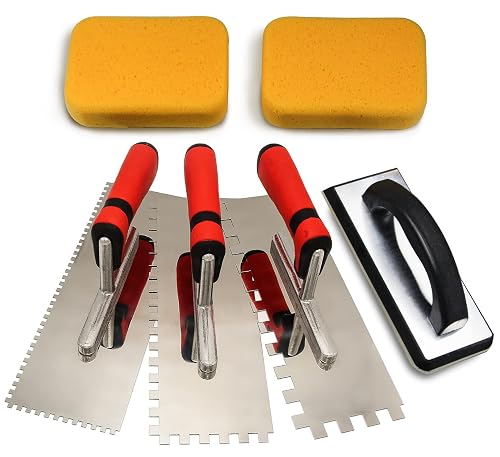 TOP CHOICEBest for small bathroom floorsTile Tools Stainless Steel Square Notch Trowel Set Plus Rubber Grout FView on Amazon
- 3
 TOP CHOICEBest for mixed tile sizes9PCS Tile Trowel Set with 2 Margin Trowels for Tile SettingView on Amazon
- 4
 Best for varied notch needsTile Mortar Trowel 3 PC (Notch Size: 5/32", 5/16", 1/2") Stainless Steel Tile Tools SetView on Amazon
- 5
 Best budget pickGrout Trowel, Grout Float Sponge, Tile Mortar Trowel 6Pcs Tile Tools SetView on Amazon
- 6
 Best for large-format tileFloor Leveler Notched Trowel Tiling Paving Tool for Large Tiles Adjustable 15.75-31.5 InchView on Amazon
- 7
 Best for thin-set on small jobsQEP 3/16" x 5/32" V-Notch Economy Flooring TrowelView on Amazon
Our Top Picks
Quick Comparison
| Product | Best for | Key feature |
|---|---|---|
| QEP Comfort Grip Stainless Steel Trowel Square Notch 1/4″ x 1/4″ x 1/4″ | General floor and wall tile | Square 1/4″ notch with a comfort grip handle |
| Tile Tools Stainless Steel Square Notch Trowel Set Plus Rubber Grout Float and Grout Sponge | Small bathroom floors | Complete set with grout float and sponge |
| 9-piece Tile Trowel Set with two margin trowels | Mixed tile sizes | Two margin trowels for tight edges |
| Tile Mortar Trowel 3-Piece Set (5/32″, 5/16″, 1/2″) | Varied notch needs | Three notch sizes in one kit |
| Grout Trowel and Float Sponge 6-Piece Tile Tools Set | Budget-conscious DIY jobs | Grout and mortar tools in one kit |
| Adjustable Floor Leveler Notched Trowel | Large-format tile | Long adjustable handle for floor work |
| QEP 3/16″ x 5/32″ V-Notch Economy Flooring Trowel | Small thin-set jobs | V-notch profile for thin-set coverage |
QEP Comfort Grip Stainless Steel Trowel Square Notch 1/4″ x 1/4″ x 1/4″
QEP Comfort Grip Stainless Steel Trowel Square Notch 1/4" x 1/4" x 1/4"
Best for: General floor and wall tile
This is a solid starting point for most DIY renovators tiling a kitchen floor, a backsplash or a bathroom wall. The 1/4″ square notch suits common 12″ x 12″ and 8″ x 10″ ceramic and porcelain tiles.
Key specs
- Stainless steel blade
- Square notch, 1/4″ x 1/4″ x 1/4″
- Comfort grip handle
Pros
- Notch size covers a wide range of standard tile
- Stainless blade resists rust after cleaning
- Handle is easier on the hand during long sessions
Cons
- Single notch size means you need another trowel for large-format tile
- Grip can feel bulky for users with small hands
Bottom line: A strong first trowel for a homeowner who plans one or two tile projects and wants a single reliable tool.
Tile Tools Stainless Steel Square Notch Trowel Set Plus Rubber Grout Float and Grout Sponge
Tile Tools Stainless Steel Square Notch Trowel Set Plus Rubber Grout Float and Grout Sponge for Tiling Installation Grouting
Best for: Small bathroom floors
Renovators doing a single bathroom who want the setting and grouting tools in one purchase will find this kit convenient. The grout float and sponge save a separate trip to the store.
Key specs
- Stainless steel square notch trowel set
- Rubber grout float included
- Grout sponge included
Pros
- Covers setting and grouting in one kit
- Good fit for a single small room
- Stainless steel blades are easy to wipe clean
Cons
- Grout float is a basic rubber type, not a premium one
- Notch range is limited for larger tile formats
Bottom line: A practical pick for a homeowner tiling one small bathroom who wants everything in a single box.
9PCS Tile Trowel Set with 2 Margin Trowels for Tile Setting
3-Size Square-Notched Trowels,2-Style Margin Trowels,Grout Float,2 Grout Sponges for Wall Floor Tiling Installation Grouting 9PCS Tile Trowel Set, 2 Margin Trowels Included for Tile Setting
Best for: Mixed tile sizes
A good match for a project that combines floor tile with a mosaic or small-format wall tile. The set gives you three square-notch sizes and two margin trowels for tight spots.
Key specs
- Three square-notch sizes
- Two margin trowels
- Grout float and two grout sponges
Pros
- Multiple notch sizes for different tile formats
- Margin trowels help with edges and cuts
- Nine pieces cover most setting and grouting tasks
Cons
- Individual blades may feel lighter than single professional-grade trowels
- Some smaller pieces can be easy to misplace
Bottom line: Best suited to a renovator working with several tile sizes who wants flexibility without buying trowels one at a time.
Tile Mortar Trowel 3 PC (Notch Size: 5/32″, 5/16″, 1/2″) Stainless Steel Tile Tools Set
Tile Mortar Trowel,3 PC (Notch Size: 5/32" & 5/16" & 1/2"), Masonry Hand Kit for Wall Floor Tiling Installation Stainless Steel Tile Tools Set 3PC, Trowel Concrete Tool, Notched Trowel
Best for: Varied notch needs
Useful when you need to move between thin-set for porcelain, mortar for heavier stone and a larger notch for bigger tiles. Each trowel covers a different coverage range.
Key specs
- Three notch sizes: 5/32″, 5/16″, 1/2″
- Stainless steel construction
- Three-piece kit
Pros
- Covers thin-set through heavier mortar applications
- Compact kit with no wasted pieces
- Good spread of notch sizes for common tile
Cons
- No grout float or sponge included
- Smaller handles may feel tight for heavy use
Bottom line: A useful choice if your project calls for more than one notch size and you already have grouting tools.
Grout Trowel, Grout Float Sponge, Tile Mortar Trowel 6Pcs Tile Tools Set
Grout Trowel, Grout Float Sponge for Tiling Installation Grouting, Tile Mortar Trowel 6Pcs Tile Tools Set, Tile Trowel Concrete Tool, Notched Trowel
Best for: Budget-conscious DIY jobs
A sensible pick for a first-time tiler who wants a complete set of basic tools without paying for premium brands. It suits small projects like a backsplash or a single shower wall.
Key specs
- Six-piece tile tools set
- Notched mortar trowel and grout trowel
- Grout float and sponge included
Pros
- Broad set for a basic tiling kit
- Useful for both setting and grouting
- Good starter option for small projects
Cons
- Blade steel and finish are not as refined as premium trowels
- Notch sizes may need supplementing for larger tile
Bottom line: A reasonable budget pick for a homeowner who needs basic tools for one small project.
Floor Leveler Notched Trowel Tiling Paving Tool for Large Tiles Adjustable 15.75-31.5 Inch
Floor Leveler Notched Trowel Tiling Paving Tool for Large Tiles Flooring and Tiling Masonry Adjustable 15.75-31.5 Inch Adjustable Notched Trowel Mortar Comb Sand Leveler with Handle
Best for: Large-format tile
Designed for spreading mortar across wide areas and helping to level large tiles. The long adjustable handle reduces bending on big floors.
Key specs
- Adjustable length, listed at 15.75 to 31.5 inches
- Notched leveling blade for large tile
- Handle included
Pros
- Long handle reduces back strain on floors
- Suited to large-format and paving-style tile
- Adjustable length fits different working heights
Cons
- Overkill for wall tile or small rooms
- Longer length takes more practice to control in tight corners
Bottom line: Best for a renovator laying large-format floor tile who needs reach and coverage more than fine control.
QEP 3/16″ x 5/32″ V-Notch Economy Flooring Trowel
QEP 3/16" x 5/32" V-Notch Economy Flooring Trowel
Best for: Small thin-set jobs
A V-notch trowel suited to spreading thin-set on smaller floor and wall tile jobs. It is a straightforward, no-frills option from a well-known tile tool brand.
Key specs
- V-notch profile, 3/16″ x 5/32″
- Economy flooring trowel design
Pros
- V-notch pattern suits thin-set on smaller tile
- Simple design is easy to clean
- Brand has a long presence in tile tooling
Cons
- V-notch is not suited to all tile backs or large formats
- Economy design may lack the grip comfort of premium handles
Bottom line: A workable choice for a small thin-set job where a V-notch pattern fits the tile you have chosen.
Buying Guide
Notch size and tile format
The notch depth and width control how much mortar goes under each tile. Smaller tiles, such as 2″ mosaics, usually work with a 1/8″ or 3/16″ notch, while 12″ x 12″ tile often calls for 1/4″ or larger. Larger tiles and uneven subfloors may need a bigger notch so the mortar fully contacts the tile back. Check the mortar bag or tile manufacturer for the recommended notch size.
Good picks for this: QEP Comfort Grip Stainless Steel Trowel; Tile Mortar Trowel 3-Piece Set
Notch shape: square versus V
Square notches leave evenly spaced ridges that are common for floor and wall tile. V-notches create a sharper, narrower ridge and are often used with thin-set on smaller tile. Match the shape to the tile type and mortar instructions. Using the wrong shape can leave voids under the tile.
Good picks for this: QEP 3/16″ x 5/32″ V-Notch Economy Flooring Trowel; Tile Tools Stainless Steel Square Notch Trowel Set
Blade material and flex
Stainless steel blades resist rust and are easy to wipe clean between batches. Owners often report that thin, flexible blades are easier to control on walls, while stiffer blades suit floor work. Check that the blade is securely attached to the handle, since loose joints can cause uneven spreading.
Good picks for this: Tile Tools Stainless Steel Square Notch Trowel Set; Tile Mortar Trowel 3-Piece Set
Handle comfort and grip
You may spend several hours spreading mortar, so handle shape matters. Rubberized or contoured grips reduce hand fatigue and help control the blade angle. If you have small hands, look for a slimmer handle. Test the grip in the store where possible, or read owner feedback about hand comfort.
Good picks for this: QEP Comfort Grip Stainless Steel Trowel; 9PCS Tile Trowel Set
Project size and use case
A single bathroom floor needs fewer tools than a whole-house tile job. Sets with multiple notch sizes and margin trowels give flexibility for mixed projects. A single trowel is often enough for a backsplash. Think about how many square feet you plan to cover and whether you will switch tile formats partway through.
Good picks for this: Grout Trowel and Float Sponge 6-Piece Tile Tools Set; 9PCS Tile Trowel Set
Durability and care
Clean trowels immediately after use, before mortar hardens. Dried thin-set is hard to remove from notches and can change the spacing of the ridges. Store trowels dry to prevent rust on non-stainless models. Inspect notches for wear before each job, since worn edges leave inconsistent mortar coverage.
Good picks for this: QEP Comfort Grip Stainless Steel Trowel; Adjustable Floor Leveler Notched Trowel
Size and reach for large floors
On large floors, a longer handle lets you spread mortar without repeatedly kneeling. Adjustable trowels can help you match the reach to your working position. Shorter trowels give more control in corners and along walls, so many renovators keep both lengths on hand.
Good picks for this: Adjustable Floor Leveler Notched Trowel; QEP 3/16″ x 5/32″ V-Notch Economy Flooring Trowel
FAQ
What notch size should I use for porcelain tile?
Many porcelain tiles are set with a 1/4″ square notch, but the mortar manufacturer and tile size should guide the choice. Larger tiles often need more coverage, and back-buttering may be recommended. Check both the tile and mortar instructions before buying.
Can one trowel handle both floor and wall tile?
Yes, a single square-notch trowel in a common size such as 1/4″ can work for many floor and wall jobs. For very different tile sizes or thin-set versus mortar, a multi-notch set is more flexible.
Do I need a V-notch trowel or a square notch?
Use the notch shape the mortar or tile manufacturer specifies. Square notches are more common for general floor and wall tile, while V-notches are often used with thin-set on smaller tile. The wrong shape can cause poor coverage.
How do I clean a notched trowel after tiling?
Wipe off mortar right away with a damp sponge or rag. Once thin-set hardens, scraping becomes difficult and can dull the notch edges. Rinse the blade and dry it before storing.
How often should I replace a notched trowel?
Replace a trowel when the notch edges are rounded, bent or badly worn, because uneven ridges lead to inconsistent mortar coverage. Stainless blades last longer than basic steel, but inspect them before each job.
Is a set better than a single trowel?
A set gives you multiple notch sizes and extra tools for grouting, which helps on mixed projects. A single trowel is often enough for one tile type. Choose based on how many tile sizes you plan to use.
If you are unsure about the right notch for a specific tile or a structural subfloor, consult a professional tile installer or the tile manufacturer before you start.
Conclusion
For most DIY renovators, the QEP Comfort Grip Stainless Steel Trowel is a sensible first choice because its 1/4″ square notch covers common floor and wall tile. If you are tiling one small bathroom and want everything in one box, the Tile Tools Stainless Steel Square Notch Trowel Set is a practical option. Projects with several tile sizes suit the 9-piece set with margin trowels, while large-format floors point toward the adjustable floor leveler. Always confirm the notch size against your tile and mortar instructions before you begin.
Sources
- Workplace safety guidance on hand tools and repetitive motion that applies to long tiling sessions (osha.gov)
- Consumer safety information on tools and household product hazards (cpsc.gov)
- Standards and measurement resources relevant to tool dimensions and tolerances (nist.gov)
Related reading
- Yard Drain Tile Installation: A Step-by-Step Guide for Wet Lawns
- Wood Tile Installation Cost: A Step-by-Step Guide for Renovators
- Wood Tile Flooring Installation Cost: A Step-by-Step Guide for Renovators
- Wood Tile Floor Installation Cost: A Step-by-Step Guide for Renovators
- Wood Look Tile Installation Cost: A Step-by-Step Guide for Renovators
About Emily Parker
Emily Parker is part of our editorial team and reviews and edits our DIY home renovation guides, checking product details against manufacturer specifications and owner feedback.



