
 By Owen Palmer
Updated November 2026
Learning how to install hardwood laminate flooring is one of the most achievable DIY floor projects, but the quality of your instructions matters more than most people expect. Floating laminate has a few unforgiving steps: subfloor prep, acclimation, expansion gaps, underlayment and the locking sequence. A clear guide can save you from cracked joints and a floor that buckles in the first humid summer. In this roundup we compared five instructional books on the criteria that matter to a first-time installer: how much of the full process they cover, how clearly they explain measuring and layout, whether they address the common tools and materials, and how useful they are for mixed-material projects. Nothing here is based on our own testing; these picks reflect how each title is described and the patterns owners tend to report.
Our top picks at a glance
- 1
 TOP CHOICEBest overallBasic Home Flooring Installation: The Complete Guide to Installing LVPView on Amazon
- 2
 TOP CHOICEBest for beginnersHow To Install Laminate FlooringView on Amazon
- 3
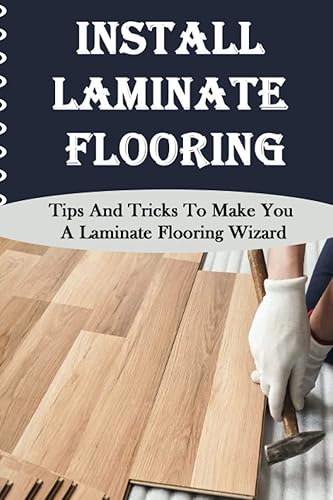 TOP CHOICEBest for tips and troubleshootingInstall Laminate Flooring: Tips And Tricks To Make You A Laminate Flooring WizardView on Amazon
- 4
 Best for planning and material selectionHardwood • Vinyl • Laminate — Flooring Basics: Selecting • EstimatingView on Amazon
- 5
 Best for confidence-buildingA Beginner's Guide to Effortless Laminate Floor InstallationView on Amazon
Our Top Picks
Quick Comparison
| Product | Best for | Key feature |
|---|---|---|
| Basic Home Flooring Installation: The Complete Guide to Installing LVP, Laminate, Tile, Hardwood and More | Mixed-material projects | Covers several floor types in one volume |
| How To Install Laminate Flooring | Absolute beginners | Step-by-step, single-purpose focus |
| Install Laminate Flooring: Tips And Tricks To Make You A Laminate Flooring Wizard | Troubleshooting common problems | Practical tips on fitting and finishing |
| Hardwood • Vinyl • Laminate — Flooring Basics: Selecting • Estimating • Preparing • Installing | Planning before you buy | Covers selection and estimating, not just laying |
| A Beginner’s Guide to Effortless Laminate Floor Installation | Nervous first-timers | Confidence-focused walkthrough |
Basic Home Flooring Installation: The Complete Guide to Installing LVP, Laminate, Tile, Hardwood and More
Basic Home Flooring Installation: The Complete Guide to Installing LVP, Laminate, Tile, Hardwood and More
Best for: Mixed-material projects
This is a good fit if you plan to lay laminate now and may tackle vinyl plank or tile later. Owners often report that the broad scope makes it a useful reference shelf title, even if laminate is the only floor you install.
Key specs
- Covers laminate alongside LVP, tile and hardwood
- Complete-guide format for whole-home floor projects
Pros
- Useful comparison of installation methods across floor types
- Good for reference when you switch materials between rooms
- Broad scope suits homeowners planning several flooring jobs
Cons
- Laminate-specific detail may be thinner than in single-topic guides
- Less depth for a one-room, laminate-only project
Bottom line: Choose this if you want one guide covering several floor types and expect to do more than one flooring project.
How To Install Laminate Flooring
How To Install Laminate Flooring
Best for: Beginners who want a focused, laminate-only walkthrough
If you have never laid a floor and want one subject covered from start to finish, this single-purpose title keeps the scope tight. Owners often describe it as easy to follow, which matters when you are working through subfloor checks and locking sequences for the first time.
Key specs
- Single-subject focus on laminate installation
Pros
- Tight, step-by-step structure for first-timers
- Stays on laminate rather than spreading across materials
- Easy to use as a checklist during the job
Cons
- Limited coverage of other flooring types
- May not go as deep on troubleshooting as tip-focused titles
Bottom line: A strong pick for a first laminate project in a single room.
Install Laminate Flooring: Tips And Tricks To Make You A Laminate Flooring Wizard
Install Laminate Flooring: Tips And Tricks To Make You A Laminate Flooring Wizard
Best for: Troubleshooting common problems
This suits readers who already know the basic sequence and want practical fixes for the trouble spots: cutting around door casings, managing expansion gaps and handling uneven subfloors. Its tip-oriented format rewards readers who skim for the one answer they need.
Key specs
- Tip-and-trick format focused on laminate installation
Pros
- Practical advice on common installation problems
- Easy to scan for a specific question mid-project
- Useful as a companion to a full step-by-step guide
Cons
- Less useful as a first read for someone with no background
- Tips-style layout can feel fragmented for linear learners
Bottom line: Best paired with a basic guide if you want troubleshooting help on the day you are stuck.
Hardwood • Vinyl • Laminate — Flooring Basics: Selecting • Estimating • Preparing • Installing
Hardwood • Vinyl • Laminate — Flooring Basics: Selecting • Estimating • Preparing • Installing
Best for: Planning before you buy
If you are still choosing a product, this title is useful because it covers selection and estimating alongside installation. Readers who need to calculate square footage and compare materials before ordering will find the planning content relevant.
Key specs
- Covers selecting, estimating, preparing and installing
- Compares hardwood, vinyl and laminate
Pros
- Good coverage of planning and material choice
- Helpful estimating guidance before purchase
- Compares materials side by side
Cons
- Installation steps may be less detailed than dedicated laminate guides
- Broader scope means less space per material
Bottom line: Ideal if you are deciding between flooring types and want the planning phase covered before you start the install.
A Beginner’s Guide to Effortless Laminate Floor Installation
A Beginner's Guide to Effortless Laminate Floor Installation": Unlock the Secrets of Installing Laminate Flooring with Confidence and Achieve Stunning Results
Best for: Nervous first-timers who want reassurance
This is aimed at readers who worry that the job is beyond them. Its confidence-building tone and sequence-focused approach suit someone who wants to understand why each step happens, not only what to do.
Key specs
- Beginner-oriented guide to laminate floor installation
Pros
- Approachable tone for nervous first-timers
- Explains the reasoning behind steps
- Focused on laminate, so little time spent on unrelated materials
Cons
- Tone-driven marketing language can outpace technical detail
- Less depth on planning and material selection
Bottom line: A reassuring choice if you want to build skill and confidence before tackling a large room.
Buying Guide
Scope: laminate-only or multi-material
Decide whether you want a book that covers only laminate or one that also addresses vinyl, tile and hardwood. A single-subject guide tends to go deeper on expansion gaps and locking systems, while a broad title helps if you plan more than one flooring job.
Good picks for this: How To Install Laminate Flooring, Basic Home Flooring Installation
Step-by-step clarity
Look for a guide that lays out subfloor preparation, acclimation, underlayment, layout and the locking sequence in order. Clear sequencing matters because laminate mistakes often come from doing steps out of order.
Good picks for this: How To Install Laminate Flooring, A Beginner’s Guide to Effortless Laminate Floor Installation
Troubleshooting coverage
Check whether the book explains how to cut around door casings, handle out-of-square walls and avoid buckling. Owners frequently mention these trouble spots as the points where they most wanted help.
Good picks for this: Install Laminate Flooring: Tips And Tricks To Make You A Laminate Flooring Wizard
Planning and estimating
Before you buy boxes, you need to measure the room, add a waste allowance and account for doorways. Guides that cover estimating help you avoid running short mid-job.
Good picks for this: Hardwood • Vinyl • Laminate — Flooring Basics: Selecting • Estimating • Preparing • Installing
Beginner friendliness
If this is your first floor, prioritize tone and explanation over reference density. A guide that explains why each step matters makes it easier to adapt when your subfloor is not perfect.
Good picks for this: A Beginner’s Guide to Effortless Laminate Floor Installation, How To Install Laminate Flooring
Care and long-term performance
A good guide also explains how to leave an expansion gap, maintain the floor and avoid moisture damage. Laminate that is installed correctly is less likely to swell at the seams later.
Good picks for this: Install Laminate Flooring: Tips And Tricks To Make You A Laminate Flooring Wizard, Basic Home Flooring Installation
FAQ
Can I install hardwood laminate flooring myself?
Many homeowners do. Floating laminate is designed to click together without nails or glue, which makes it approachable. Success depends on proper subfloor prep, acclimation and leaving expansion gaps. If your subfloor is badly damaged or you have concerns about moisture, consult a flooring professional.
How long should laminate acclimate before installation?
Manufacturers commonly specify letting the planks sit in the room for at least 48 hours, though you should follow the instructions printed on your product. Stack the boxes flat in the room where they will be installed.
Do I need underlayment under laminate?
Most floating laminate requires an underlayment for sound and moisture reasons, though some products include an attached pad. Check your manufacturer’s specification before buying. For more detail, see our article on underfelt.
What expansion gap should I leave around the edges?
Manufacturers typically call for a gap of roughly 1/4 inch to 3/8 inch around fixed objects and walls. Quarter-round or transition molding covers the gap once the floor is complete.
Can laminate go over concrete?
It can, provided the slab is dry, level and protected with an appropriate vapor barrier. Moisture testing is important before you start. Consult a professional if you suspect moisture problems.
Which tools do I need for a basic laminate install?
Most jobs require a tapping block, pull bar, spacers, a circular or miter saw for cuts, a tape measure and a utility knife. Many guides include a tools checklist worth following before you start.
Conclusion
For most readers, the best guide is the one that matches their project scope and experience. If you want one book covering several floor types, Basic Home Flooring Installation is a sensible choice. For a focused beginner’s walkthrough, How To Install Laminate Flooring suits a single room. Readers who already know the basics will benefit from the troubleshooting focus of Install Laminate Flooring: Tips And Tricks, while anyone still choosing materials should look at the planning content in the Hardwood • Vinyl • Laminate title. Nervous first-timers may prefer A Beginner’s Guide to Effortless Laminate Floor Installation. Whichever you choose, pair the reading with your manufacturer’s installation instructions, since those specify the gaps, acclimation time and underlayment for your exact product.
For related reading, see our step-by-step guide on how to install laminate flooring for beginners and our article on how to install laminate flooring over concrete.
Sources
- Consumer product safety information relevant to home renovation tools and materials (cpsc.gov)
- Home weatherization and moisture-control guidance that informs flooring and subfloor decisions (energy.gov)
- Residential construction standards and builder practices for interior finishes
Before you buy: helpful guides
- How to Install Laminate Flooring: A Step-by-Step Guide for Beginners
- Underfelt for Laminate Flooring: How to Choose and Install It Right
- Stair Nose Laminate Flooring: How to Choose and Install It Right
- Laminate Flooring Vapour Barrier: When You Need One and How to Install It
- Cost to Install Laminate Flooring Calculator: How to Estimate Your Job
Related reading
About Owen Palmer
Owen Palmer is part of our editorial team and reviews and edits our DIY home renovation guides, checking product details against manufacturer specifications and owner feedback.
