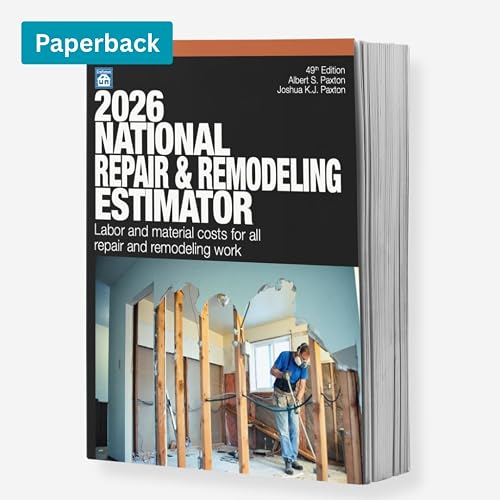
By Owen Palmer
Updated November 2026
If you are estimating bathroom remodel costs for the first time, the hardest part is rarely the tile or the fixtures. It is knowing which numbers to trust, how to break a job into labor, materials and overhead, and where unexpected charges tend to hide. This guide compares six reference books on construction cost estimating, so you can choose the one that matches how you plan: as a homeowner, a fix-and-flip investor, or someone who wants to understand the trade-side math. We looked at each title’s stated scope, how current its cost data is, how practical its worksheets appear, and what owners and readers commonly say about its usefulness.
Our top picks at a glance
- 1
 TOP CHOICEBest overallThe Book on Estimating Rehab Costs: The Investor's Guide to Defining YView on Amazon
- 2
 TOP CHOICEBest for current labor and material pricingContractor's Pricing Guide: Residential Repair & Remodeling Costs withView on Amazon
- 3
 TOP CHOICEBest for whole-house budgetingEstimating Home Construction CostsView on Amazon
- 4
 Best for older-home referenceEstimating Home Building CostsView on Amazon
- 5
 Best for line-item takeoffsConstruction Cost Estimating Handbook: Quantity Takeoff, Unit Pricing,View on Amazon
- 6
 Best for risk-aware planningConstruction Estimating and Cost Risk: How to Build Reliable DefensablView on Amazon
Our Top Picks
Before you buy any estimating reference, decide how you will use it. A homeowner pricing a single guest bath needs a different book than an investor comparing three flips, and a contractor-minded reader will want quantity takeoff methods that a casual planner never touches. Our selection looked at five things: the scope of the book (residential remodeling versus new construction or heavy civil work), how recent the cost data appears, whether the book includes worked examples or templates, how clearly it explains overhead and contingency, and the general pattern of reader feedback about whether it translates into a usable budget.
Quick Comparison
| Product | Best for | Key feature |
|---|---|---|
| The Book on Estimating Rehab Costs | Investors and homeowners planning a renovation budget | Step-by-step renovation plan and budget build-up |
| Contractor’s Pricing Guide: Residential Repair & Remodeling Costs with RSMeans Data 2026 | Anyone who needs current unit pricing | Residential repair and remodel unit costs |
| Estimating Home Construction Costs | Whole-house budgeting | Broad coverage of residential cost categories |
| Estimating Home Building Costs | Readers who want a classic reference | Long-established residential cost method |
| Construction Cost Estimating Handbook | Detailed takeoffs and bid assembly | Quantity takeoff and productivity worked examples |
| Construction Estimating and Cost Risk | Planners who want contingency logic | Estimating under uncertainty |
The Book on Estimating Rehab Costs: The Investor’s Guide to Defining Your Renovation Plan, Building Your Budget, and Knowing Exactly How Much It All Costs (Fix-and-Flip, 2)
The Book on Estimating Rehab Costs: The Investor's Guide to Defining Your Renovation Plan, Building Your Budget, and Knowing Exactly How Much It All Costs (Fix-and-Flip, 2)
Best for: Best overall for renovation budgeting
This book suits homeowners and investors who want a practical path from a rough scope to a line-item budget. Its title signals a focus on defining the renovation plan first and then building the budget around it, which is the order most first-time estimators need.
Key specs
- Format: paperback, part of a fix-and-flip series
- Subject: rehab and renovation cost estimating
Pros
- Walks through defining the scope before pricing anything
- Written with the renovation budget as the end goal
- Useful for comparing several projects side by side
Cons
- Oriented toward investment rehabs more than a single owner-occupied bath
- Price data will need checking against current local rates
Bottom line: A strong first purchase for anyone building a budget from scratch, especially if you may flip or rent the property later.
Contractor’s Pricing Guide: Residential Repair & Remodeling Costs with RSMeans Data 2026
Contractor's Pricing Guide: Residential Repair & Remodeling Costs with RSMeans Data 2026
Best for: Best for current labor and material pricing
This is aimed at readers who want unit-cost figures for residential repair and remodeling work. Anyone who has tried to estimate labor by hand will appreciate having a reference that lists typical costs per task.
Key specs
- Edition: 2026
- Subject: residential repair and remodeling costs using RSMeans data
Pros
- Organized around residential repair and remodel tasks
- Current edition year makes it easier to reflect recent conditions
- Good starting point for line-item pricing
Cons
- Unit costs are national baselines and still need regional adjustment
- Can feel dense for readers who only want a quick estimate
Bottom line: Best for readers who want line-item unit costs and are comfortable adjusting numbers to their own region.
Estimating Home Construction Costs
Estimating Home Construction Costs
Best for: Best for whole-house budgeting
This title fits readers who want a broad view of how residential costs are built up, from site work through finishes. A bathroom remodel becomes easier to fit into a larger budget once you understand the full cost structure.
Key specs
- Subject: residential construction cost estimating
- Scope: whole-house cost categories
Pros
- Covers the full cost structure of a home, not just one trade
- Helpful for placing a bath remodel within a total project budget
- Clear categories make it easy to build your own checklist
Cons
- Less focused on small-scale remodel pricing
- Older cost figures will need updating before use
Bottom line: Good for homeowners who are budgeting a larger renovation that includes a bathroom.
Estimating Home Building Costs
Estimating Home Building Costs
Best for: Best for older-home reference
This is a long-standing title in residential cost estimating. Readers who want to understand the classic method behind a cost estimate, rather than only current numbers, may find it useful.
Key specs
- Subject: residential building cost estimating
- Type: established reference title
Pros
- Explains the underlying estimating method
- Long-established title with a familiar structure
- Useful for learning how cost categories relate to each other
Cons
- Cost data is likely dated and must be updated locally
- Less suited to readers who want current pricing
Bottom line: A good companion for learning the method, paired with a current price source.
Construction Cost Estimating Handbook: Quantity Takeoff, Unit Pricing, Labor and Equipment Productivity, Overhead and Bid Assembly for Building and Heavy Civil Projects, with Worked Examples
Construction Cost Estimating Handbook: Quantity Takeoff, Unit Pricing, Labor and Equipment Productivity, Overhead and Bid Assembly for Building and Heavy Civil Projects, with Worked Examples
Best for: Best for line-item takeoffs
This handbook targets readers who want to measure quantities from plans and assemble bids. It is more technical than a homeowner guide, but worked examples make the process approachable for motivated DIYers.
Key specs
- Topics: quantity takeoff, unit pricing, productivity, overhead, bid assembly
- Includes worked examples
Pros
- Teaches quantity takeoff step by step
- Worked examples help translate theory into numbers
- Covers overhead and bid assembly, often skipped in homeowner guides
Cons
- Written with building and heavy civil projects in mind, so it can feel broad
- May be more detail than a single bathroom needs
Bottom line: Best for readers who want to measure and price every line item themselves.
Construction Estimating and Cost Risk: How to Build Reliable Defensable Estimates Under Uncertainty (Construction Cost and Project Controls Series)
Construction Estimating and Cost Risk: How to Build Reliable Defensable Estimates Under Uncertainty (Construction Cost and Project Controls Series)
Best for: Best for risk-aware planning
This title focuses on how to build estimates that hold up when conditions change. Renovations often surprise owners with hidden damage or delays, so a book on uncertainty and contingency can be a useful complement to a pricing guide.
Key specs
- Subject: estimating under uncertainty and cost risk
- Part of a construction cost and project controls series
Pros
- Explains how to set contingency rather than guessing
- Useful for defending a budget to a lender or partner
- Complements unit-cost references well
Cons
- More conceptual than a pricing reference
- Less practical for someone who only needs a quick bathroom number
Bottom line: A good second book for anyone whose bathroom budget needs a realistic contingency.
Buying Guide
Choosing a cost-estimating book is easier when you know which factors matter for your project. The points below help you match a title to how you plan.
Scope: residential remodel versus new construction
Check whether the book covers the kind of work you are doing. A bathroom remodel involves demolition, plumbing rough-in, tile and fixtures, and most new-construction references spend little time on those tasks.
Good picks for this: The Book on Estimating Rehab Costs, Contractor’s Pricing Guide
Currency of cost data
Labor and material prices change. Look at the edition year and the source of the data. Expect to adjust any national figure to your local market, since labor rates vary widely between regions.
Good picks for this: Contractor’s Pricing Guide, Estimating Home Construction Costs
Worked examples and templates
Books with worked examples make it easier to build your own estimate. Look for sample takeoffs, unit-price tables, or budget worksheets you can copy into a spreadsheet.
Good picks for this: Construction Cost Estimating Handbook, The Book on Estimating Rehab Costs
Depth of quantity takeoff
If you plan to measure the job from drawings, choose a title that explains how to count and measure each item. Homeowners who only need a ballpark may not need this level of detail.
Good picks for this: Construction Cost Estimating Handbook
Contingency and risk
Renovations often reveal problems behind walls or under floors. A good estimating book explains how to set a contingency percentage and why it matters, rather than leaving the reserve to guesswork.
Good picks for this: Construction Estimating and Cost Risk, Construction Cost Estimating Handbook
Use case: homeowner versus investor
Homeowners usually want a single-project budget and a clear checklist. Investors often need repeatable methods to compare several properties. Match the book to the way you will use the numbers.
Good picks for this: The Book on Estimating Rehab Costs, Estimating Home Building Costs
Readability and layout
Tables, clear headings and a logical order make a reference easier to use mid-project. Skim the table of contents and a sample chapter before buying.
Good picks for this: Estimating Home Construction Costs, Contractor’s Pricing Guide
FAQ
Can I estimate a bathroom remodel using only a book?
You can build a solid working estimate from a good reference, but treat it as a starting point. Get written quotes from licensed trades for the work you cannot price confidently yourself, such as plumbing or electrical. For those trades, consult a licensed professional.
How much contingency should I include?
Many estimators add a reserve on top of the base estimate to cover surprises like hidden water damage or code upgrades. The right percentage depends on the age of the house and how much you can see before demolition. A risk-focused book can help you reason through this rather than picking a number at random.
Do I need a book that is updated every year?
Current editions reflect more recent pricing, which helps for labor and materials. Older books still teach the method, so many readers pair an older method text with a current pricing guide.
What is quantity takeoff?
Quantity takeoff means measuring each item you will need, such as square feet of floor tile, linear feet of pipe or number of fixtures, and then pricing each quantity. It is the most accurate way to estimate, and it is covered in depth in the construction-focused handbook above.
Should I include overhead and profit in my estimate?
If you are hiring out the work, the contractor’s price will include overhead and profit. If you are doing the work yourself, you should still account for tool purchases, permits, waste disposal and your own time. A handbook covering overhead and bid assembly can help you organize these costs.
Are regional prices important?
Yes. Labor rates and material availability differ by region and even by city. Use national figures as a baseline and adjust them using quotes from local trades. Speak with a licensed contractor or local building professional before finalizing a budget.
Conclusion
For most homeowners planning a single bathroom, start with The Book on Estimating Rehab Costs to learn how to define scope and build a budget. Add a current pricing guide, such as the Contractor’s Pricing Guide, to ground your line items in recent unit costs. If you want to measure quantities from plans and assemble a detailed bid, the Construction Cost Estimating Handbook is the more technical choice. For a bigger project where unexpected costs could strain your budget, pair any of these with Construction Estimating and Cost Risk to set a contingency you can defend. Whichever you choose, verify figures against local quotes before committing money.
Sources
- Guidance on home energy upgrades and efficiency considerations that can affect renovation scope and budget (energy.gov)
- Consumer safety information relevant to bathroom fixtures, electrical items and product recalls (cpsc.gov)
- Industry research and housing-market context from the National Association of Home Builders
Related reading
- How Much Should It Cost to Remodel a Bathroom? A Homeowner's Breakdown
- Cost of Bathroom Remodel Calculator: 7 Best Tools Compared (2026)
- Cost for Bathroom Remodel: A Step-by-Step Guide to Budgeting Your Project (2026)
- Bathroom Remodel Budget Calculator: 7 Best Tools for Planning Your Costs
- 6 Best Books on Estimated Cost to Remodel Bathrooms (2026)
- 3 Best Bathroom Remodel Costs Estimator Guides for Homeowners (2026)
About Owen Palmer
Owen Palmer is part of our editorial team and reviews and edits our DIY home renovation guides, checking product details against manufacturer specifications and owner feedback.