
 By Owen Palmer
Updated November 2026
If you are patching a gap around a window frame, a hole where a pipe passes through a wall, or a void behind a loose panel, expanding foam for drywall repair can be a practical fill. The catch is that most foams are built for insulation and air sealing, not for a smooth finished surface, so choosing the right can matters. We compared five widely sold polyurethane foam sealants based on the product specifications, the brand’s reputation, and the patterns owners tend to describe in their feedback. We did not test these products ourselves, so treat the notes below as a research summary.
Our top picks at a glance
- 1
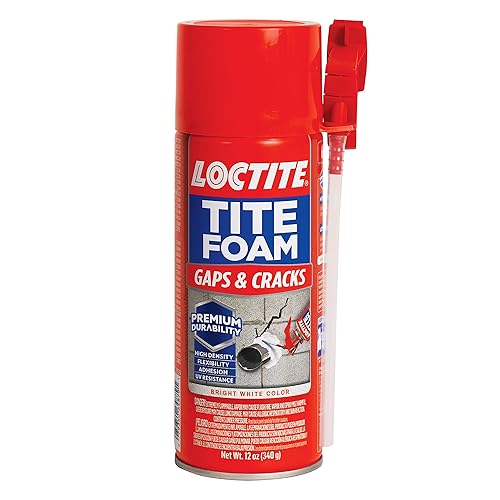 TOP CHOICEBest overallLoctite Tite Foam Gaps & Cracks Spray Foam SealantView on Amazon
- 2
 TOP CHOICEBest for large voidsLoctite Tite Foam Big Gaps Spray Foam SealantView on Amazon
- 3
 TOP CHOICEBest for repeat projectsLoctite Polyurethane Foam Sealant for Gaps & Cracks (Pack of 2)View on Amazon
- 4
 Best for wall cavitiesDAP Wall and Cavity Foam with Wide Spray ApplicatorView on Amazon
- 5
 Best budget pickRed Devil 0913 Spray Foam & FillView on Amazon
Our Top Picks
Quick Comparison
| Product | Best for | Key feature |
|---|---|---|
| Loctite Tite Foam Gaps & Cracks Spray Foam Sealant | Small to medium gaps | Expanding polyurethane in a 12 oz can |
| Loctite Tite Foam Big Gaps Spray Foam Sealant | Large voids | Higher-expansion formula for wider openings |
| Loctite Polyurethane Foam Sealant for Gaps & Cracks (Pack of 2) | Repeat or multi-spot projects | Two cans per pack |
| DAP Wall and Cavity Foam | Wall cavities and hidden voids | Wide spray applicator tip |
| Red Devil 0913 Spray Foam & Fill | Light, occasional fills | Off-white polyurethane sealant |
Loctite Tite Foam Gaps & Cracks Spray Foam Sealant
Expanding Polyurethane Foam Sealant Fills Gaps & Cracks To Insulate, Create Airtight Seals & Block Drafts Loctite Tite Foam Gaps & Cracks Spray Foam Sealant, White, 12 oz, 1 Pack
Best for: Small to medium gaps and general-purpose sealing
This is a good first can for a homeowner who needs to fill a gap and wants a brand with wide availability. It is aimed at gaps and cracks rather than large cavities, so it suits trim gaps and small penetrations.
Key specs
- Expanding polyurethane foam sealant
- 12 oz aerosol can, white
- Designed to fill gaps and cracks and block drafts
Pros
- Widely available and easy to find
- Clear application for small gaps
- Suitable for sealing around openings
Cons
- Not intended for large voids
- Foam must be trimmed and sanded before any finish coat
Bottom line: A sensible pick for a single small repair in a wall or trim gap.
Loctite Tite Foam Big Gaps Spray Foam Sealant
Loctite Tite Foam Big Gaps Spray Foam Sealant, 12 fl oz Can, 1 Pack – Polyurethane Expanding Insulation
Best for: Large voids
This version is marketed for wider openings than the standard gap formula. It fits projects where a hole or cavity is too big for a small-gap foam to fill without multiple passes.
Key specs
- 12 fl oz can
- Polyurethane expanding insulation foam
- Formulated for big gaps
Pros
- Fills wider openings in fewer passes
- Same brand familiar from smaller gap formulas
- Useful for filling deep cavities
Cons
- Expansion can push past the opening if overfilled
- Requires patience to trim cured foam cleanly
Bottom line: Choose this if the void you are filling is clearly larger than a crack.
Loctite Polyurethane Foam Sealant for Gaps & Cracks (Pack of 2)
Loctite Polyurethane Foam Sealant for Gaps & Cracks | Expanding Foam | 12 fl oz Can | Pack of 2 | Red
Best for: Repeat projects with several spots to fill
A two-can pack makes sense when you have several gaps around a room or a larger job spread over a weekend. Owners often buy packs to avoid running out mid-project.
Key specs
- Pack of 2 cans, 12 fl oz each
- Polyurethane expanding foam sealant
- Gap and crack formula
Pros
- Good value when you need more than one can
- Consistent formula across the pack
- Convenient for multi-spot work
Cons
- Unused cans lose quality once the seal is broken
- More than most small fixes need
Bottom line: Best for someone who expects to fill several openings in one project.
DAP Wall and Cavity Foam with Wide Spray Applicator
DAP Wall and Cavity Foam with Wide Spray Applicator Aerosol, Off White, 20 oz. (7565000370)
Best for: Wall cavities and hidden voids
The wide applicator tip is designed to cover a broader area per pass, which helps when you are filling a cavity rather than a thin crack. DAP is a long-established sealant brand, which helps with consistency.
Key specs
- 20 oz aerosol can
- Off-white foam
- Wide spray applicator included
Pros
- Larger can for bigger jobs
- Wide applicator spreads foam over larger areas
- Well-known sealant brand
Cons
- Wide spray is less precise for tiny cracks
- Can be more foam than a small patch needs
Bottom line: A good match for filling wall cavities where precision matters less than coverage.
Red Devil 0913 Spray Foam & Fill
Red Devil 0913 Spray Foam & Fill Small Gaps & Cracks Expanding Insulation, Polyurethane Sealant, 12 oz, Off-White, Pack of 1
Best for: Light, occasional fills on a budget
Red Devil is a recognizable name in hardware aisles, and this off-white polyurethane sealant suits a homeowner who needs one small fill and does not want to spend much on it.
Key specs
- 12 oz can
- Off-white polyurethane foam
- Designed for small gaps and cracks
Pros
- Budget-friendly option
- Off-white color is close to common drywall shades
- Simple one-can job
Cons
- Limited for larger voids
- Fewer owner-reported details than the Loctite lines
Bottom line: A reasonable choice for a single small gap when you are keeping the project lean.
Buying Guide
Foam type and expansion
Polyurethane expanding foam grows as it cures, so the size of the opening determines whether you need a gap formula or a big-gap formula. Overfilling a small opening can bulge past the surface and leave a lump you have to carve back. Check the can’s stated coverage and expansion notes before you start.
Good picks for this: Loctite Tite Foam Gaps & Cracks, Loctite Tite Foam Big Gaps
Size of the void
Measure the opening before you buy. Small cracks and gaps under about a quarter inch are well served by standard gap foams. Wider cavities usually need a big-gap formula or a wide applicator, and very deep voids may need backer material so the foam does not sag.
Good picks for this: Loctite Tite Foam Big Gaps, DAP Wall and Cavity Foam
Applicator style
Some cans come with a straw tube for precision work, while wide spray tips cover more area quickly. A narrow nozzle is better for a seam, and a wide applicator suits a cavity. Make sure the applicator matches the job rather than assuming one fits all.
Good picks for this: DAP Wall and Cavity Foam, Red Devil 0913 Spray Foam & Fill
Quantity and pack size
Count the number of openings before you buy. A single can is enough for one or two small fills, but several spots or a larger cavity may need more. Keep in mind that a partly used can does not keep indefinitely once the seal has been broken.
Good picks for this: Loctite Polyurethane Foam Sealant (Pack of 2), DAP Wall and Cavity Foam
Cured appearance and finishing
Cured polyurethane foam is not drywall. It can be trimmed with a utility knife once hard, but it does not take joint compound the way paper-faced wallboard does. Plan to cover the foam with a patch or joint compound after trimming, and sand lightly so the surface blends with the wall. Our sandpaper guide covers grit choices for that final step.
Good picks for this: Loctite Tite Foam Gaps & Cracks, Red Devil 0913 Spray Foam & Fill
Budget and intended use
If the fill is hidden behind trim or inside a cavity, a basic gap foam is usually enough. Premium-line sealants are useful when the seal must hold up to moisture or temperature swings, so match the product to the exposure rather than the label alone.
Good picks for this: Red Devil 0913 Spray Foam & Fill (budget pick), Loctite Polyurethane Foam Sealant (Pack of 2)
Safety and ventilation
Aerosol polyurethane foam releases irritating vapors while it cures. Work in a ventilated space, wear nitrile gloves and eye protection, and keep the room clear of pets and children until the foam is fully set. Manufacturers specify curing times on the label, so follow those directions closely. If you have any respiratory condition, consult a healthcare professional before working with aerosol foams.
Good picks for this: Loctite Tite Foam Gaps & Cracks, DAP Wall and Cavity Foam
FAQ
Can expanding foam be used to repair drywall holes?
It can fill the inside of a hole or cavity, but it is not a finished surface. Owners generally fill the void with foam, trim it once cured, then cover it with a patch and joint compound for a smooth look. Larger holes usually need a proper drywall patch.
How long does expanding foam take to cure?
Cure time varies by product and temperature. Manufacturers specify a range on the can, and most polyurethane foams need several hours before trimming. Avoid cutting or sanding until the foam is fully firm.
Can you paint over expanding foam?
Painting over cured foam is possible, but it usually needs a primer and a skim coat of joint compound first so the texture matches the wall. Paint alone will not hide the foam’s porous surface.
Is expanding foam safe to use indoors?
It is intended for indoor sealing when used as directed, with good ventilation and protective gear. Keep people and pets out of the room during application and curing. If you have concerns about indoor air quality or health, consult a professional.
What is the difference between gap foam and big-gap foam?
Gap formulas are made for narrow cracks and openings, while big-gap formulas are meant for wider voids and expand more. Using a gap foam in a large cavity can leave the cavity under-filled, and a big-gap foam in a tiny crack can overfill it.
Should I use expanding foam or a drywall patch kit?
For small holes and seams, a patch kit or joint compound is usually the cleaner finish. Expanding foam is more useful for filling hidden voids, gaps around fixtures, and openings behind the surface. Many homeowners combine the two: foam inside, a patch on top.
Conclusion
For most small gaps, the Loctite Tite Foam Gaps & Cracks Spray Foam Sealant is a practical starting point. If the opening is wide, the Loctite Tite Foam Big Gaps formula fits better, and the DAP Wall and Cavity Foam suits larger cavities. The two-can Loctite pack is worth considering for multi-spot work, while the Red Devil 0913 Spray Foam & Fill is a reasonable pick for a single light fill. Measure the void, match the formula to the opening, and plan to finish the surface with joint compound for the best result.
Sources
- Workplace guidance on chemical exposure, ventilation and protective equipment for aerosol products (osha.gov)
- Indoor air quality information and tips for ventilating home projects (epa.gov)
- Consumer product safety guidance for household chemicals and aerosol containers (cpsc.gov)
Related reading
- What Is the Average Price for Drywall Repair? Costs and Factors
- What Grit Sandpaper for Drywall Repair: A Step-by-Step Guide
- What Do I Need to Repair Drywall: Tools and Supplies for Beginners
- Wet-n Fix Drywall Anchor Repair: Step-by-Step Guide for Loose Anchors
About Owen Palmer
Owen Palmer is part of our editorial team and reviews and edits our DIY home renovation guides, checking product details against manufacturer specifications and owner feedback.


