
 By Owen Palmer
Updated November 2026
Gluing down laminate flooring is less common than floating it, but it has real advantages. A glued floor feels solid underfoot, doesn’t creak or shift, and suits rooms where a floating floor would move too much, such as stairs, heavily trafficked hallways, or spaces with uneven subfloors. The catch is that laminate was never designed to be bonded the way solid hardwood is, so the adhesive you choose matters a great deal. This guide compares three adhesives, using the criteria that actually decide whether a glued laminate floor lasts: what the adhesive is rated for, how it spreads, how it cures, and how easy it is to remove later.
Our top picks at a glance
- 1
 TOP CHOICEBest overallDAP 141 Multi-Purpose Floor AdhesiveView on Amazon
- 2
 Best for wood-look subfloorsRoberts 1487 Engineered+ Wood Flooring AdhesiveView on Amazon
- 3
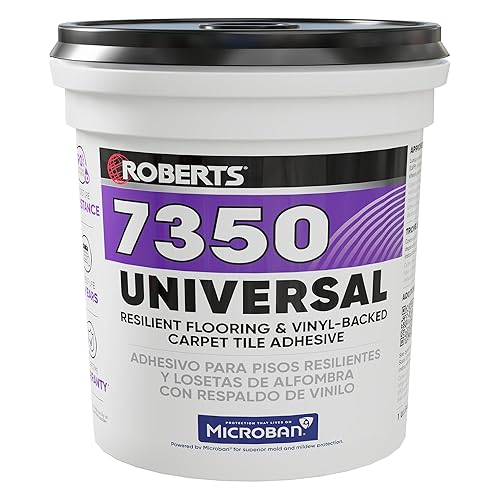 Best budget pickROBERTS Universal Resilient Flooring & Vinyl-Backed Carpet Tile AdhesiveView on Amazon
The selection criteria here are based on manufacturer specifications, brand reputation for flooring adhesives, and patterns that installers and owners commonly describe. We did not test these products ourselves. Where a detail isn’t stated on the product listing, we left it out rather than guess.
Our Top Picks
Quick Comparison
| Product | Best for | Key feature |
|---|---|---|
| DAP 141 Multi-Purpose Floor Adhesive, 1 Quart | General-purpose gluing on a range of subfloors | Trowel-applied, labeled for multiple flooring materials |
| ROBERTS Universal Resilient Flooring & Vinyl-Backed Carpet Tile Adhesive | Budget-conscious projects with resilient-type backings | Universal adhesive for resilient and vinyl-backed products |
| Roberts 1487 Engineered+ Wood Flooring Adhesive | Engineered wood planks and parquet-style installations | Formulated for engineered wood planks and parquet |
DAP 141 Multi-Purpose Floor Adhesive
Flooring Adhesives, Floor Covering Adhesives, 32 oz pail, for cork polypropylene rubber vinyl wood, applied by trowel DAP 141 Multi-Purpose Floor Adhesive, 1 Quart, Off-White
Best for: General-purpose gluing on a range of subfloors
This is a good fit for homeowners who want one adhesive that can handle several flooring types across different rooms, or who are gluing laminate over a subfloor that isn’t purely wood, such as concrete or an older resilient floor.
Key specs
- Container size: 1 quart, per the listing name
- Color: off-white
- Application: trowel-applied, per the product name
- Listed for multiple floor materials, including cork, polypropylene, rubber, vinyl, and wood, per the listing
Pros
- Labeled for a wide range of flooring materials, so one product can cover several rooms
- Trowel application gives you control over bed thickness
- Widely available, which makes it easy to restock mid-project
Cons
- A 1-quart container covers only a small area, so larger rooms need more containers
- General-purpose formulas aren’t specifically engineered for laminate, so you should confirm compatibility with your flooring manufacturer
Bottom line: Choose this if you want a versatile adhesive for a small or mixed-material project and you’ve confirmed it’s acceptable for your laminate’s backing.
Roberts 1487 Engineered+ Wood Flooring Adhesive
Roberts 1487 Engineered+ Wood Flooring Adhesive for Engineered Wood Planks and Parquet Flooring – 1 Gal. (3.78 L)
Best for: Wood-look subfloors and engineered wood-style installations
This suits people gluing laminate in rooms where the product is installed alongside or over engineered wood, or where the floor will be closest in character to a wood-plank look. It’s built for engineered wood planks and parquet, which makes it a reasonable reference point when you’re working with wood-based materials.
Key specs
- Container size: 1 gallon (3.78 L), per the listing name
- Designed for engineered wood planks and parquet flooring, per the listing name
Pros
- Formulated for wood-based planks, which fits the look of many laminate products
- One-gallon size covers a larger area than a quart-size tub
- Its named use case makes compatibility easy to judge against your product
Cons
- It’s built for engineered wood rather than laminate, so confirm with your laminate manufacturer before using it
- Wood-specific adhesives can be less forgiving of moisture in the subfloor than general products
Bottom line: Pick this for larger rooms where the flooring is wood-based or wood-look and you want an adhesive matched to that material family.
ROBERTS Universal Resilient Flooring & Vinyl-Backed Carpet Tile Adhesive
ROBERTS Universal Resilient Flooring & Vinyl-Backed Carpet Tile Adhesive – 1 Gal. (3.78 L)
Best for: Budget-conscious projects with resilient-type backings
This is the pick for someone who wants a universal adhesive for a larger area without paying for a specialty formula, particularly where the subfloor is resilient or the backing has a vinyl component.
Key specs
- Container size: 1 gallon (3.78 L), per the listing name
- Universal formula for resilient flooring and vinyl-backed carpet tile, per the listing name
Pros
- Universal labeling covers several resilient and vinyl-backed materials
- One-gallon container suits larger rooms
- Generally positioned as a value option among flooring adhesives
Cons
- Not specifically engineered for laminate or wood, so compatibility needs checking
- Owners often report that surface preparation matters more with universal products, so the subfloor must be clean and dry
Bottom line: Choose this if you’re gluing a resilient or vinyl-backed product over a suitable subfloor and want to keep material costs in check.
Buying Guide
Confirm the adhesive is compatible with your laminate
Laminate is a wood-fiber core with a melamine wear layer and a backing, and manufacturers vary in what they permit. Some explicitly forbid gluing their floating products. Check your laminate’s installation instructions before buying adhesive. If the manufacturer allows gluing, note the approved adhesive type.
Good picks for this: DAP 141 Multi-Purpose Floor Adhesive, Roberts 1487 Engineered+ Wood Flooring Adhesive
Match the adhesive to the subfloor
Concrete, plywood, and existing resilient floors each behave differently. Concrete must be dry and tested for moisture, and plywood should be firm and free of flex. An adhesive that performs well on one may not on another, so match the product’s stated substrates to what you’re covering.
Good picks for this: DAP 141 Multi-Purpose Floor Adhesive, ROBERTS Universal Resilient Flooring Adhesive
Check the coverage and container size
Adhesive coverage is listed per container, and trowel-applied products are usually spread at a specified notch size. Measure the room in square feet, add about 10 percent for waste, and divide by the coverage rate on the label. Buying a quart when you need a gallon wastes time mid-install.
Good picks for this: Roberts 1487 Engineered+ Wood Flooring Adhesive, ROBERTS Universal Resilient Flooring Adhesive
Consider the application method
Trowel-applied adhesives need a notched trowel that matches the manufacturer’s recommended size. Spreading too thin leaves dry spots; too thick causes squeeze-out and longer cure times. Practice on a scrap section first if you haven’t used a trowel before.
Good picks for this: DAP 141 Multi-Purpose Floor Adhesive, Roberts 1487 Engineered+ Wood Flooring Adhesive
Think about working time and cure time
Open time is how long the adhesive stays tacky enough to set the flooring. Cure time is how long before you can walk on it or put furniture back. Plan the room so you can finish laying within the open time, and keep traffic off the floor until the adhesive has fully cured.
Good picks for this: ROBERTS Universal Resilient Flooring Adhesive, DAP 141 Multi-Purpose Floor Adhesive
Plan for removal and future repairs
Glued laminate is harder to remove than a floating floor. Once bonded, individual planks can be difficult to lift without damage, so think about whether you may want to replace sections later. Some owners choose gluing only where the benefit is clear, such as stairs or high-traffic zones.
Good picks for this: Roberts 1487 Engineered+ Wood Flooring Adhesive, DAP 141 Multi-Purpose Floor Adhesive
Ventilation and handling
Flooring adhesives release fumes while they cure, and some contain solvents. Open windows, run fans, and follow the label’s safety directions and any recommended protective equipment. Keep children and pets out of the room during application and curing.
Good picks for this: DAP 141 Multi-Purpose Floor Adhesive, ROBERTS Universal Resilient Flooring Adhesive
FAQ
Can you glue down laminate flooring?
Some manufacturers allow it and others don’t. Check your product’s installation guide first. If gluing is permitted, use an adhesive the manufacturer approves or one labeled for the subfloor and flooring type.
Is glued laminate better than a floating floor?
It depends on the room. Glued laminate feels more solid and suits stairs and high-traffic areas. A floating floor is easier to remove and repair. Neither is universally better.
Which subfloor works best for gluing laminate?
A flat, dry, firm subfloor is essential. Concrete should be moisture-tested, and plywood should be stiff and well fastened. Uneven or damp subfloors cause adhesion problems.
Do I need a special trowel?
Most trowel-applied adhesives specify a notch size. Use the trowel the manufacturer recommends to get the right bed thickness.
How long does glued laminate take to cure?
Cure time varies by product and conditions. Follow the label, and keep foot traffic and furniture off the floor until the adhesive has fully set.
Can I remove glued laminate later?
It’s harder than removing a floating floor. Expect some damage to planks and possibly the subfloor. Consider this before committing to a full glue-down installation.
For structural, moisture, or health concerns, consult a qualified flooring professional before starting.
Conclusion
For most homeowners, DAP 141 Multi-Purpose Floor Adhesive is the most versatile starting point, especially if your project involves mixed materials. Roberts 1487 Engineered+ Wood Flooring Adhesive fits wood-based and wood-look installations in larger rooms. ROBERTS Universal Resilient Flooring Adhesive suits budget-conscious projects over resilient or vinyl-backed surfaces. Whichever you choose, confirm compatibility with your laminate manufacturer first, prepare the subfloor carefully, and plan your open time so the work stays on schedule. For related planning, see 7 Best Tools for Putting Down Laminate Flooring in 2026 and Underlay for Laminate Flooring: 6 Best Options for Every Room (2026).
Sources
- Guidance on indoor air quality, ventilation, and reducing exposure to chemical fumes during home projects (epa.gov)
- Workplace chemical handling and safety data guidance relevant to adhesive use (osha.gov)
- Consumer product safety information for household chemicals and home improvement materials (cpsc.gov)
Related reading
- Wooden and Laminate Flooring (2026): Which Is Better for Your Home?
- Wooden Laminate Flooring Identification: How to Tell What You Have
- Wooden Flooring vs Laminate: Which Wins for Your Home? (2026)
About Owen Palmer
Owen Palmer is part of our editorial team and reviews and edits our DIY home renovation guides, checking product details against manufacturer specifications and owner feedback.



