
 By Owen Palmer
Updated November 2026
If you are planning to lay laminate yourself, the most useful thing you can do before you open the first box is learn where other people go wrong. Common mistakes when laying laminate flooring tend to be the same few errors repeated across rooms: a subfloor that was never checked, expansion gaps that were skipped, planks laid in the wrong direction, and underlayment chosen without thought. We looked for instructional books that cover these problems clearly, judging each on how thoroughly it explains preparation, installation steps, troubleshooting, and how well its guidance matches what manufacturers specify. Our picks below are books rather than tools, so you can read them alongside the floor you are working on.
A quick note on method: this list is based on the published contents of each title, the authors’ stated scope, and the patterns that homeowners often describe in reader feedback. We have not tested these books in a workshop, and nothing here is a substitute for the installation instructions printed by your flooring manufacturer, which should always take priority.
Our Top Picks
Quick Comparison
| Product | Best for | Key feature |
|---|---|---|
| Install Laminate Flooring: Tips And Tricks To Make You A Laminate Flooring Wizard | Readers who want practical shortcuts | Focus on time-saving tips and common pitfalls |
| How To Install Laminate Flooring | First-time installers wanting a straightforward walkthrough | Step-by-step sequence from start to finish |
| A Beginner’s Guide to Effortless Laminate Floor Installation | Complete beginners who feel nervous about starting | Confidence-building explanations of each stage |
| Hardwood • Vinyl • Laminate — Flooring Basics | Homeowners comparing several floor types | Covers selecting, estimating, preparing and installing |
| Basic Home Flooring Installation: The Complete Guide | Readers planning several floor types in one project | Broad coverage of LVP, laminate, tile and hardwood |
Install Laminate Flooring: Tips And Tricks To Make You A Laminate Flooring Wizard
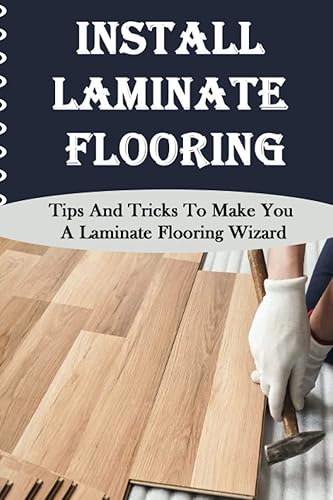
Install Laminate Flooring: Tips And Tricks To Make You A Laminate Flooring Wizard
Best for: Readers who want practical shortcuts and a feel for the tricks that keep a job on schedule.
This title suits someone who has already read the basics and wants to avoid the small errors that slow experienced-looking installs down. Its tips-focused framing makes it easy to dip into when you hit a specific problem mid-room.
Key specs:
- Format: instructional paperback, tips-oriented layout
- Subject: laminate installation from preparation through finishing
Pros:
- Practical tips that address common errors directly
- Easy to scan when you need a quick answer
- Useful for checking your plan against known pitfalls
Cons:
- Less suited to absolute beginners who need every step spelled out
- Tips-first structure can leave some foundational topics thinner
Bottom line: A good second book for someone who has a basic plan and wants to catch the mistakes that trip up most installers.
How To Install Laminate Flooring

How To Install Laminate Flooring
Best for: First-time installers who want a straightforward, sequential walkthrough.
If you have never laid a floating floor, a title built around a clear sequence of steps is the easiest starting point. Following the work in order helps prevent the most common error of skipping preparation and jumping straight to planks.
Key specs:
- Format: instructional guide with step-by-step structure
- Subject: laminate installation from start to finish
Pros:
- Logical, sequential order that suits first-timers
- Covers the full installation path in one place
- Helps you build a checklist before you begin
Cons:
- Broad step-by-step coverage may not go deep on specialized problems
- You will still need to cross-check measurements against your own floor
Bottom line: Best for a homeowner who wants a clear route from bare subfloor to finished floor without guessing the order of work.
A Beginner’s Guide to Effortless Laminate Floor Installation

A Beginner's Guide to Effortless Laminate Floor Installation": Unlock the Secrets of Installing Laminate Flooring with Confidence and Achieve Stunning Results
Best for: Complete beginners who feel nervous about starting a flooring project.
This book is aimed at readers who are not sure they can do the job at all. Its confidence-building framing explains why each stage matters, which helps prevent the rushed decisions that cause gaps, buckling and misaligned seams.
Key specs:
- Format: beginner-focused instructional guide
- Subject: laminate installation with an emphasis on understanding each stage
Pros:
- Explains the reasoning behind each step, not just the action
- Reassuring tone for people new to home improvement
- Good at highlighting preparation, which many beginners underrate
Cons:
- Beginner framing may feel slow for readers with some experience
- Less detail on advanced layouts such as irregular rooms
Bottom line: Suited to anyone who wants to understand why laminate fails when it is installed carelessly before picking up a tool.
Hardwood • Vinyl • Laminate — Flooring Basics: Selecting • Estimating • Preparing • Installing

Hardwood • Vinyl • Laminate — Flooring Basics: Selecting • Estimating • Preparing • Installing
Best for: Homeowners comparing several floor types before choosing one.
If you have not yet settled on laminate, this book covers selection and estimating alongside installation. That wider view helps you judge whether laminate is the right material for the room, which prevents a common mistake: buying the wrong product for the space.
Key specs:
- Format: general flooring reference covering several materials
- Subject: selecting, estimating, preparing and installing
Pros:
- Helps you compare laminate against hardwood and vinyl
- Includes estimating, which reduces ordering mistakes
- Useful as a single reference for a whole-house plan
Cons:
- Covering several materials means laminate gets less depth than a dedicated title
- May be more than you need if you are certain about laminate
Bottom line: A sensible choice if you are still deciding between floor types and want the preparation advice that applies to all of them.
Basic Home Flooring Installation: The Complete Guide to Installing LVP, Laminate, Tile, Hardwood and More

Basic Home Flooring Installation: The Complete Guide to Installing LVP, Laminate, Tile, Hardwood and More
Best for: Readers planning several floor types across a home in one project.
This is the broadest title on the list. It suits a homeowner who expects to lay laminate in one room and a different floor elsewhere, since the shared preparation advice applies to most types.
Key specs:
- Format: comprehensive installation guide
- Subject: LVP, laminate, tile, hardwood and other flooring types
Pros:
- Covers many floor types, useful for whole-home projects
- Strong on general preparation that carries over between materials
- Good reference to keep on the job site
Cons:
- Breadth means each material receives less specific detail
- Laminate-specific troubleshooting may be shallower than a dedicated book
Bottom line: The best fit for someone who wants one book to cover a multi-floor renovation rather than a single laminate project.
Buying Guide
Choosing a reference for laminate work comes down to what you need to avoid. The factors below cover the areas where most installation errors happen, so you can judge any book, or the advice in it, against the real conditions of your floor.
Subfloor Preparation Coverage
Laminate is a floating floor, so it depends heavily on a flat, clean, dry base. Check whether a book explains how to measure flatness, typically with a straightedge across the floor, and what to do about high or low spots. A common mistake is treating subfloor work as optional, and a good reference should make it a clear first step.
Good picks for this: Install Laminate Flooring: Tips And Tricks To Make You A Laminate Flooring Wizard; A Beginner’s Guide to Effortless Laminate Floor Installation
Expansion Gap Guidance
Laminate expands and contracts with humidity and temperature. Manufacturers generally specify an expansion gap around the perimeter of the room, often around a quarter inch, and the gap must be covered by trim or molding. Look for a book that explains why the gap is needed rather than only saying to leave one, since this is one of the most frequently skipped steps.
Good picks for this: How To Install Laminate Flooring; Install Laminate Flooring: Tips And Tricks To Make You A Laminate Flooring Wizard
Underlayment and Moisture Protection
Underlayment cushions the floor and can add a moisture barrier, but the right choice depends on the subfloor and on whether there is a vapor concern, such as concrete slabs. A reference should explain when a separate vapor barrier is needed and how it is installed. Check that any guidance agrees with your manufacturer’s instructions.
Good picks for this: Basic Home Flooring Installation: The Complete Guide to Installing LVP, Laminate, Tile, Hardwood and More; Hardwood • Vinyl • Laminate — Flooring Basics
Layout and Plank Direction
Planks are usually laid parallel to the main light source or the longest wall, and end joints should be staggered so they do not line up row to row. Starting the first row with a poorly squared wall is a frequent error that throws off the entire room. A useful book shows how to find a straight starting line and how to plan the stagger, ideally with diagrams.
Good picks for this: How To Install Laminate Flooring; A Beginner’s Guide to Effortless Laminate Floor Installation
Room Size and Shape
Long rooms, narrow hallways and rooms with many corners each raise different planning questions, including how to handle transitions and how many planks to buy. A reference that addresses estimating and irregular shapes will help you avoid running short or leaving awkward offcuts. Plan for extra material to cover cutting waste.
Good picks for this: Hardwood • Vinyl • Laminate — Flooring Basics; Basic Home Flooring Installation: The Complete Guide to Installing LVP, Laminate, Tile, Hardwood and More
Durability and Floor Type Choice
Not every room suits laminate. Bathrooms and rooms that flood regularly need careful consideration, since standard laminate swells when water sits on its surface. Choosing the right material for the room is itself a way of avoiding mistakes. Compare the scope of each book, because broader titles help you weigh laminate against alternatives.
Good picks for this: Hardwood • Vinyl • Laminate — Flooring Basics; Basic Home Flooring Installation: The Complete Guide to Installing LVP, Laminate, Tile, Hardwood and More
Care, Maintenance and Troubleshooting
A good book should also cover what to do after installation, including cleaning with a damp cloth rather than a soaked mop and dealing with planks that begin to separate or click loosely. Troubleshooting sections save time because they help you diagnose a problem before you tear up a whole row.
Good picks for this: Install Laminate Flooring: Tips And Tricks To Make You A Laminate Flooring Wizard; How To Install Laminate Flooring
FAQ
What is the most common mistake when laying laminate flooring?
Skipping or rushing subfloor preparation is widely cited as the most damaging error. Laminate needs a flat, clean and dry base, and high spots or debris can cause planks to click loosely or develop gaps over time.
Why do I need an expansion gap?
Laminate changes size with humidity and temperature. An expansion gap around the perimeter gives the floor room to move. Manufacturers typically specify the gap size, and it is normally hidden under baseboards or quarter-round trim.
Can I install laminate directly on concrete?
It is possible in many cases, but concrete can hold moisture. Check your manufacturer’s requirements, and consider a vapor barrier or moisture-resistant underlayment. Testing for moisture before you start is the safer approach.
Which direction should laminate planks run?
Planks are generally laid parallel to the main light source, which makes seams less visible, or along the longest wall. Confirm the best direction for your room layout before you begin the first row.
Should I stagger the end joints?
Yes. Staggering end joints row to row gives a more stable, natural look and helps the floor lock together. Lining up joints can weaken the floor and make it look less convincing.
Do I need to glue laminate planks together?
Most laminate is a floating floor that locks together without glue. Some manufacturers specify glue for particular products, so always follow the installation instructions provided with your flooring.
When should a professional be consulted?
If your subfloor has significant damage, moisture problems, or uneven areas you are not sure how to correct, consult a qualified flooring installer or contractor. Structural or moisture issues can affect the whole home, so professional advice is worth seeking before you proceed.
Conclusion
Most laminate failures come from a few avoidable errors: poor subfloor preparation, missing expansion gaps, careless layout and the wrong underlayment. The books above cover these areas from different angles. If you are new to the work, a clear step-by-step guide will keep you on track. If you already have some experience, a tips-focused title can help you catch problems early. For a multi-room or mixed-floor project, a broader reference offers the most practical value. Whichever you choose, read the manufacturer’s instructions for your specific product before you begin, and use a book to plan the work rather than to replace those instructions.
For further reading on the main topics, you may also find these guides on this site helpful, including Laminate Flooring Vapour Barrier: When You Need One and How to Install It, Adhesive for Laminate Flooring: When You Need It and When You Don't, and Waterproofing for Laminate Flooring: A Step-by-Step Guide for Beginners.
Sources
- Guidance on moisture control and home comfort that can inform decisions about humidity and subfloor conditions (energy.gov)
- Home safety information covering trip hazards and flooring-related injury prevention (cpsc.gov)
Related reading
- Laying Pergo Laminate Flooring: A Step-by-Step Guide for Beginners
- Laminate Flooring Is It Waterproof? What Actually Happens When It Gets Wet
- Cost Laying Laminate Flooring: A Step-by-Step Guide for Homeowners
About Owen Palmer
Owen Palmer is part of our editorial team and reviews and edits our DIY home renovation guides, checking product details against manufacturer specifications and owner feedback.
