
 By Owen Palmer
Updated November 2026
If you want to know how to install laminate flooring over concrete, the job is more about preparation than the clicking together of planks. Concrete slabs hold moisture, stay uneven and can release vapor into a floating floor for months. So the guides you choose matter. We looked at each title below for how clearly it covers slab moisture testing, flatness, underlayment and vapor barriers, the planks and transitions, and the common mistakes that cause buckling or gaps. We also weighed owner feedback patterns and how well each book fits a first-time installer working on a ground-floor or basement slab.
Our top picks at a glance
- 1
 TOP CHOICEBest overallHow To Install Laminate FlooringView on Amazon
- 2
 TOP CHOICEBest for whole-house projectsBasic Home Flooring InstallationView on Amazon
- 3
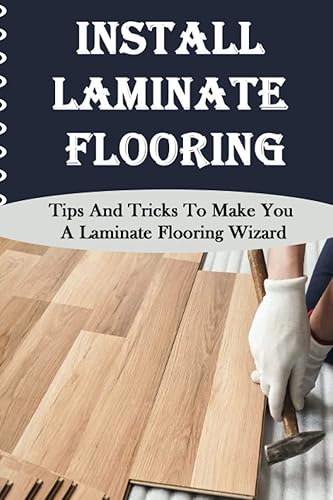 TOP CHOICEBest for tips and troubleshootingInstall Laminate Flooring: Tips And Tricks To Make You A Laminate Flooring WizardView on Amazon
- 4
 Best for beginnersA Beginner's Guide to Effortless Laminate Floor InstallationView on Amazon
- 5
 Best for planning and estimatingHardwood • Vinyl • Laminate — Flooring Basics: Selecting • EstimatingView on Amazon
- 6
 Best for aspiring installersFlooring Installer 101: How to Start in LVP, Hardwood, and LaminateView on Amazon
- 7
 Best budget pickZero-Stress Flooring : A Highly Efficient Step-By-Step Guide To InstalView on Amazon
Our Top Picks
Quick Comparison
| Product | Best for | Key feature |
|---|---|---|
| How To Install Laminate Flooring | Overall step-by-step learning | Focused laminate-only instructions |
| Basic Home Flooring Installation | Whole-house projects | Covers LVP, laminate, tile and hardwood |
| Install Laminate Flooring: Tips And Tricks | Tips and troubleshooting | Practical shortcuts and fixes |
| A Beginner’s Guide to Effortless Laminate Floor Installation | Beginners | Confidence-building walkthrough |
| Hardwood • Vinyl • Laminate — Flooring Basics | Planning and estimating | Covers selecting, estimating and preparing |
| Flooring Installer 101 | Aspiring installers | Business-minded, multi-floor coverage |
| Zero-Stress Flooring | Budget-minded DIYers | Efficient step-by-step structure |
How To Install Laminate Flooring
How To Install Laminate Flooring A related read: 6 Best Wood Flooring Router Bits for Tongue-and-Groove Installs (2026).
Best for: Overall step-by-step learning on laminate specifically
This is a good pick if you want a single-subject guide and do not need coverage of tile or hardwood. Readers who plan a basic laminate job over a slab will find the sequence easy to follow.
Key specs:
- Laminate-only focus
- Step-by-step installation sequence
Pros:
- Narrow scope keeps the content on point
- Easy to use as a checklist during the job
- Suits a first install
Cons:
- Less depth on concrete moisture testing than specialist titles
- Not useful if you also plan other floor types
Bottom line: A strong first choice for a homeowner who wants a focused laminate walkthrough.
Basic Home Flooring Installation
Basic Home Flooring Installation: The Complete Guide to Installing LVP, Laminate, Tile, Hardwood and More
Best for: Whole-house projects across several floor types
Ideal for renovators who plan to lay laminate in one room and tile or LVP in another. The broader scope helps you compare subfloor requirements side by side.
Key specs:
- Covers LVP, laminate, tile and hardwood
- Complete guide format
Pros:
- Useful comparisons between floor types
- Good for planning a whole-home project
- Covers preparation in several contexts
Cons:
- Laminate-specific details may be thinner than in dedicated titles
- Can feel long if you only need one floor type
Bottom line: Best for readers who want one reference across multiple floor types.
Install Laminate Flooring: Tips And Tricks To Make You A Laminate Flooring Wizard
Install Laminate Flooring: Tips And Tricks To Make You A Laminate Flooring Wizard
Best for: Tips and troubleshooting during the job
Suited to someone who has read the basics and wants practical fixes for gaps, cut-ins and uneven slabs. Owners often describe its tips as the part they return to mid-project.
Key specs:
- Focus on laminate installation tips
- Troubleshooting-oriented structure
Pros:
- Practical shortcuts for common problems
- Helpful for fixing mistakes mid-job
- Concise and action-focused
Cons:
- Assumes some basic knowledge already
- Less structured as a full beginner course
Bottom line: Pair it with a foundational guide for the best results on a slab.
A Beginner’s Guide to Effortless Laminate Floor Installation
A Beginner's Guide to Effortless Laminate Floor Installation": Unlock the Secrets of Installing Laminate Flooring with Confidence and Achieve Stunning Results
Best for: Beginners who want confidence before starting
Aimed at first-time renovators who worry about making expensive errors. The tone is encouraging and the steps are laid out in plain language.
Key specs:
- Beginner-oriented laminate walkthrough
- Step-by-step confidence focus
Pros:
- Plain-language explanations
- Good sequence for first-timers
- Reassuring tone for nervous DIYers
Cons:
- Marketing-heavy title may not reflect depth
- Check moisture-testing coverage before buying
Bottom line: A good match for a first-time installer who wants a gentle learning curve.
Hardwood • Vinyl • Laminate — Flooring Basics: Selecting • Estimating • Preparing • Installing
Hardwood • Vinyl • Laminate — Flooring Basics: Selecting • Estimating • Preparing • Installing
Best for: Planning, estimating and surface preparation
Useful for readers who want to work out quantities, underlayment and subfloor prep before buying planks. The selecting and estimating sections help avoid over-ordering.
Key specs:
- Covers selecting, estimating, preparing and installing
- Multi-material coverage
Pros:
- Strong on planning and estimating
- Covers preparation steps clearly
- Useful reference across floor types
Cons:
- Installation detail for laminate may be less focused
- Broader scope than some readers need
Bottom line: Ideal for planning stage readers who also need preparation guidance.
Flooring Installer 101: How to Start in LVP, Hardwood, and Laminate
Flooring Installer 101: How to Start in LVP, Hardwood, and Laminate
Best for: Aspiring installers who may take on paid work
Written with a career path in mind as well as a DIY one. Readers who want to understand the trade side of floor installation will find the framing useful.
Key specs:
- Covers LVP, hardwood and laminate
- Installer-oriented perspective
Pros:
- Professional-minded approach
- Covers several materials
- Good for understanding trade standards
Cons:
- May be more than a homeowner needs
- Laminate over concrete may get less focus than general flooring topics
Bottom line: Suited to readers who want an installer’s perspective and may take the work further.
Zero-Stress Flooring: A Highly Efficient Step-By-Step Guide To Installing Seamless LVP and Laminate Flooring
Zero-Stress Flooring : A Highly Efficient Step-By-Step Guide To Installing Seamless LVP and Laminate Flooring
Best for: Budget-minded DIYers who want an efficient guide
A lean option for someone who wants the essentials without a long read. It pairs well with a more detailed title for moisture testing.
Key specs:
- Step-by-step format for LVP and laminate
- Efficiency-focused structure
Pros:
- Direct and easy to scan
- Covers two floating-floor types
- Good value as a secondary reference
Cons:
- Less depth on slab-specific moisture issues
- Seamless-finish claims should be checked against the content
Bottom line: A practical second book for a DIYer who wants a quick reference alongside a deeper guide.
Buying Guide
Concrete moisture and vapor barriers
Concrete can wick moisture upward, which can cause laminate cupping, swelling or mold under the planks. Test the slab before you buy flooring. Many manufacturers specify a relative humidity limit for the slab and call for a vapor barrier, often a 6-mil polyethylene sheet, overlapped and taped at seams. Check your laminate maker’s warranty requirements, since some void coverage without a barrier. Consult a professional if you see efflorescence, standing water or persistent dampness.
Good picks for this: How To Install Laminate Flooring, Install Laminate Flooring: Tips And Tricks
Flatness and surface preparation
Floating laminate needs a reasonably flat base. Many installers use a straightedge or long level to check for high spots and low spots; a common guideline is no more than about 3/16 inch variation over 10 feet. Grind high spots and fill low areas with a patching compound made for concrete, and let it cure fully before laying anything over it.
Good picks for this: Hardwood • Vinyl • Laminate — Flooring Basics, Basic Home Flooring Installation
Underlayment and cushioning
Underlayment provides sound dampening, a small amount of cushion and a surface that helps the planks click together. Some products combine the underlayment with a built-in vapor barrier, which can simplify the job. Match the underlayment to the laminate manufacturer’s instructions.
Good picks for this: A Beginner’s Guide to Effortless Laminate Floor Installation, Zero-Stress Flooring
Plank size, thickness and locking system
Thicker planks tend to feel more solid underfoot, and click-lock systems make floating installation faster. Check the locking profile and whether the planks are rated for your use case. Plank length also affects how many end joints you will see; longer planks usually look more realistic.
Good picks for this: Flooring Installer 101, Install Laminate Flooring: Tips And Tricks
Room size, layout and expansion gaps
Laminate expands and contracts with humidity, so plan an expansion gap of roughly 1/4 inch to 3/8 inch around walls and fixed objects, and check the maker’s figure. Lay out the first row to avoid narrow strips at the far wall, which should be at least about 2 inches wide.
Good picks for this: Basic Home Flooring Installation, Hardwood • Vinyl • Laminate — Flooring Basics
Durability and wear rating
Laminate wear layers are rated by abrasion class. Higher classes suit busy households, while lower classes may be fine for bedrooms. Confirm the rating on the product label rather than assuming it.
Good picks for this: How To Install Laminate Flooring, A Beginner’s Guide to Effortless Laminate Floor Installation
Care and maintenance after install
Wipe spills promptly, use a damp mop rather than soaking the floor, and keep furniture pads in place. Leave transitions and trim loose enough to allow movement. Good habits after installation protect both the planks and any warranty.
Good picks for this: Zero-Stress Flooring, Flooring Installer 101
FAQ
Can you install laminate flooring directly on concrete?
Yes, in most cases you can float laminate over a clean, dry, flat concrete slab, provided you test moisture, install a vapor barrier and use suitable underlayment. Skipping these steps is the most common cause of failure.
How do I test a concrete slab for moisture?
Many installers use a calcium chloride test kit or a relative humidity probe placed in the slab. Follow the flooring manufacturer’s stated limits. If results are high or you are unsure, consult a flooring professional.
Do I need a vapor barrier over concrete?
Often yes. A polyethylene vapor barrier is commonly specified, and some laminate warranties require one. Check your product’s installation instructions before deciding.
How flat does concrete need to be for laminate?
Flatness is usually checked with a long straightedge. A common guideline is about 3/16 inch variation over 10 feet. Grind high spots and patch low ones before installation.
Can I use a floating floor method on a basement slab?
Basement slabs often carry more moisture, so testing is essential. Many installers add a vapor barrier and check for seepage. If there is any sign of water intrusion, address that first.
Should I glue laminate to concrete?
Most laminate is designed to float rather than be glued. Glue-down methods are less common and depend on the product, so follow the manufacturer’s directions.
How long should I wait after pouring or patching concrete?
Wait until the concrete or patch compound has fully cured and passed moisture testing. Curing times vary by product and conditions, so follow the label and the flooring maker’s guidance. Gluing Down Laminate Flooring: 3 Best Adhesives Compared (2026) goes further into this.
Conclusion
For most readers learning how to install laminate flooring over concrete, a focused laminate guide such as How To Install Laminate Flooring makes a solid starting point. If you are planning several floor types, Basic Home Flooring Installation or Hardwood • Vinyl • Laminate — Flooring Basics will serve better. Beginners may prefer A Beginner’s Guide to Effortless Laminate Floor Installation, while those who already have the basics can use Install Laminate Flooring: Tips And Tricks for troubleshooting. Pair any of these with careful slab testing, since moisture and flatness decide most outcomes.
For more on specific steps, see How to Install Laminate Flooring: A Step-by-Step Guide for Beginners, Laminate Flooring Vapour Barrier: When You Need One and How to Install It, Underfelt for Laminate Flooring: How to Choose and Install It Right, Trim for Laminate Flooring: How to Measure, Cut and Fit It (Step-by-Step) and Laminate Flooring Knocking Block: How to Use One Without Damaging Your Planks.
Sources
- Guidance on moisture control and home building performance (energy.gov)
- Home safety information relevant to flooring and trip hazards (cpsc.gov)
- Residential construction standards and remodeling practices
Related reading
About Owen Palmer
Owen Palmer is part of our editorial team and reviews and edits our DIY home renovation guides, checking product details against manufacturer specifications and owner feedback.



