By Owen Palmer
Updated November 2026
Most boxes of laminate flooring cover somewhere between about 15 and 30 square feet, but the number printed on your specific box is the only one you should trust. Manufacturers set coverage by how many planks go into each carton, and that count changes with plank length, width and brand. Always read the label before you multiply anything.
Why the coverage number varies from box to box
There is no industry-wide standard box size, so two cartons from different brands can look identical and still hold very different amounts of flooring. A box of wide, long planks may cover 25 square feet, while a box of narrow planks in a smaller format might cover 18. The label is the authority here, and it will usually state square feet per carton directly.
Shopping for one? See our guide: How Much per Square Foot Laminate Flooring? 7 Best Options Compared.
When you are working through a how many square feet in box of laminate flooring question for a real room, remember that the figure on the box assumes a full plank layout with no cutting waste. Your actual usable coverage will be a little lower once you start trimming planks at walls and doorways.
Factors that change how many boxes you need
The box tells you how much flooring is inside, but your room tells you how much you need. Several factors push the final order up or down.
- Room measurements: Multiply length by width for each room, then add the areas together. Measure to the nearest inch and round up.
- Waste allowance: Most installers add around 10 percent for cuts, mistakes and damaged planks. Rooms with diagonal layouts or many angles may need closer to 15 percent.
- Layout pattern: Herringbone and other angled patterns burn through more material than a straight lay, so plan for extra boxes.
- Stairs, closets and thresholds: Each of these areas adds small cuts. Measure them separately and include them in your total.
- Dye lot and batch: Laminate can vary slightly between production runs. Buy everything you need at once when possible.
How to calculate the boxes you need
Start with the total square footage of the space. Add your waste allowance, then divide by the square feet per box shown on the label. Round up to the next whole box. For example, a 12 by 15 foot room is 180 square feet. Adding 10 percent gives 198 square feet. If each box covers 22 square feet, you would divide 198 by 22 and get 9 boxes.
If you are dealing with an L-shaped room or several connected spaces, split the floor into rectangles, measure each one, and add the results. This keeps the math simple and makes errors easier to spot.
Practical steps and tips
- Measure each room in feet and inches, then convert to square feet.
- Add a waste allowance of 10 to 15 percent depending on room shape and pattern.
- Check the label for square feet per box, and confirm the number against the manufacturer’s website if anything looks unclear.
- Round up to the next full box. Leftover planks are useful for future repairs.
- Save a few planks from the same lot in case a board is damaged later.
- Keep the boxes in the room for 48 hours before installation so the planks can acclimate to the temperature and humidity.
- Check local retailers or the manufacturer’s site for current availability and product details rather than relying on older listings.
What we’d use
A few tools make the layout and cutting side of the job easier, especially on a room with odd angles.
- Tapping block for laminate flooring: protects the tongue and groove edges while you seat each plank. View on Amazon
- Laminate flooring spacer set: keeps the expansion gap consistent along walls. View on Amazon
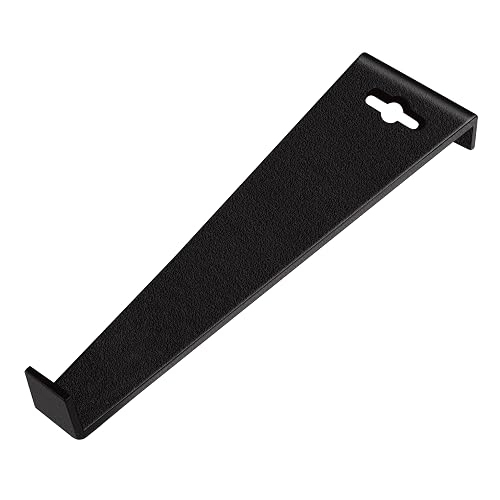
- Laminate flooring cutting tool: a manual or powered option for trimming planks cleanly. View on Amazon
Related questions
Should I buy extra boxes of laminate flooring?
Yes, buying a little more than you calculate is usually wise. Extra planks cover mistakes, damaged boards and future repairs. Ask whether the retailer accepts returns on unopened cartons before you purchase.
Does the square footage on the box include waste?
No. The printed coverage is the usable area of the planks in the box. Waste from cuts and layout is something you need to add yourself.
How do I know if my laminate flooring is the same batch?
Check the batch or production code printed on the carton. Matching codes help avoid slight color or shade differences across the floor.
Can I return unused laminate flooring?
Many retailers accept returns on unopened, undamaged boxes within a set window, but policies differ. Confirm the terms with the seller before you open anything.
Where can I learn more about planning the full job?
Start with Laminate Flooring by the Box: How to Calculate, Buy and Install for a full walkthrough. It covers ordering, layout and installation in one place. If you are still deciding between products, Waterproof Laminate Flooring Price: What to Expect and How to Budget and Underfelt for Laminate Flooring: How to Choose and Install It Right are useful next reads. For finishing details, see Trim for Laminate Flooring: How to Measure, Cut and Fit It (Step-by-Step) and Quarter Round on Laminate Flooring: How to Cut, Fit and Nail It. Check the manufacturer’s installation guide for any specific requirements before you start.
FAQ
Why does the square footage on two boxes of the same laminate sometimes differ?
Two boxes can look identical but hold a different number of planks, especially if the boards come in different lengths or the carton was packed under a different count. That is why the coverage printed on each specific box is the figure to trust. Compare the label on every box before you assume they match.
Can I install laminate flooring without leaving room for expansion?
Laminate needs a small expansion gap around the perimeter of the room so it can move with changes in temperature and humidity. Skipping that gap can cause buckling or gaps later on. Follow the manufacturer’s installation instructions for the exact spacing they recommend.
Do I need an underlayment under laminate flooring?
Most laminate products call for an underlayment, which adds cushioning, helps with sound, and provides a moisture barrier. Some products come with an attached pad, so check the packaging before buying separately. Using the wrong or no underlayment can void the warranty.
Is it easy to cut laminate planks to fit around doorways and corners?
Laminate is generally cut with a fine-tooth saw or a laminate cutter, and most planks can be trimmed to fit awkward spaces. Measure twice and make cuts on the back or face as the instructions indicate to limit chipping. Save the offcuts, since they can sometimes be reused at the end of a row.
Can laminate flooring be installed over an existing floor?
In many cases, laminate can float over a smooth, level, and sound existing floor such as vinyl, tile, or hardwood. The subfloor must be clean, flat, and dry, and any squeaks or high spots should be addressed first. If the current floor is damaged or uneven, removing it is usually the better path.
How long should I let laminate boxes acclimate before installing?
Many manufacturers recommend letting the unopened boxes sit in the room where they will be installed for about 48 hours. This helps the planks adjust to the room’s temperature and humidity before they are fixed in place. Check the specific product’s guidance, since times can vary.
Conclusion
If you want a simple, budget-friendly option that is easy to lay in a standard room, a common plank laminate with clear coverage on the box is a sound choice. Buyers working in odd-shaped rooms or who plan to add more rooms later should buy a little extra and confirm the batch number before purchase. Either way, the number on the label and a careful measurement will guide you to the right count.
Ready to choose one?
About Owen Palmer
Owen Palmer is part of our editorial team and reviews and edits our DIY home renovation guides, checking product details against manufacturer specifications and owner feedback.